
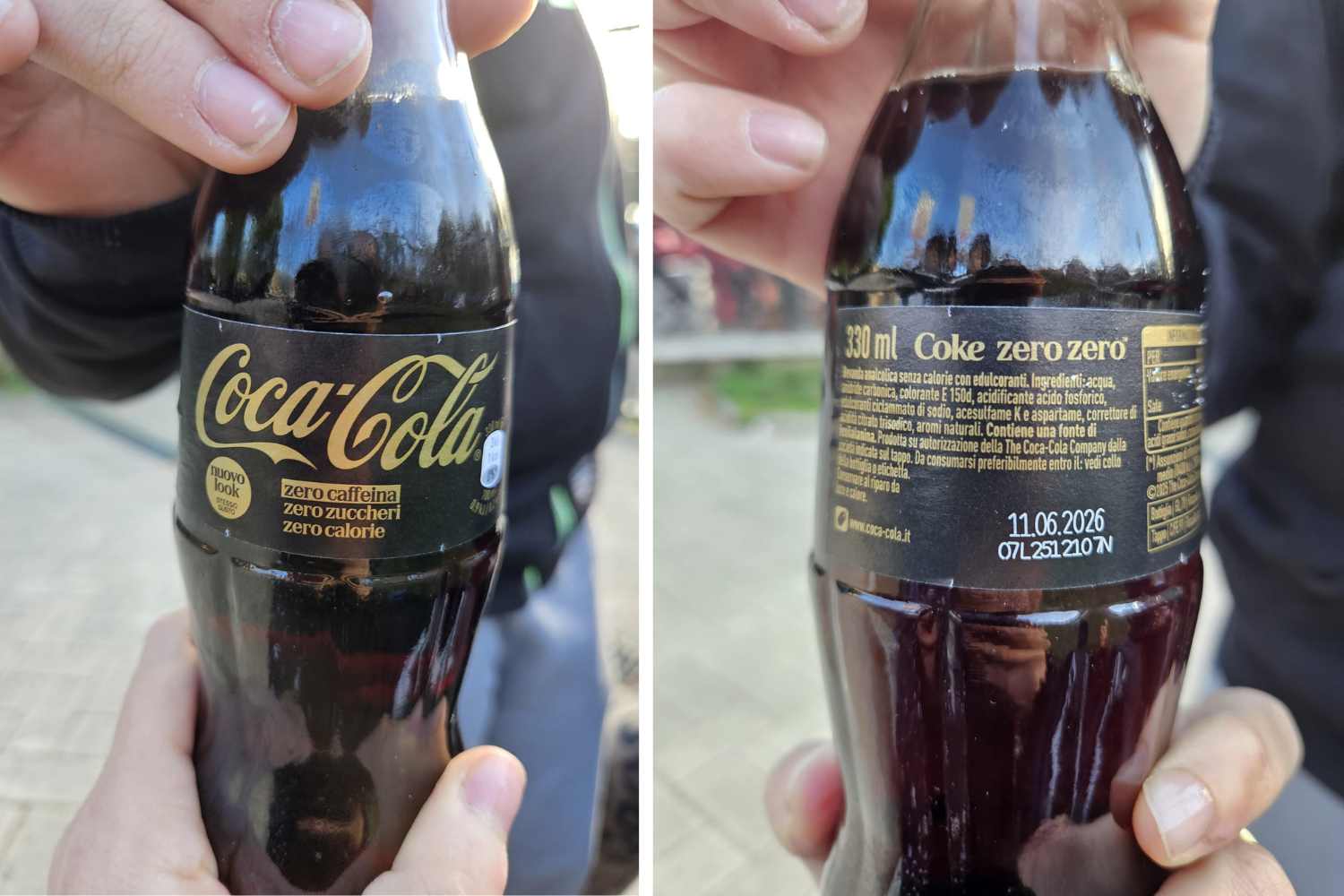
Lately it appears more often in posts on Instagram or other social networks and perhaps you have already noticed it on supermarket shelves with eye-catching packaging that you didn’t remember. And that’s where doubt can arise: is it new? Have they changed it? In reality we are talking about Coca-Cola Zero Zero, which is not at all as new as it might seem.
This version of Coca Cola which does not contain sugar, caffeine and calories has actually existed since 2022 (we talked about it HERE). But what has changed then? What occurred in Italy, at the beginning of 2026, is just a restyling of the packaging which is now black and gold, more recognizable, accompanied by a promotional campaign and some competitions linked to the spring season.
A change of clothes, in short, but the product inside has remained the same: same recipe and same ingredients. The new look mainly serves to distinguish it visually from the classic Zero – which has caffeine – and to intercept those looking for something “even lighter”. A clever positioning, designed for those who did not recognize it and distinguish it from the other proposals or had simply never noticed it among the other products in the range.
But, beyond aesthetics, what does it contain?
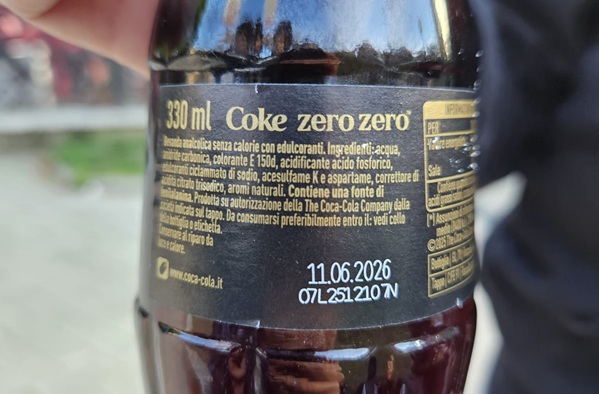
What’s inside Coca Cola Zero Zero
The promise is tempting: no sugar, calories or caffeine. Yet the ingredient list tells a slightly more complex story than the packaging suggests.
The drink contains phosphoric acid (E338), the acidifier that gives Coca-Cola that unmistakable pungent sensation. Present in all versions, including Zero, frequent consumption can contribute to the erosion of tooth enamel and a decrease in bone density.
Instead of sugar there are two sweeteners: aspartame (E951) and acesulfame K (E950). In 2023, IARC classified aspartame as “possibly carcinogenic” (class 2B). European health authorities consider it safe within recommended doses, but recent research suggests that artificial sweeteners can alter the gut microbiota and – paradoxically – stimulate cravings for sweet foods.
Then there is the E150d colourant, ammonia sulphite caramel which gives the characteristic dark colour, obtained by treating sugar with ammonia and sulphites, another controversial ingredient according to some studies.
And the environment?
The new packaging doesn’t talk about sustainability. Yet Coca-Cola systematically appears among the main causes of single-use plastic pollution globally.
A more elegant look unfortunately does not equate to more sustainable packaging. The objectives declared by the company for 2030 exist, but environmental organizations have long underlined that the volumes produced each year make that progress still insufficient.
Is it worth drinking?
A glass every now and then obviously isn’t the end of the world. But knowing what’s inside helps you make more informed choices, without being convinced by the elegance of a restyling or the promise of not containing sugar or calories. If you are really looking for something light and thirst-quenching, sparkling water with a squeeze of fresh lemon remains the healthiest choice: zero additives, zero unnecessary packaging and zero compromises.
