
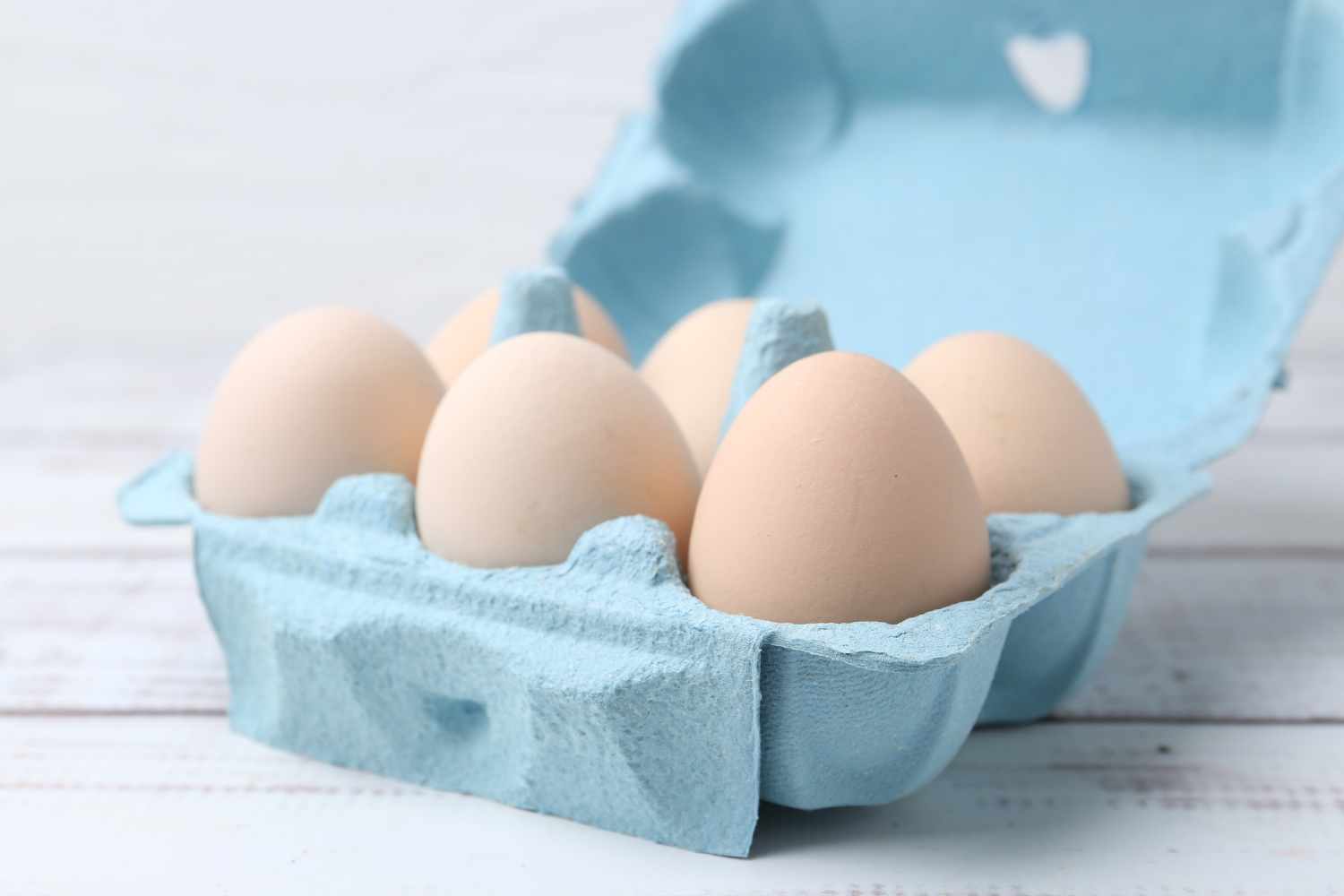
Should eggs be stored in the fridge or outside? It is one of those questions that divide Italian families, comparable to the question of cooking pasta (overcooked, medium or al dente?). In reality, the European Food Safety Authority (EFSA) has already thought about clarifying the ideas better, with data in hand, and the response is quite clear.
The problem is called Salmonella enteritidis
In July 2014, EFSA published a scientific opinion on the public health risks associated with the conservation of table eggs. At the center of the analysis is a bacterium, la Salmonella enteritidisresponsible, at least as far as the European Union is concerned, for the largest number of outbreaks of egg-borne infections.
The critical point concerns timing. If the recommended sell-by date — the date by which stores can put eggs on shelves — were extended from the current 21 days to 28, the risk of infection would rise by 40-50% for raw and/or undercooked eggs. In the worst case scenario, with a sales date of 42 days and a minimum duration increased to 70, the risk would triple compared to the current situation, both for domestic use and in catering.
Temperature, of course, has a lot to do with it. Salmonella, if present inside the egg, multiplies more rapidly with heat and the passage of time. Complete cooking eliminates the risk, the problem arises when the eggs are used raw, or used for all those low temperature preparations, such as artisanal mayonnaise, tiramisu and poached eggs.
Fridge yes, but it’s not enough
The refrigerator is the right answer, but it is not enough to simply put them “somewhere” inside, because there are some habits that can compromise conservation even with the right temperature. Let’s see them together:
- The first concerns washing. Eggs have a natural film on their shells — the cuticle — that acts as a barrier against bacteria. Washing them before storing removes them, leaving the porous coquille completely exposed. Better not to do this unless you use them immediately.
- The second concerns the position. Keeping them on the refrigerator door – the one we open and close dozens of times a day – exposes them to continuous temperature changes. The bottom of the shelf, away from strong odors such as fish and mature cheeses, is the most suitable location: the coquille is porous and absorbs surrounding aromas with a certain ease, which affects the final flavour.
- The third concerns orientation. Stored with the pointed side down, the yolk remains centered and the bladder – that little sac at the round end – is not compressed. A detail which, especially in the long term, can affect the general freshness of the product.
Three weeks, no more
The time limit indicated by EFSA is clear: beyond three weeks from deposition, even with adequate and constant refrigeration, the risk of infection increases. Not drastically, of course, but in a measurable way, and measurable, in this context, means real.
For anyone who buys eggs from the supermarket, the minimum shelf life date printed on the packaging should always be the main reference. If they are purchased directly from local producers and at farmers’ markets – which is fortunately increasingly common – you should always ask for the date of laying and do the math.
An empirical method, meanwhile, works well: a fresh egg immersed in water sinks and remains, horizontally, at the bottom. As it ages, the air chamber will expand and the egg will tend to tilt, then stand vertically, then float. Does it float? Better not to risk it.
How important is the European control programme
The numbers of human salmonellosis cases in Europe have fallen significantly in recent years, and EFSA attributes this decline mainly to Salmonella control programs in laying hen farms. The presence of the bacterium in poultry has significantly reduced, which directly reflects on the safety of commercially available eggs.
The fact remains that good domestic practices are not at all accessory, given that they represent the final part of a chain that begins on the farm and ends on the plate. Breaking it in the last meter would be a real shame.
