
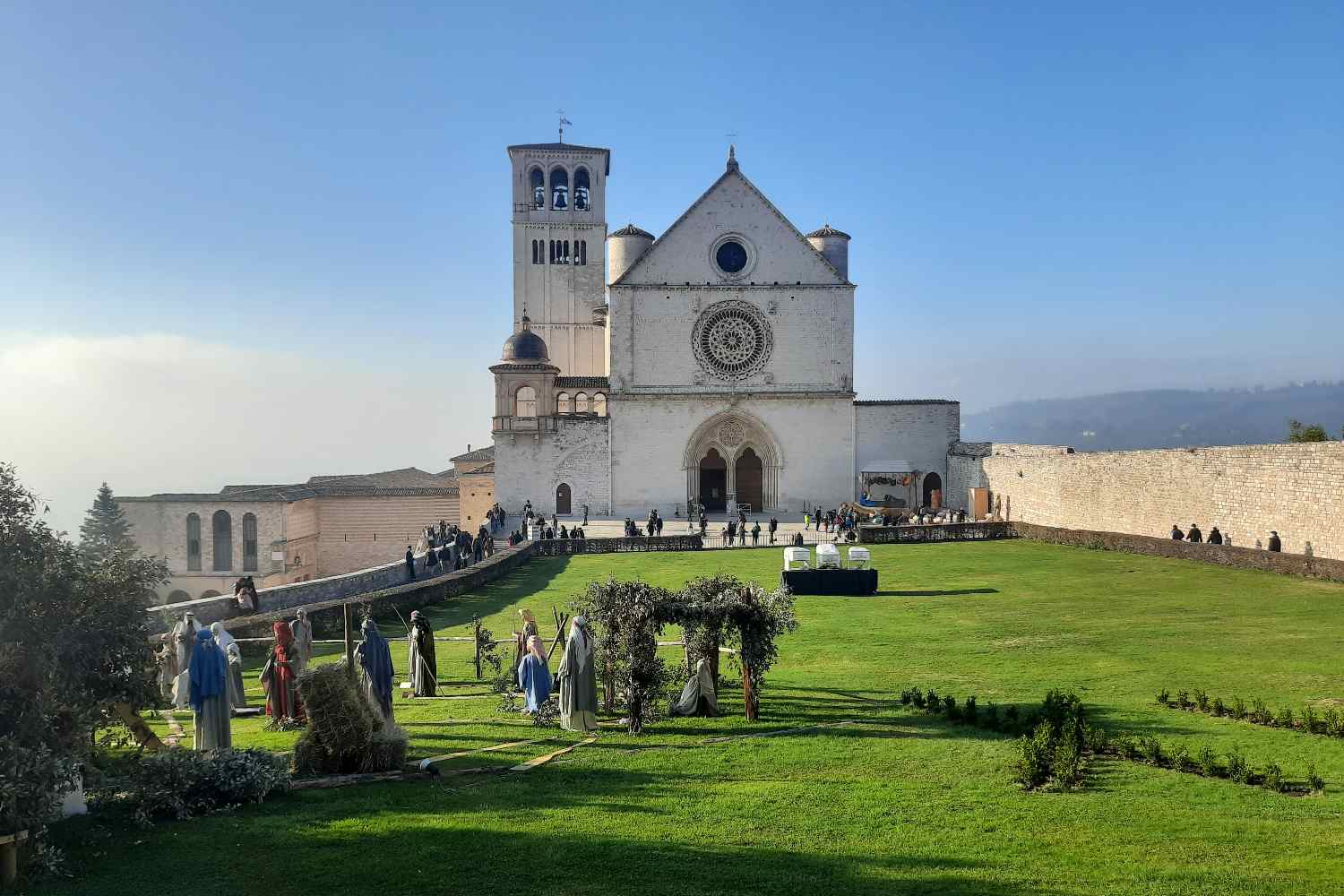
Arriving in Assisi means entering a different dimension. The Umbrian city, nestled on the slopes of Mount Subasio, welcomed us with its slow, almost meditative pace. The pink stones of the houses, the streets that climb gently (be careful, some not too gently: it is better to arm yourself with comfortable shoes and dress lightly for the continuous up and down) towards the historic center and the silence that envelops its squares create a feeling of peace and harmony that is difficult to describe.
During my trip I had the feeling that Assisi is not just a tourist destination, but a place capable of telling profound stories. Saint Francis and Saint Clare were born here, figures who marked the spirituality and history of the Middle Ages. Even today their message of simplicity and brotherhood seems to echo within the city walls.
The spiritual heart: the Basilica of San Francesco
The first encounter with the city can only be with the Basilica of San Francesco, one of the most famous places in Italy and recognized as a UNESCO World Heritage Site. The complex dominates the Umbrian valley and is made up of two overlapping churches, each with a different character.
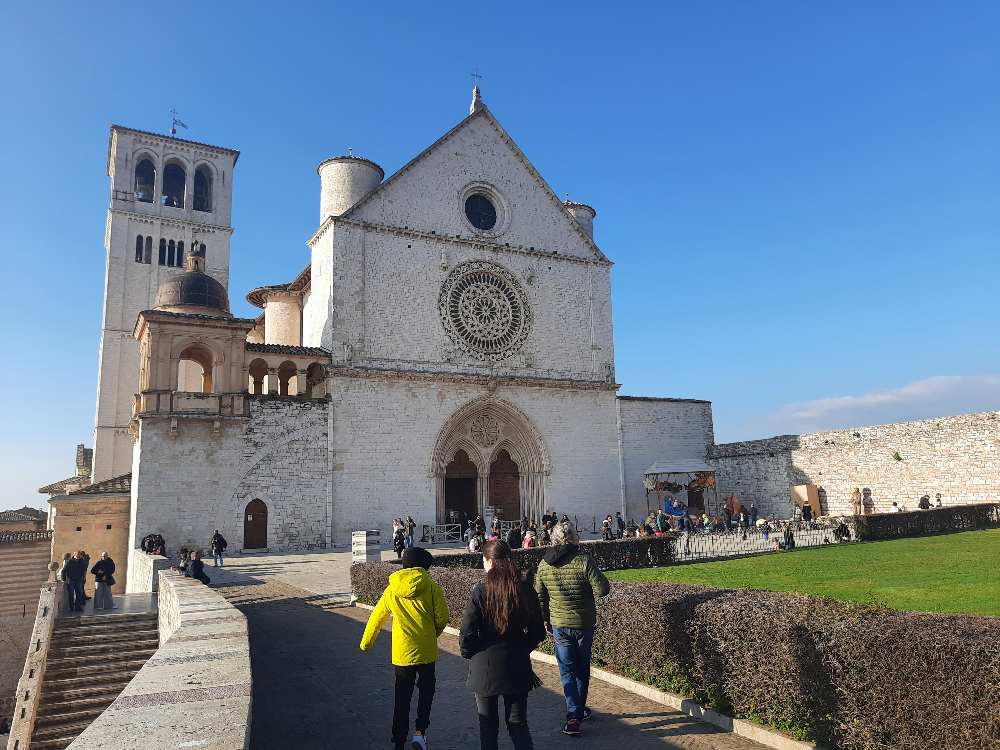
The Upper Basilica is striking for its light and its extraordinary frescoes. Here is the famous pictorial cycle attributed to Giotto, which tells the life of the Saint with lively and engaging images. Walking under these works means crossing centuries of art and spirituality. Going down to the Lower Basilica, the atmosphere changes. The spaces become more intimate and evocative, almost intimate. This is where St. Francis rests.
Between medieval squares and Roman temples
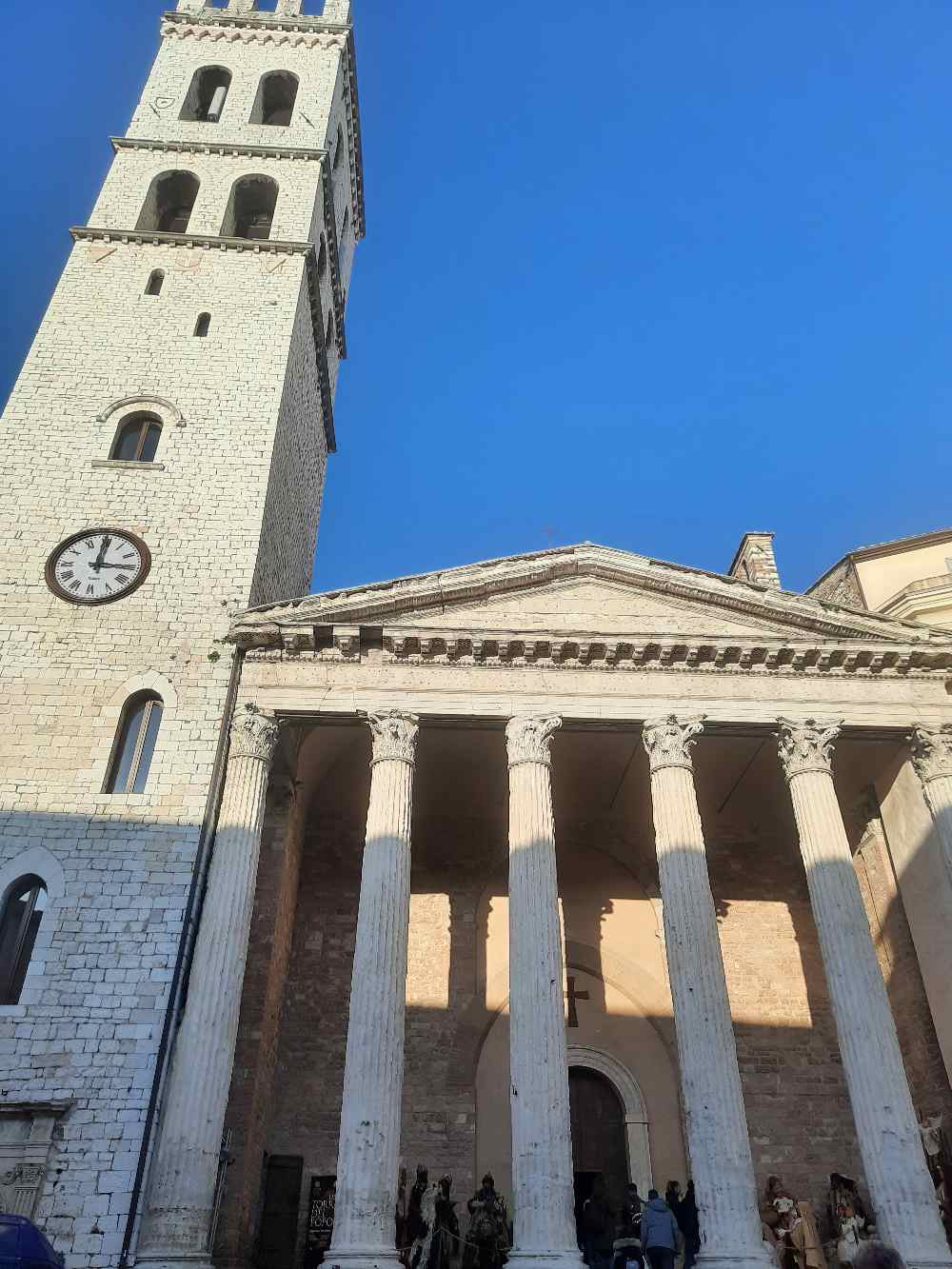
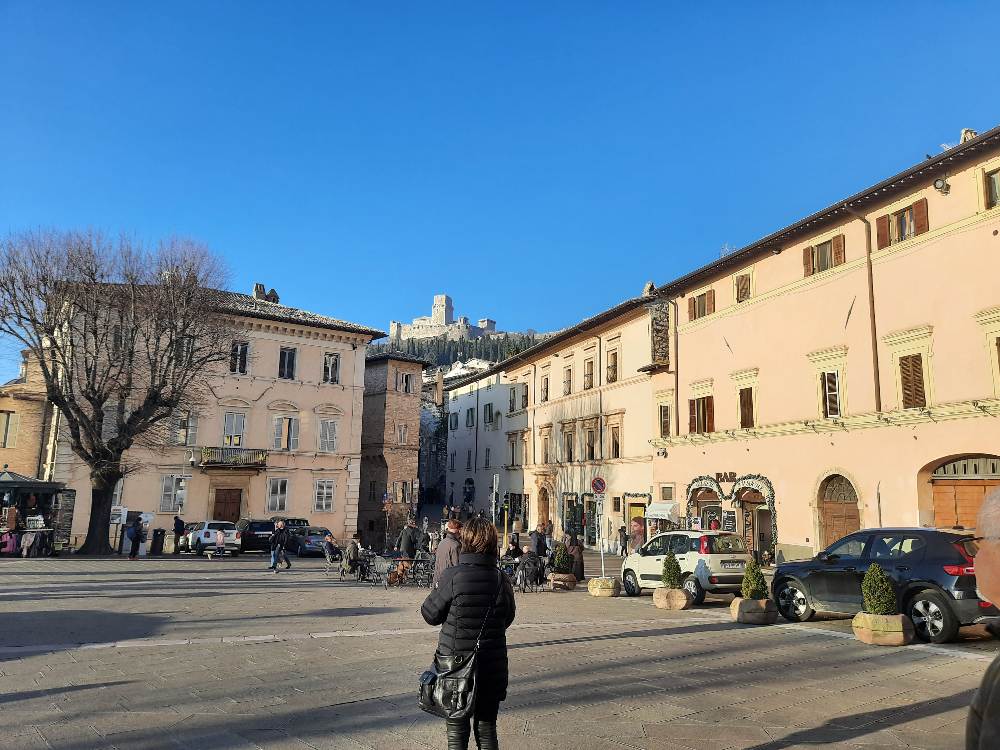
From the basilica a walk starts through the alleys that lead to the heart of the city. Walking among artisan workshops and panoramic views you arrive at the lively Piazza del Comune, the center of city life since Roman times. The square is dominated by the Temple of Minerva, one of the best preserved Roman buildings in Umbria. Today it has become the church of Santa Maria sopra Minerva, but the Corinthian columns still tell of the ancient grandeur of the city when it was an important Roman municipium.
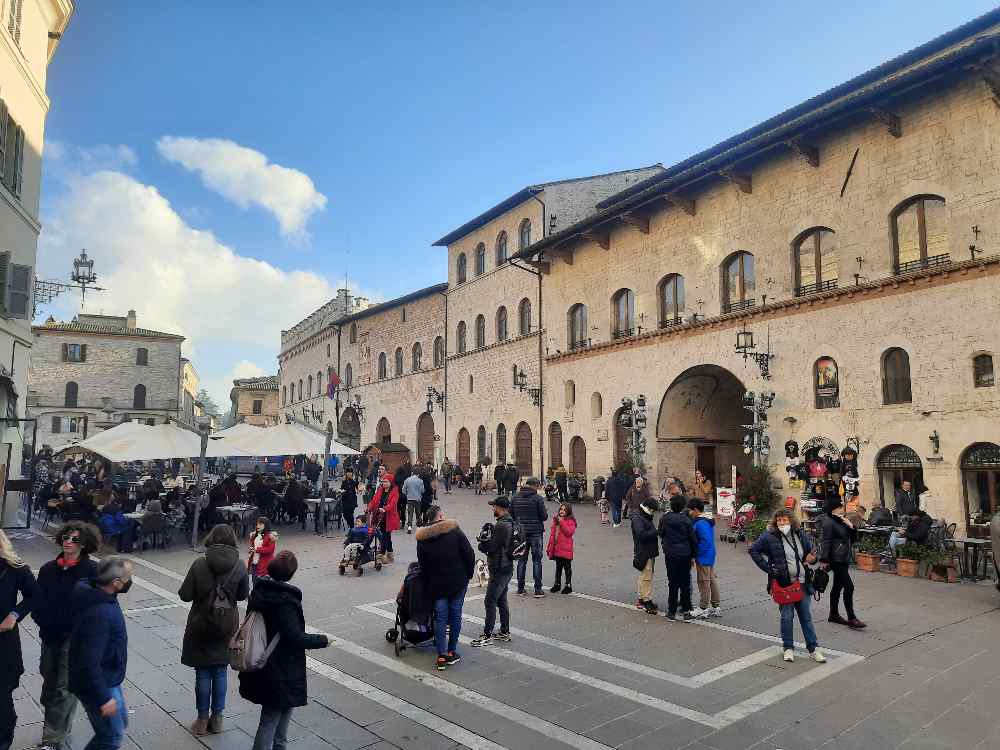
The Palazzo dei Priori and the Palazzo del Capitano del Popolo also overlook here, medieval buildings that bear witness to the period in which Assisi was an autonomous and lively municipality. Sitting at a table in the square with a coffee means observing the slow flow of city life, between tourists and inhabitants.
The spirituality of the basilicas and the history of the city
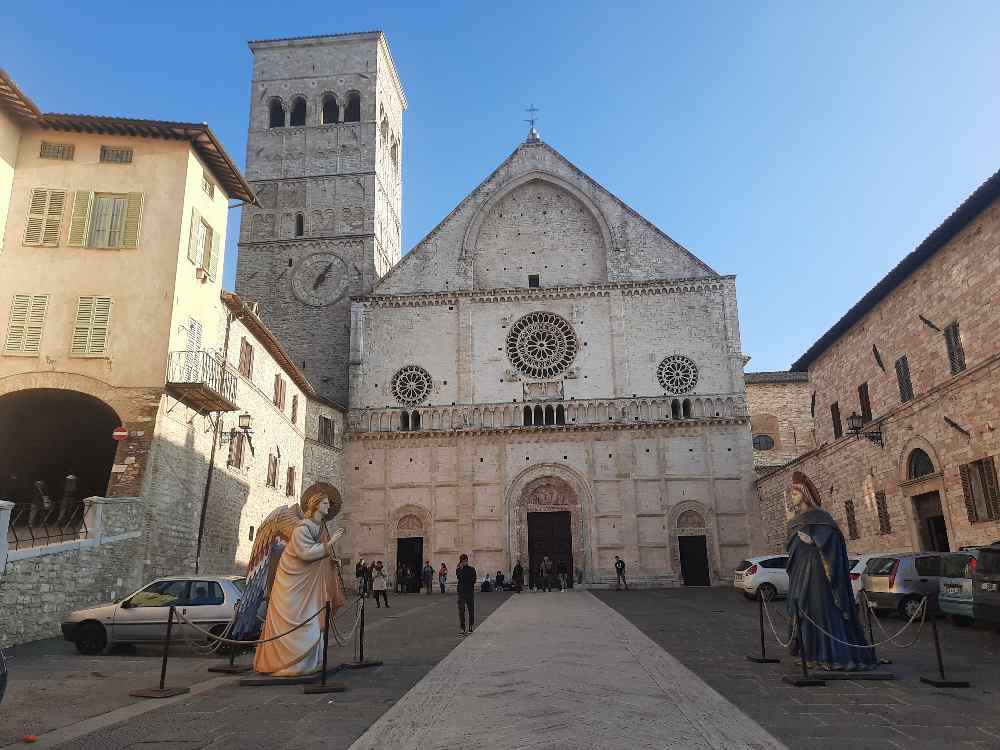
Continuing between the climbs of the historic center you reach the Cathedral of San Rufino, one of the oldest religious buildings in the city. Here Saint Francis and Saint Clare were baptized, and it was within these walls that the Saint delivered one of his first sermons.
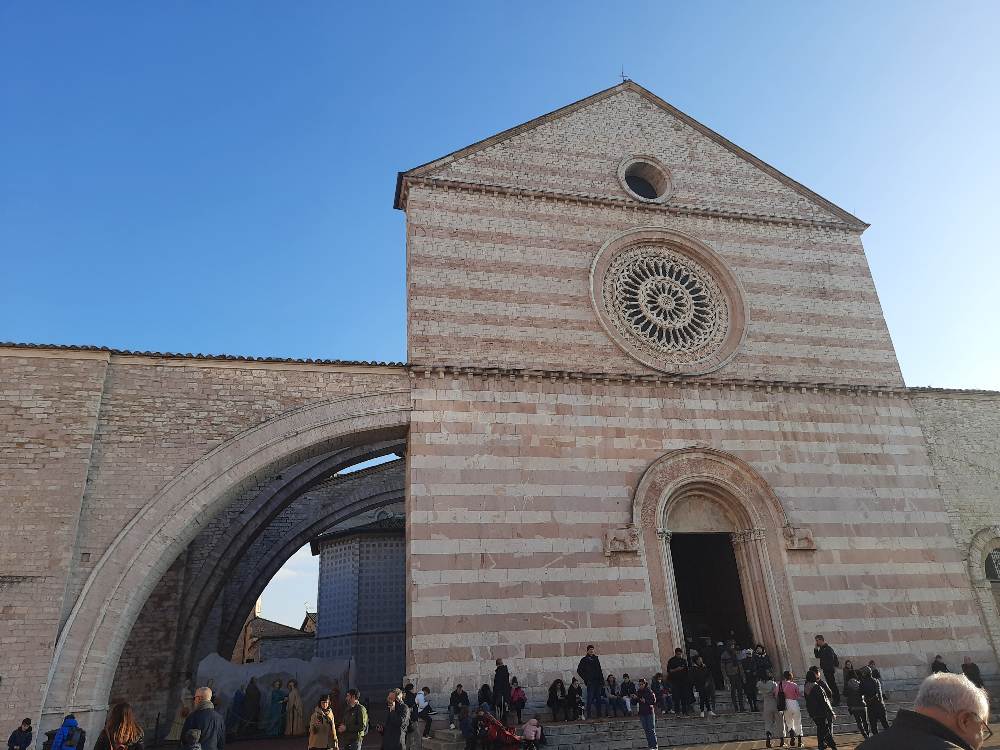
Not far away is the Basilica of Santa Chiara, built in pink stone from Mount Subasio. The building houses the body of the saint and the famous crucifix which, according to tradition, spoke to Saint Francis inviting him to renew the Church. Walking among these churches means crossing centuries of religious and cultural history.
Assisi seen from above: the Rocca Maggiore
To truly understand the strategic position of Assisi you need to go up to the Rocca Maggiore, the fortress that dominates the city from above. The climb is short but offers spectacular views between the medieval walls. The fortress was built in the 12th century and hosted historical figures such as Frederick I Barbarossa and the young Frederick II. Today it is one of the most evocative panoramic points in Umbria. From the walls there is an incredible view of the valley and the roofs of the city. At that moment I understood why Assisi is often described as a place suspended between earth and spirituality.
Between nature and silence: the Hermitage of the Prisons
The journey to Assisi does not end in the historic center. A few kilometers away, immersed in the woods of Mount Subasio, there is the Hermitage of the Carceri, one of the most evocative places linked to the life of Saint Francis. Here the Saint and his disciples retreated to pray and meditate. The complex is surrounded by centuries-old holm oaks, natural caves and silent paths that create an almost mystical atmosphere. Walking in this place means rediscovering the most authentic dimension of Franciscanism: simplicity, nature and contemplation.
The Franciscan sanctuary of Santa Maria degli Angeli
A few minutes from the center there is also another fundamental place: the Basilica of Santa Maria degli Angeli. Inside this large church is the Porziuncola, a small chapel which played a central role in the life of Saint Francis. Here the Saint understood his vocation, welcomed Saint Clare and received what is known as the Forgiveness of Assisi. The sensation is curious: a small church enclosed inside an immense basilica. It is one of the places most visited by pilgrims and represents one of the most profound symbols of Franciscan spirituality.
A journey that remains inside
Assisi is not just a city full of monuments. It is a place that manages to convey something deeper: a sense of serenity and slowness that today seems almost rare. Walking through its streets means being surprised by medieval views, Umbrian panoramas and silences that tell ancient stories. A trip to Assisi is an experience that remains imprinted in the memory and, in some way, also in the heart.
You might also be interested in:
