
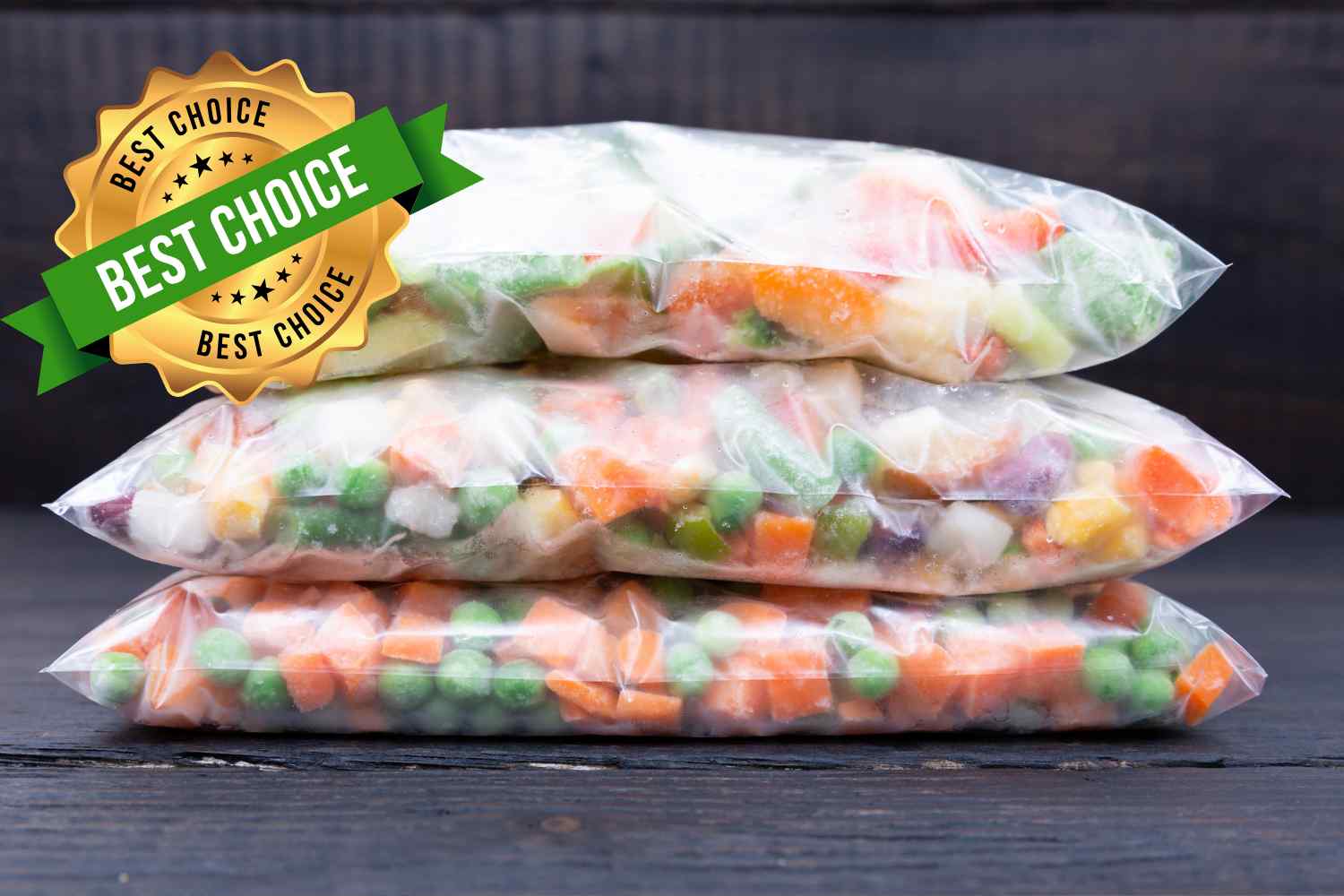
Practical, economical and available all year round, preserved vegetables are now a cornerstone of the shopping of millions of families. But which one to choose? The French magazine 60 Millions de Consumers tested green beans, spinach and peas with carrots — in frozen, canned and glass jar versions — analyzing nutrients, salt, vitamins, nitrites and pesticide residues. The results largely reward frozen foods, but with some surprises.
The best products in the test
Bonduelle frozen green beans — the best score of the entire test, about 15.2 out of 20. Almost no salt and very high vitamin C, preserved by rapid freezing started a few hours after harvesting.
Products to avoid
Bonduelle canned peas and carrots — 8.9 out of 20. Penalized by the high salt content and the presence of five different pesticide residues: the worst result of the entire category.
Carrefour Classic canned spinach — 9.6 out of 20. Nutritional values lower than the average of all the other products analyzed.
The test method
The experts analyzed three of the most widespread families of vegetables: extra-fine green beans, spinach, peas combined with carrots, in the main forms of preservation on the market – frozen, in cans and in glass jars. For each category, fiber, salt, key minerals (iron, calcium, manganese, potassium, magnesium, copper, phosphorus, zinc) and several vitamins (C, A, K1, B1, B3, B6, B9) were measured. To complete the picture, the analyzes looked for the presence of nitrates, nitrites and pesticide residues.
Vegetable for vegetables: what’s really inside
Green beans
Green beans reserve some disappointments on the fiber front: six out of ten samples do not reach the average reference value of 3.2 grams per 100 grams, especially among the canned versions. Sterilization at high temperatures alters the structure of plant fibres, and the botanical variety also matters: in Europe only about ten varieties are grown for industrial processing.
The salt chapter leaves no doubt: frozen foods contain practically zero, while canned or jarred ones reach up to 0.79 grams per 100 grams. A 200 gram serving of canned green beans can already cover about a third of your maximum recommended daily intake of sodium.
For vitamin C, frozen foods win hands down, with some brands showing contents seven to fourteen times higher than average. The reason is technical: freezing occurs within a few hours of harvesting after a brief blanching at 70-80°C, while canning requires around 121°C for twenty minutes, a process that is much more aggressive on thermolabile nutrients. Be careful though: part of the vitamin C can also be lost during home cooking, nullifying at least part of the advantage.
Different story for vitamin A, lacking in the frozen foods tested but more satisfactory in canned and jarred preserves. Green beans are confirmed as a good source of potassium and manganese, with the best frozen ones leading the way for potassium content. Vitamin K1 was average in approximately half of the samples, regardless of storage method.
Spinach
For spinach, the fibers are homogeneous among all types, with values close to 3.5 grams per 100 grams regardless of the preservation method. However, salt is a recurring problem in preserves: cans and jars contain between 0.43 and 0.69 grams per 100 grams, with one exception — a brand that has chosen not to add water or salt.
The surprise comes from the minerals: for iron, manganese and calcium, canned and jarred preserves surpass frozen ones. Some brands recorded significantly higher-than-average iron contents, and one jar stood out as the only one of the entire sample to offer optimal amounts of calcium. This is probably due to the concentration of the product during the heat treatment, which by reducing the water increases the density of the minerals per gram.
On the vitamin front, frozen foods take back the stage for B6 and B9 – with a clear gap for some brands – while for vitamin K1 some preserves and jars showed higher values than frozen foods.
Peas and carrots
The pair of peas and carrots is the richest in fiber among the three categories tested, with values between 3.7 and 6.3 grams per 100 grams: a positive result, considering that fiber is often the most deficient nutrient in the modern Western diet.
Here too, salt is the Achilles’ heel of preserves: from 0.5 to 0.77 grams per 100 grams, compared to negligible levels in frozen foods. For minerals, frozen foods take the lead, with some products reaching or exceeding the expected values for both vegetables.
The water-soluble vitamins sensitive to heat – B1, B3, B6 and especially C – suffer significant losses during canning, also because some of them migrate into the preserving liquid, which is usually not consumed. Frozen foods contain on average four to five times more vitamin C than their canned counterparts.
Vitamin A, theoretically abundant in carrots, instead disappointed almost the entire sample: only one frozen food brand reached satisfactory levels, while all the others – both frozen and canned – remained well below expectations.
Nitrites and pesticides: none are completely clean
The analyzes did not detect nitrites in green beans, peas and carrots. For spinach, however, two frozen products showed the presence of nitrites – despite falling within regulatory limits – probably due to interruptions in the cold chain during distribution or storage.
On the pesticide front, no category was completely immune, even if all the molecules detected are legal in Europe and below the legal limits. Among green beans, some conventional frozen brands showed up to four distinct residues, while one product remained admittedly free of contaminants. For spinach, seven different pesticides were identified in half of the samples analyzed. The negative record goes to Bonduelle canned peas with five residues, while in total six of the ten products in the peas and carrots category – all conventional – contained at least one pesticide.
Choosing certified organic products, where available, remains the most effective strategy to reduce exposure to these residues.
What to do at the supermarket
Frozen foods come out better overall in the test: more water-soluble vitamins, less salt, good levels of minerals. However, canned and jarred preserves should not be discarded – for certain minerals, as in the case of spinach, they are even superior – but they require more attention when purchasing.
In both cases the variability between one brand and another is notable. The most effective moves: always read labels, avoid products with added salt and choose organic products when possible. It being understood that, when possible, choosing fresh vegetables is always the best choice.
Source: 60 Millions de Consumers
