
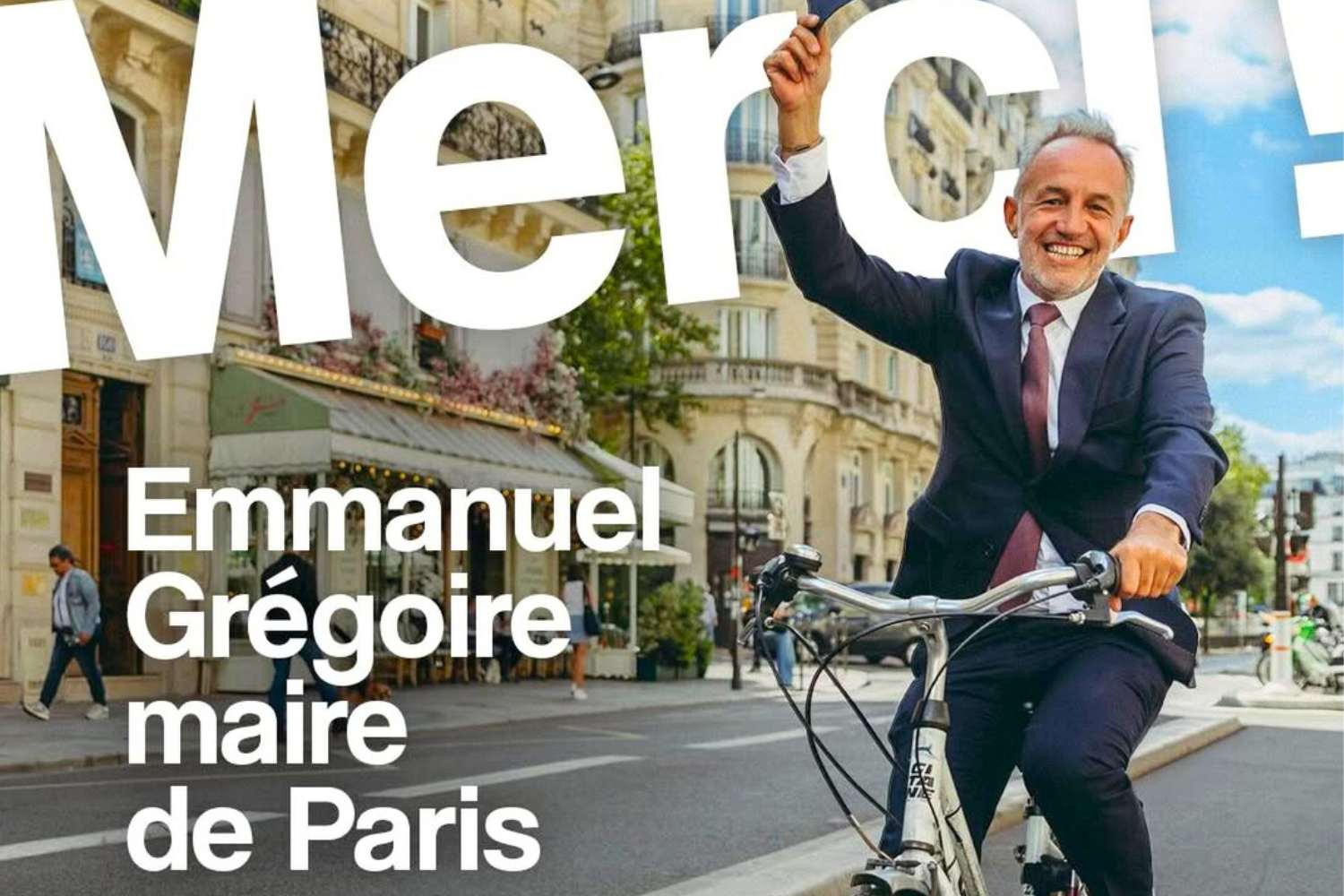
The wind of socialism continues to blow in Paris, the far right has not managed to prevail. With 50.52% of the preferences in the second round, Emmanuel Grégoire is the new mayor of Paris, and the city, at least for now, remains faithful to its progressive history. The United Left candidate beat the conservative Rachida Dati, who admitted her clear defeat in the elections.
“Our joy is immense, our responsibility is immense. We will spend a few hours celebrating and tomorrow, ladies and gentlemen, we will start work very soon. Thank you all very much!” commented the new mayor of the French capital, successor of the first citizen Anne Hidalgo, who worked to make Paris a greener and more livable city.
By bike through the streets of Paris
The newly elected mayor of Paris has chosen not to parade in a blue car or organize a procession to celebrate the election result. Yesterday evening, after the victory was confirmed, Emmanuel Grégoire took a Vélib’ public service bike and cycled – together with his future councilors – along the cycle paths of the capital up to the Hôtel de Ville: precisely those paths that he himself contributed to building in his years as deputy mayor.
View this post on Instagram
A symbolic and coherent gesture, almost a moving manifesto. Waiting for him was Anne Hidalgo, the outgoing mayor, who gave him the keys to the city, wishing him “good work”.
“Paris has decided to remain faithful to its history, it is the heart of the resistance. Paris is not and will never be a far-right city” he declared in his speech to citizens.
View this post on Instagram
Who is the new mayor and what promises he has for the city
Born in 1977, Emmanuel Grégoire is a politician who grew up in the industrious shadow of the Parisian city hall. Bertrand Delanoë’s cabinet chief, he was then a city councilor from 2014, finally first deputy mayor of the administration led by Anne Hidalgo for six years with responsibilities on the budget, urban policies and public services. Today he leads an alliance between the Socialist Party, the Greens and the French Communist Party.
With his election, the green revolution will move forward. Grégoire wants to accelerate the ecological transition of the capital: more cycle paths, more urban greenery, fewer cars to build an increasingly pedestrian-friendly city. On the social front, the priority is the housing crisis that suffocates a metropolis of two million inhabitants: more public housing and a crackdown on short-term rentals, accused of taking apartments away from residents. But the new mayor also inherits thorny dossiers: the endless construction sites that exasperate Parisians, a growing municipal debt and a serious scandal on sexual abuse in kindergartens, an affair that has also affected Grégoire deeply, having been a victim of abuse when he was a child.
