
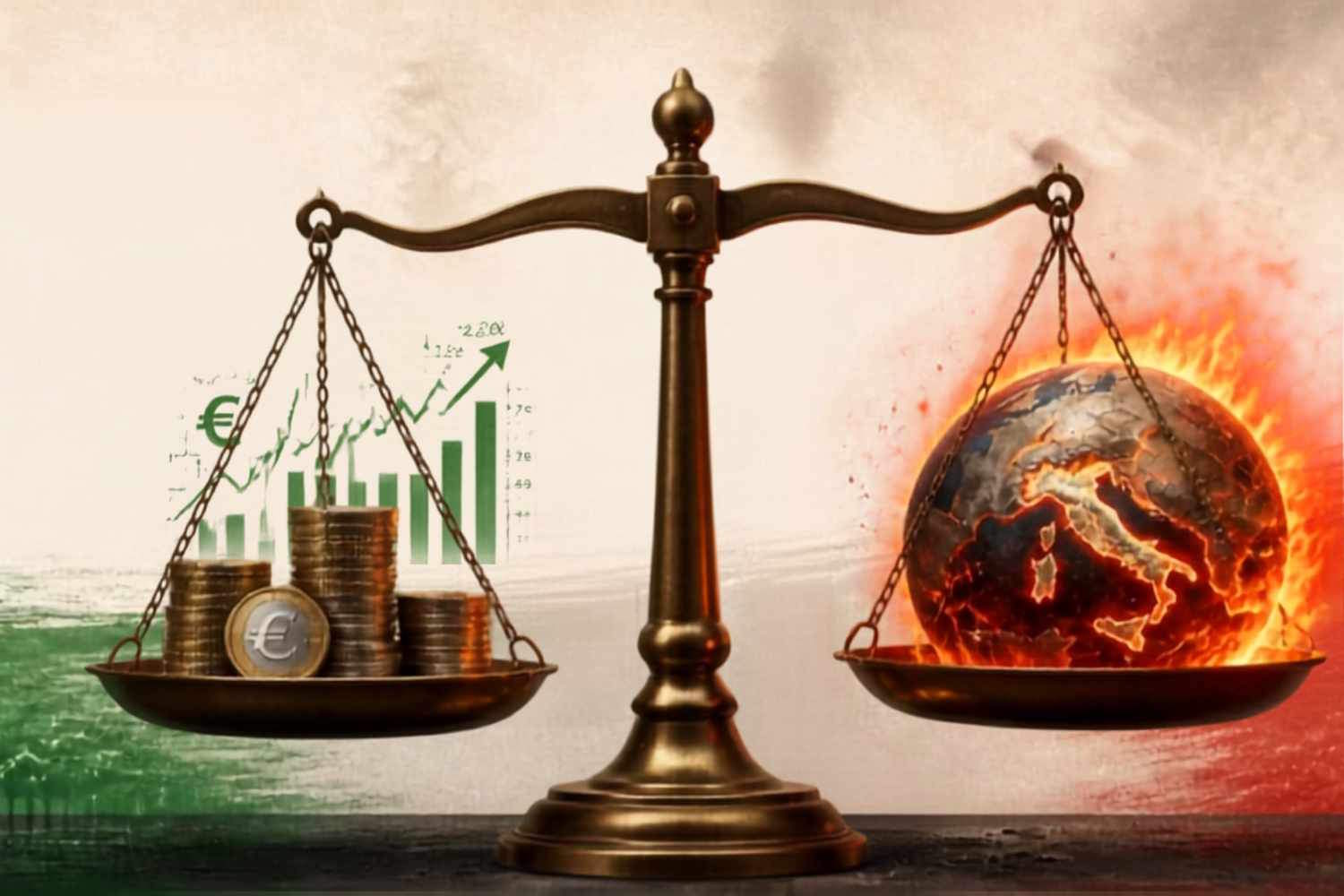
What happens when global warming has a total impact on the growth of countries? What happens is that a State is undoubtedly forced to face greater expenses and, consequently, to increase taxes or face a greater debt, in that real vicious circle which then has repercussions on the costs of all financing for families and businesses.
The climate crisis, therefore, aggravates the burden of public debt and there is only one expression to describe all of this: climate spread.
It was coined by a new study by the CMCC Foundation – Euro-Mediterranean Center on Climate Change, according to which – in the absence of climate policies and adaptation measures – our country could record a GDP level up to 6 percentage points lower by 2050 than in a scenario without climate damage.
This is the first study that quantifies the climate risk for finances in Italy – explains Massimo Tavoni of CMCC, Director of the European Institute on the Economics and the Environment and author of the study. We find that climate risk is also a sovereign risk with macroeconomic impacts that ripple through public finances, acting as a stressor on existing economic and fiscal vulnerability.
The study
The data shows that by 2050 global warming could reduce Italian GDP by between 1.5% and 6% and that, in the most extreme scenario, with global temperatures 3-5 degrees higher than the pre-industrial era (today we are close to +1.5°C), Italy could be the most penalized country among the large economies of Europe, even surpassing Spain, which instead would be the most penalized in the most moderate scenario.
@CMCC
The increase in the debt/GDP ratio and the greater riskiness of the debt induce an increase in interest rates, an increase that we could call the climate spread – explains Carlo Carraro, rector emeritus of the Ca’ Foscari University of Venice and one of the founders of the CMCC. The rate that the state must pay to finance public debt is therefore higher as a consequence of climate risk, this means higher costs for the state, therefore higher taxes or higher debt, in a vicious circle that affects the costs of all financing for families and businesses.
These GDP losses have repercussions on public finances through closely intertwined channels. Weaker growth mechanically increases the debt-to-GDP ratio, reduces available fiscal space and makes managing debt sustainability more complex in the medium and long term.
A series of analyses, in short, from which two main messages emerge:
So the solutions? Mitigation and adaptation are tools for protecting economic growth and financial stability.
For a country like Italy, exposed to both climate impacts and public finance constraints, delaying action means increasing the economic cost of global warming,” explains Matteo Calcaterra of the CMCC and author of the research. “Our results show that mitigation and adaptation are not just environmental protection tools, but real levers of macroeconomic and financial stability: acting promptly in tackling the climate crisis means protecting the country’s growth trajectory and the sustainability of the debt in the long term.
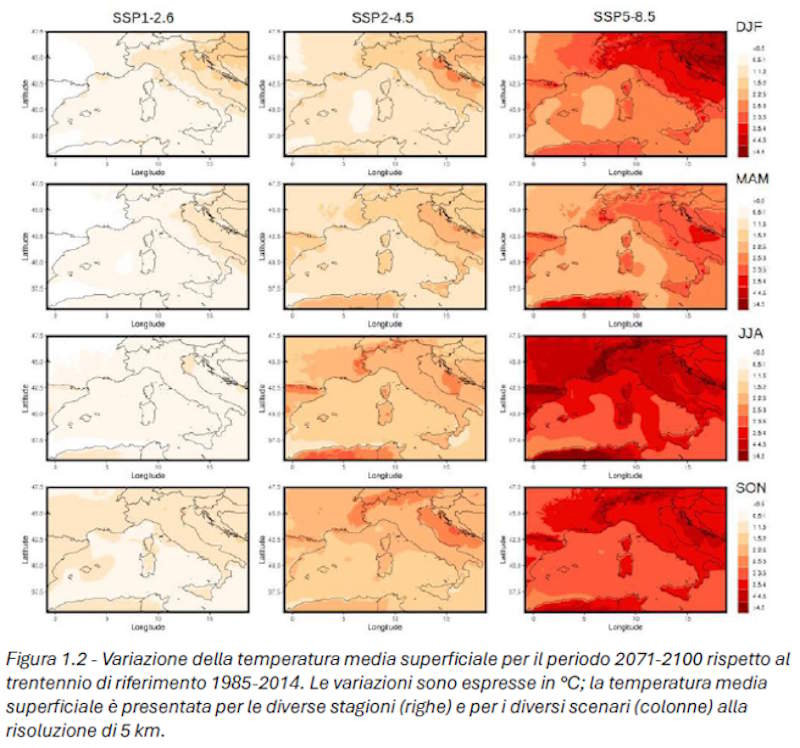
@CMCC
The European framework
Climate change doesn’t affect everyone the same way. In Europe, it is above all the southern and eastern regions that pay the highest price, where global warming has a greater impact on productivity, puts infrastructure under pressure and makes local economies more fragile.
The numbers tell a reality that is already underway. Between 1980 and 2024, extreme weather and climate events have caused economic losses in the European Union estimated at €822 billion. And the trend is accelerating: four of the last five years are among the most expensive in the entire historical series. Between 2021 and 2024 alone, the damage exceeded 208 billion euros, more than a quarter of the losses accumulated over the last forty-five years.
Above all, heat waves and drought are weighing more and more. Extreme heat, by slowing down labor productivity, is already causing losses of between 0.3% and 0.5% of European GDP, with peaks above 1% in the most vulnerable areas. And without new adaptation measures, these losses could exceed 1.1% of the Union’s GDP by the 2060s.
Things are no better on the drought front. In a scenario without further mitigation and adaptation interventions, annual economic damages for the European Union and the United Kingdom could rise from the current 9 billion to over 65 billion euros per year in a 4°C warmer world. Even in this case, the account would be far from uniform: the heaviest consequences would be concentrated above all in southern and western Europe, where water scarcity is destined to become one of the main economic challenges of the coming decades.
HERE is the complete CMCC report.
