
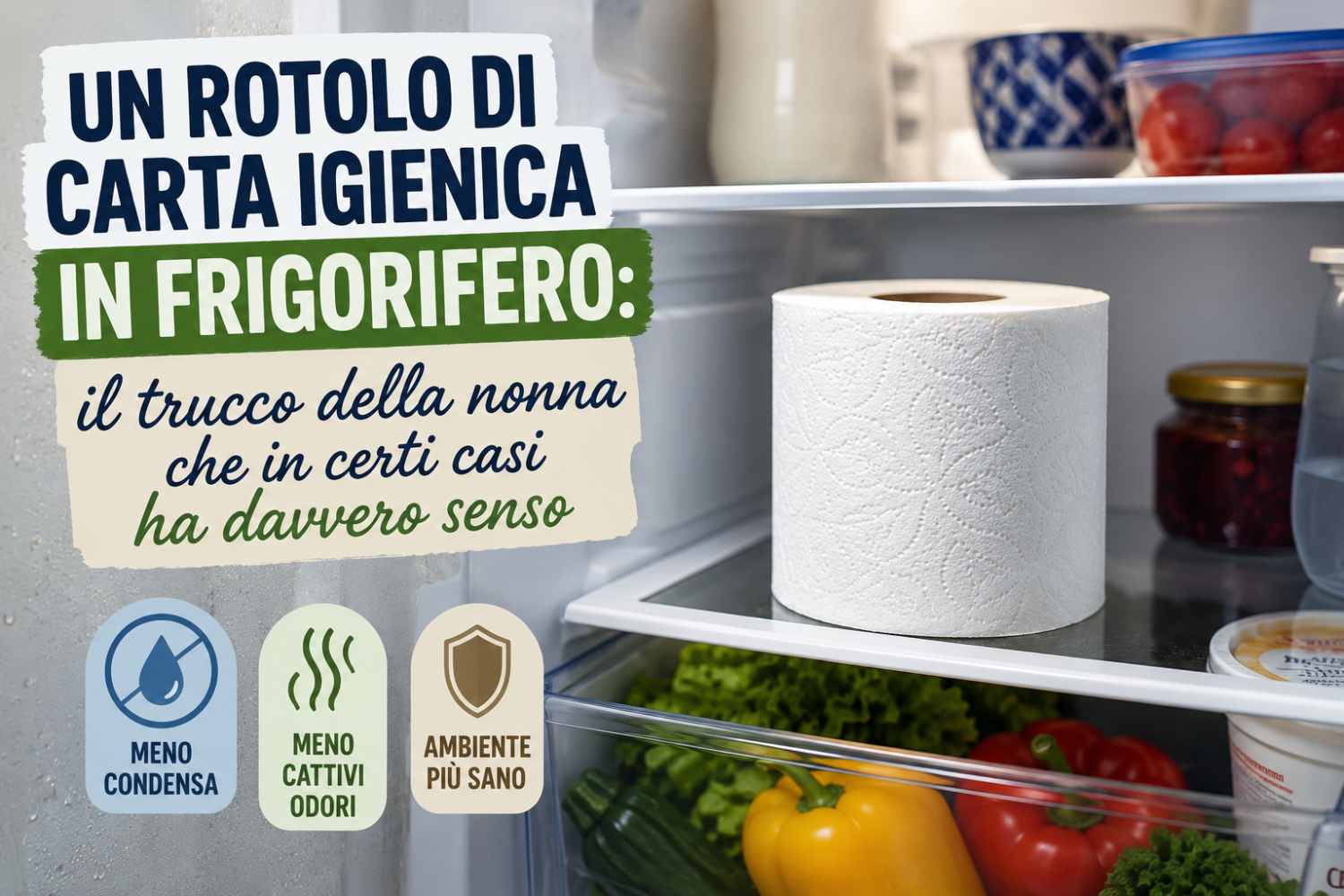
In a vacation home refrigerator, opened and closed about twenty times a day from August to September, condensation can wet the bottom shelf in a matter of hours. If you own an old appliance with worn seals, you know the problem of that film of water that continues to form, no matter what you do. It is precisely in these contexts that a remedy as poor as it is discussed has been circulating for a few weeks, namely putting a clean and unused roll of toilet paper between the shelves or in the vegetable drawer. Toilet paper, by its nature, is designed to absorb liquids quickly and, placed in the refrigerator, the cellulose captures part of the humidity that forms every time the door is opened, the one that normally deposits on the internal walls or slides down to the vegetable drawer.
Because in some refrigerators it works better than in others
The difference, however, is the context. In a recent refrigerator, with good sealing and an efficient compressor, the effect is minimal, because the machine already manages the internal humidity itself, and the roll becomes little more than a cumbersome guest among the butter and pickles. Everything changes in an old appliance from a second home, in an office mini-fridge that is constantly open or in a kitchen shared by several people, where the door never remains closed for more than a few minutes: in these cases the humidity accumulates faster than the compressor can eliminate it, and a hygroscopic material placed in the right place can really limit condensation. Less humidity also means less fertile ground for mold and bacteria responsible for bad odors: that piece of cheese forgotten at the bottom of the drawer, or the leftovers of a badly closed sauce, have less room to permeate the air in the refrigerator. However, don’t expect miracles on your bill, because the consumption of a refrigerator depends on insulation, set temperature and opening frequency, not on a roll of cellulose: if this were enough, the manufacturers would already include it in the package.
A zero-cost trick, with a margin of doubt
What makes the trick interesting, beyond its actual effectiveness, is that it requires nothing: no device, no expense, an object that can be found in any bathroom at home. Anyone who wants to test it can choose a clean roll, preferably without added fragrances, and place it away from raw or uncovered foods, for hygienic reasons even before aesthetic ones. The toilet paper market, moreover, knows no crisis, and according to estimates by Fortune Business Insights, the sector should reach almost 67 billion dollars in 2026, to exceed 100 billion by 2034.
