
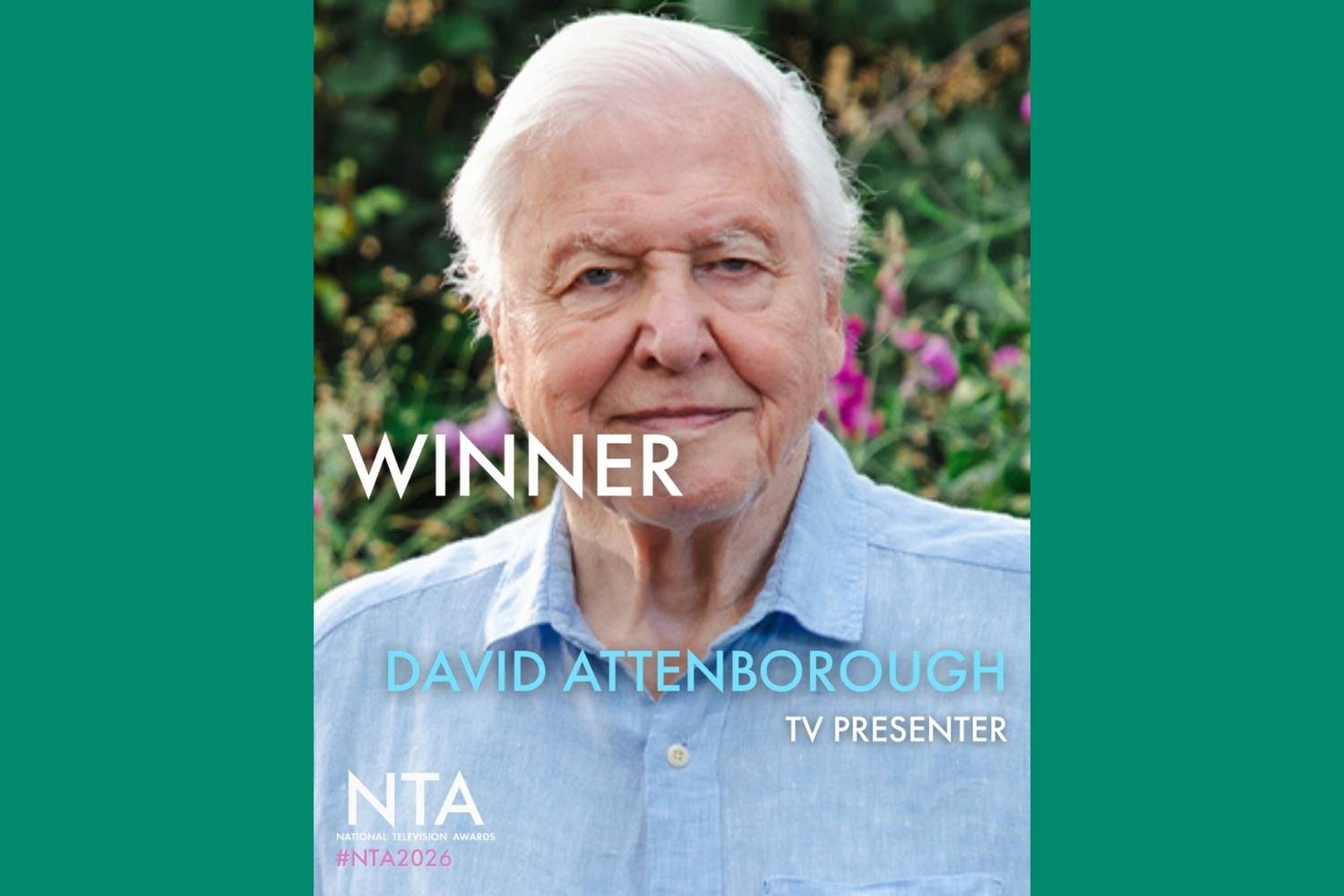
David Attenborough turned 100 this year. And he celebrated them like this too: with an award for best TV presenter at the National Television Awards, won against competition from Alison Hammond, Ant and Dec, Claudia Winkleman and Stacey Solomon. The British naturalist was not present at the ceremony, but his speech was read anyway, and became the real center of the evening.
View this post on Instagram
A century of nature television
Attenborough’s debut in front of the cameras dates back to 1954, with Zoo Quest. From there came series that trained entire generations of viewers in the relationship with the natural world: Natural World, Wildlife on One, the Planet Earth franchise, Blue Planet, Frozen Planet. In between, one episode has remained engraved in the collective memory more than any other: the close encounter with a group of mountain gorillas in Rwanda, filmed for Life on Earth in 1979. The images of Attenborough sitting a few centimeters from a female gorilla and her young, while whispering to the public the importance of that silent contact, are still today among the most cited sequences in the history of nature television, and have contributed to building international attention towards the conservation of great primates Africans, then already threatened by poaching and habitat loss.
Seventy years after that debut, the award arrives while one of his latest works, the documentary Secret Garden, was also in the running in the non-popular entertainment category, later won by Gogglebox.
The speech: “The planet needs us”
In the message read on his behalf, Attenborough linked the award to a broader theme: the role that television has had in spreading awareness of “the terrible situation facing our wonderful planet due to human activity”. And he added a sentence that summarizes the meaning of his work in recent years: “Humanity has always needed the natural world for all the practical needs of life and for its own mental well-being. Now the natural world needs us too.”
From great strategies to daily gestures
Attenborough also spoke of the need for “major national and international initiatives”, but insisted above all on another level of intervention: that of “our spaces and neighbourhoods”. Small changes that, when added together, he said, “can lead to significant results, while creating spaces that we like to be in and that we can cultivate.”
A career that has become testimony
Over the last twenty years Attenborough has progressively shifted the center of gravity of his documentaries: from the pure naturalistic wonder of the origins to an increasingly explicit story on the climate crisis and the loss of biodiversity, culminating in works such as Blue Planet II and the documentary A Life on Our Planet, defined by himself as a sort of professional testament. A path that has transformed a television presenter into one of the most listened to voices globally on environmental issues, capable of speaking both to international leaders and to the general public.
The award arrived at one hundred years of age is part of this parable: not a career recognition as an end in itself, but yet another opportunity for a final, insistent warning.
