
There are places where time seems to have decided to stop, letting the stones, the wind and the hills tell stories of a glorious past. Our trip to the heart of the Marche was just this: a total immersion in a dimension of times gone by, where the harmony of the architecture blends with the warm welcome of the local communities. We traveled the winding roads of this region to explore four jewels nestled between the provinces of Pesaro and Urbino, Ascoli Piceno and Macerata. A journey experienced first hand, step by step, to discover Mondavio, Cossignano, Offida and Montecassiano.
Mondavio: the Renaissance pearl modeled on the human body
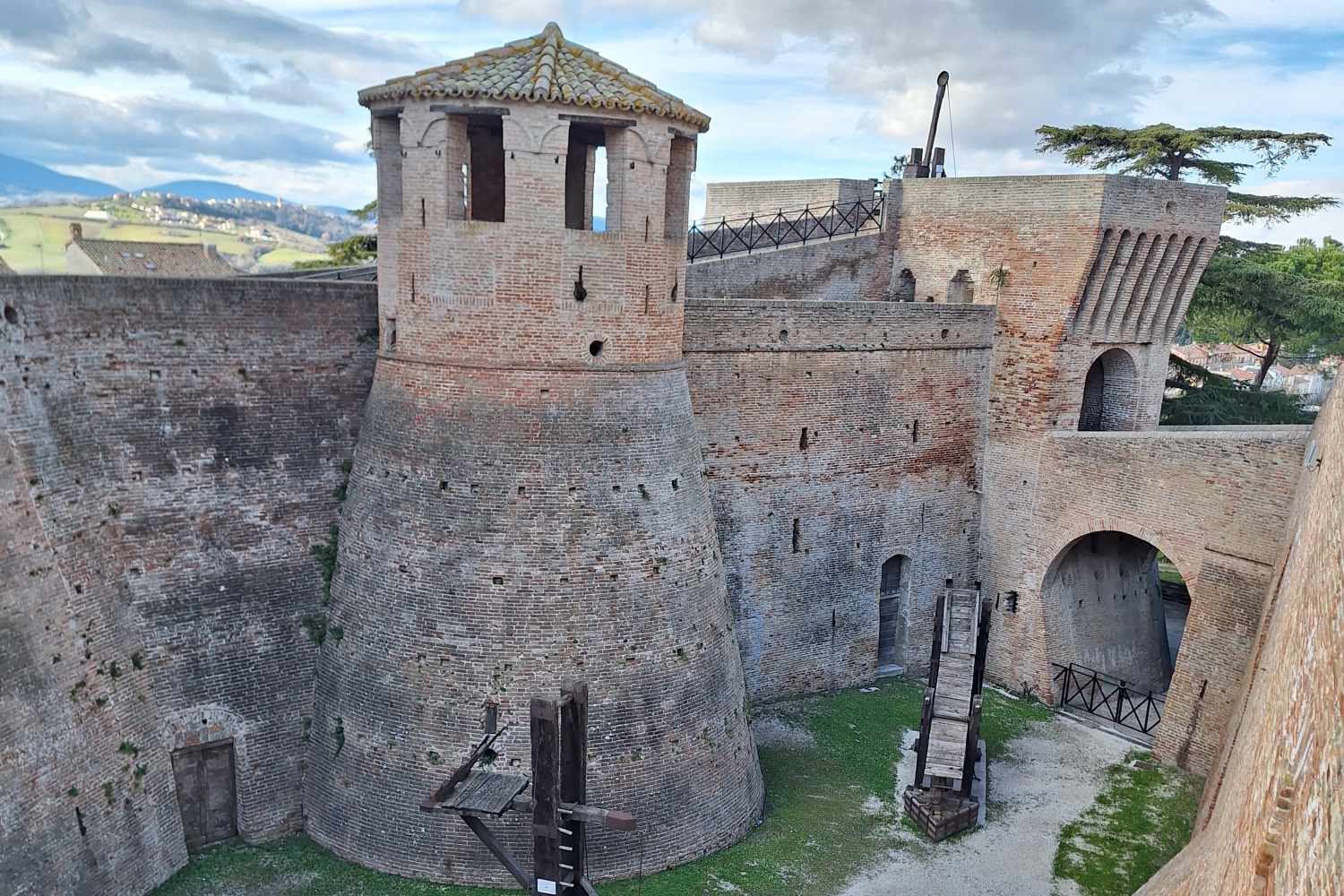
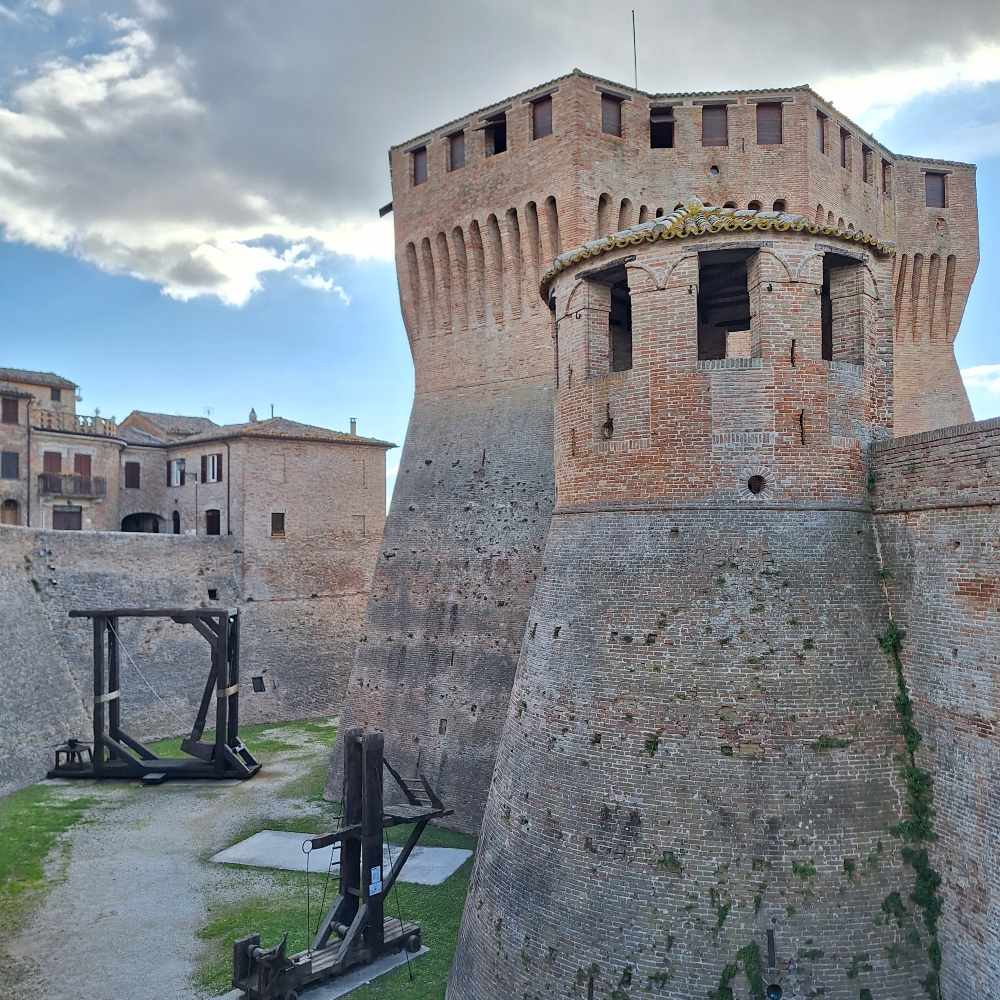
The first stop took us to Mondavio, in the province of Pesaro and Urbino. Crossing the threshold means being immediately breathless in front of the imposing Rocca Roveresca, designed in 1482 by the brilliant Sienese architect Francesco di Giorgio Martini commissioned by Giovanni della Rovere. The fortress, with its characteristic polygonal plan with ten irregular facades, dominates the central square and contains within it an evocative Museum of Historical Re-enactment, with period settings and well-preserved prisons.
@RebeccaManzi/GreenMe
We got lost in the tiny beauty of the Apollo Theater, a true eighteenth-century jewel created from a former church of San Filippo Neri, whose painted ceiling shows the Greek deity with the zither. Walking up to the moat, we crossed the Park of War Machines, admiring reproductions of medieval catapults and crossbows up close.
@RebeccaManzi/GreenMe
The most fascinating curiosity concerns the urban plan of the village: Francesco di Giorgio Martini and Leonardo da Vinci theorized the anthropomorphic model of the “Living Body”, where the Fortress represents the head, the main road the torso and the side alleys the limbs. Before continuing, we visited the Church of San Francesco, with its silent cloister and the adjoining Civic Museum, as well as the solitary Collegiate Church of Santi Pietro e Paterniano.
@RebeccaManzi/GreenMe
Cossignano: the navel of the Piceno between archeology and mystery
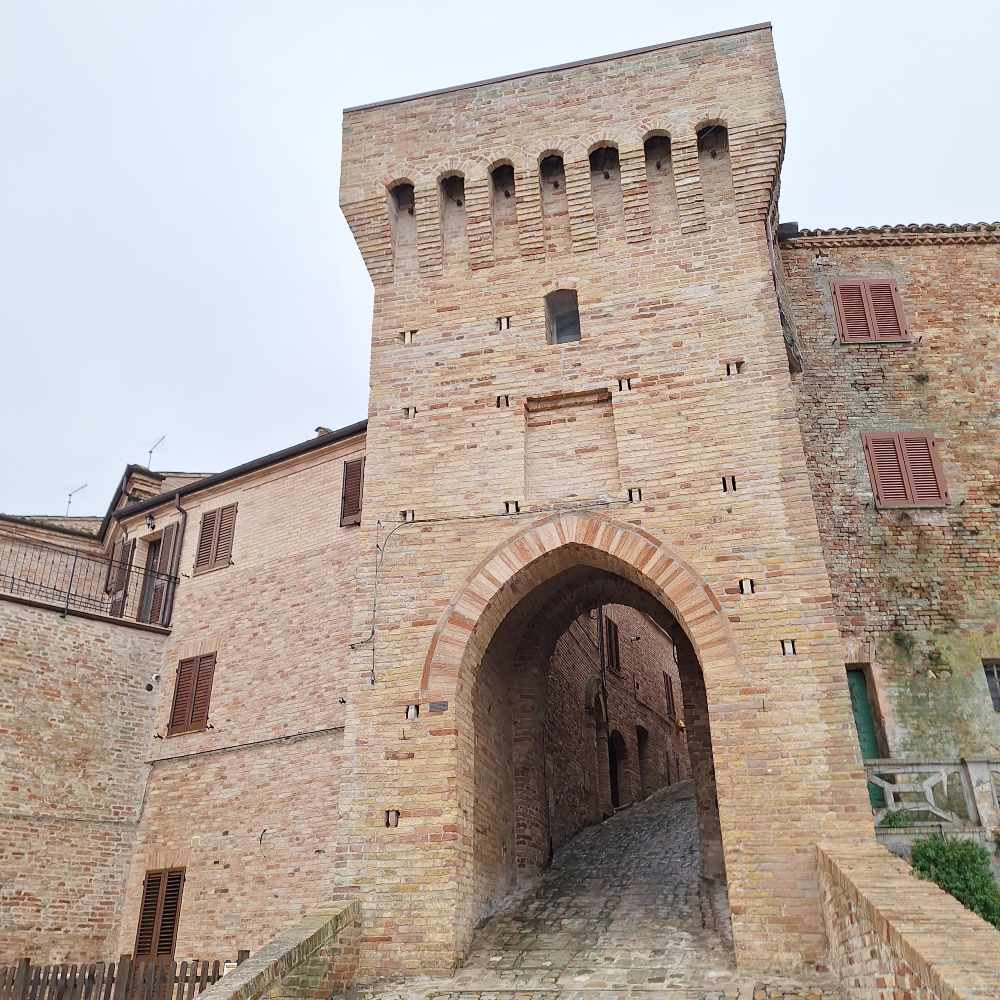
Moving south, among the hills of the province of Ascoli Piceno, we reached Cossignano, nicknamed the Navel of Piceno due to its central position between Ancona and Atri. This small village of a thousand souls has its roots in the Picene and Roman civilizations, when the noble Cossinii family transformed it into a thriving agricultural community. Crossing the medieval Porta Levante, also known as Porta San Giorgio, we were greeted by the monumental Grettù, imposing masonry niches.
@RebeccaManzi/GreenMe
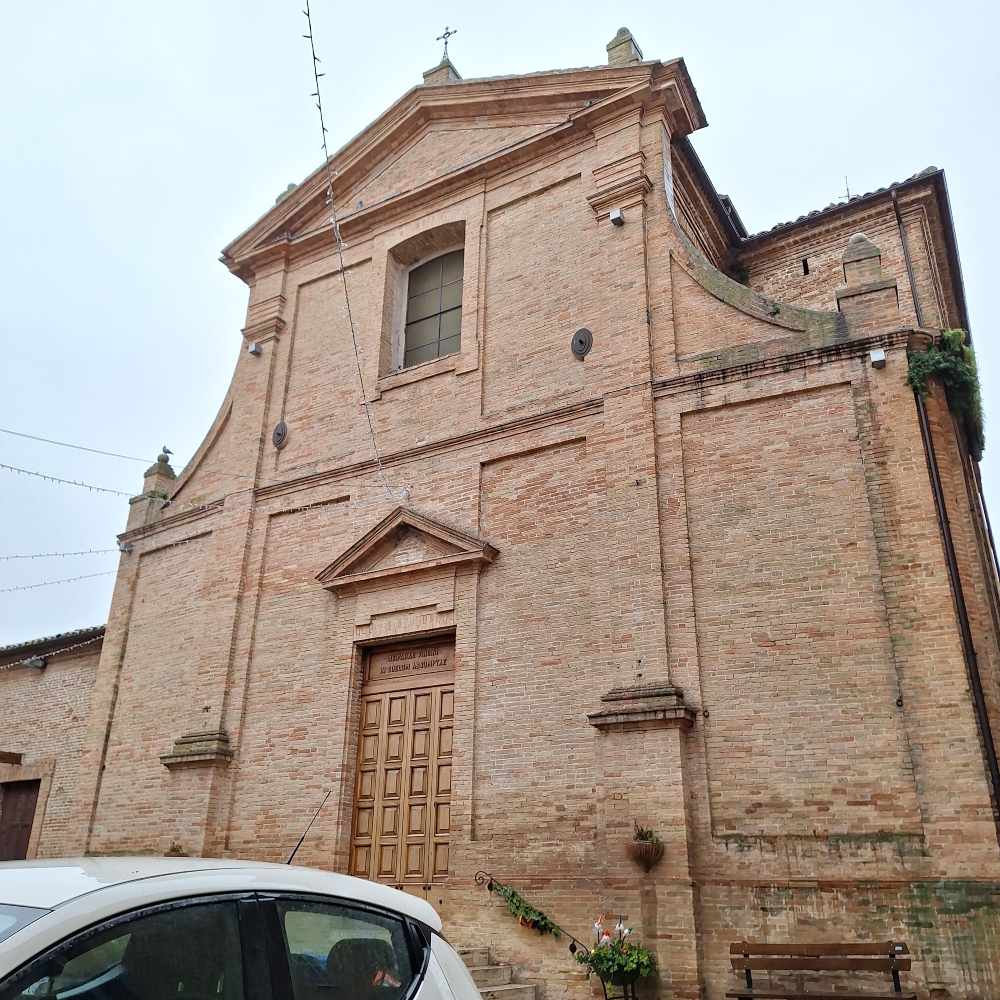
Walking along via Donna Orgilla, our attention was captured by the characteristic door of the dead at number 61, a narrow opening historically used only for the passage of the deceased or for defensive purposes. The highlight of the visit was the discovery of the Church of the Annunziata, now the Civic Museum of Sacred Art, embellished with frescoes from the Crivellesca school attributed to Pietro Alemanno, Cola dell’Amatrice and the famous altarpiece painted by Vincenzo Pagani.
@RebeccaManzi/GreenMe
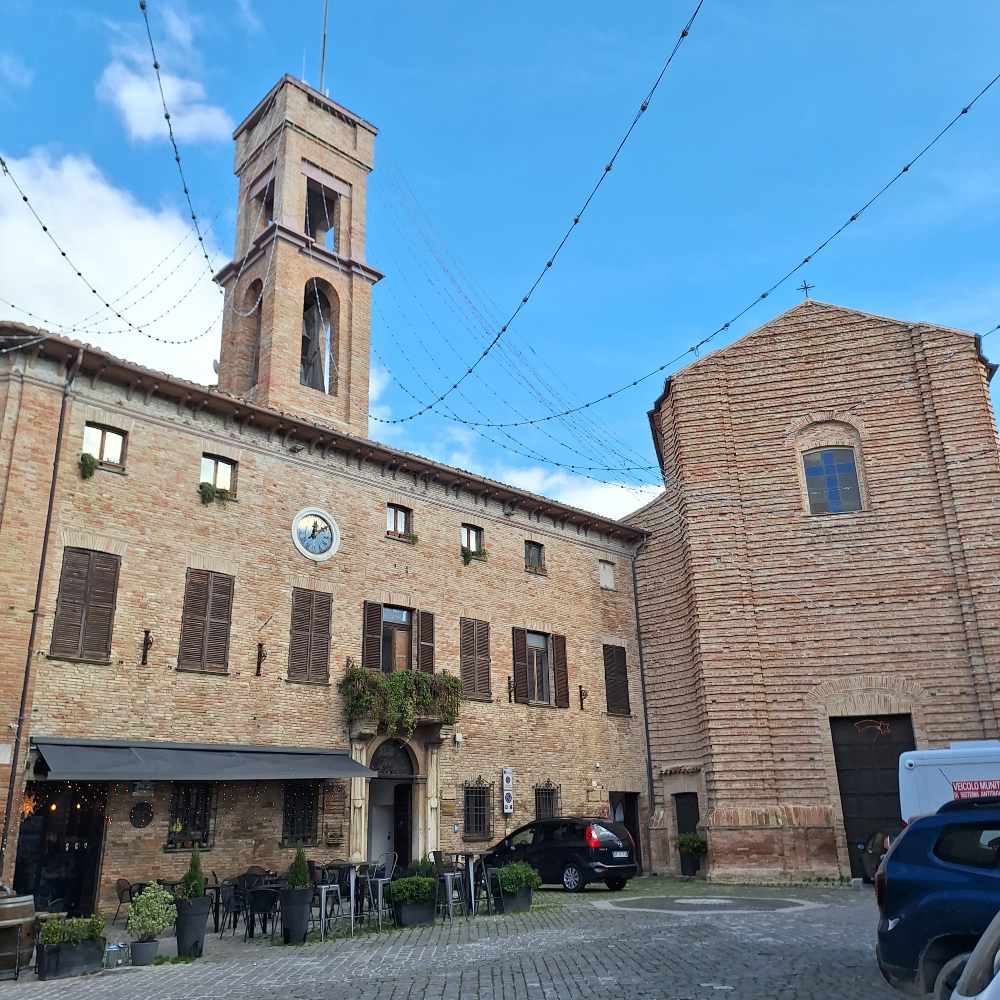
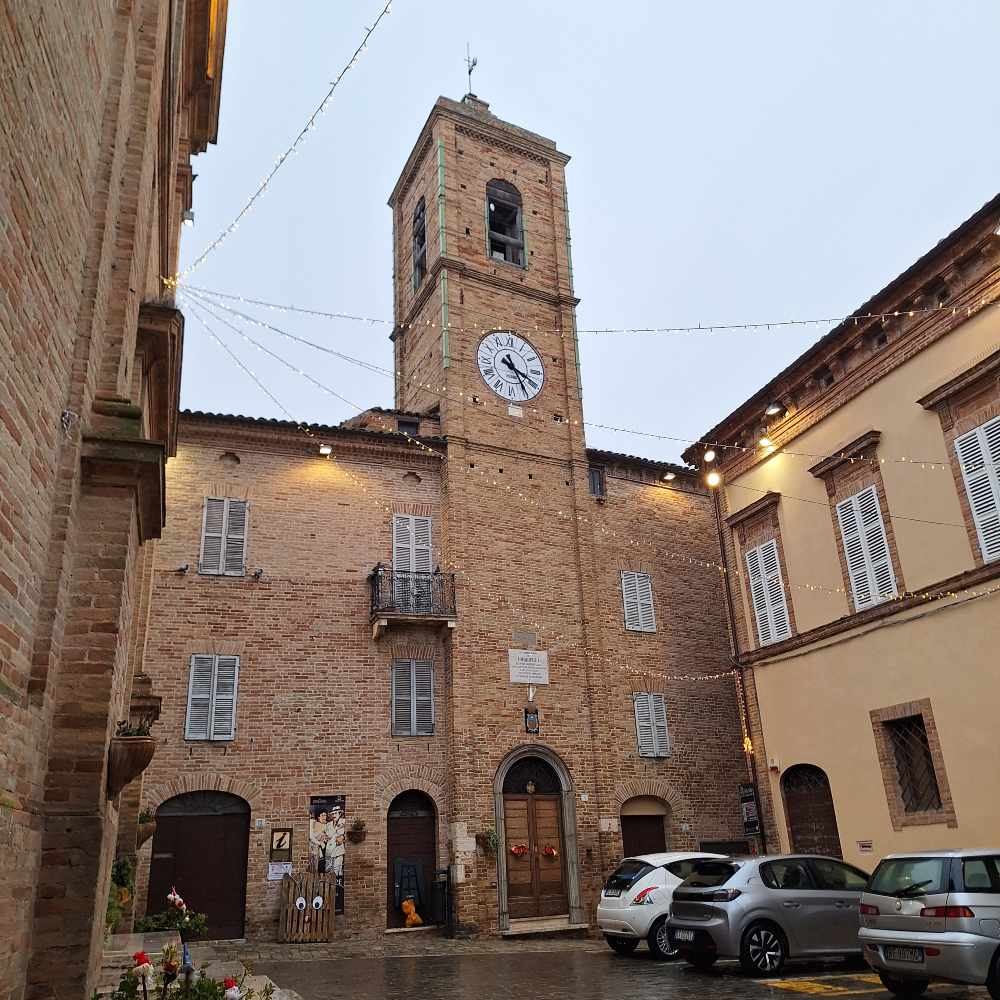
In the Town Hall, adjacent to the bell tower, you can feel the great history: here there is a shrine with the red shirt of Garibaldi’s Placido Malavolta and the precious relic of the Holy Cross donated by Pope Nicholas IV in 1289.
@RebeccaManzi/GreenMe
Offida: the art of lace making and the architecture of faith
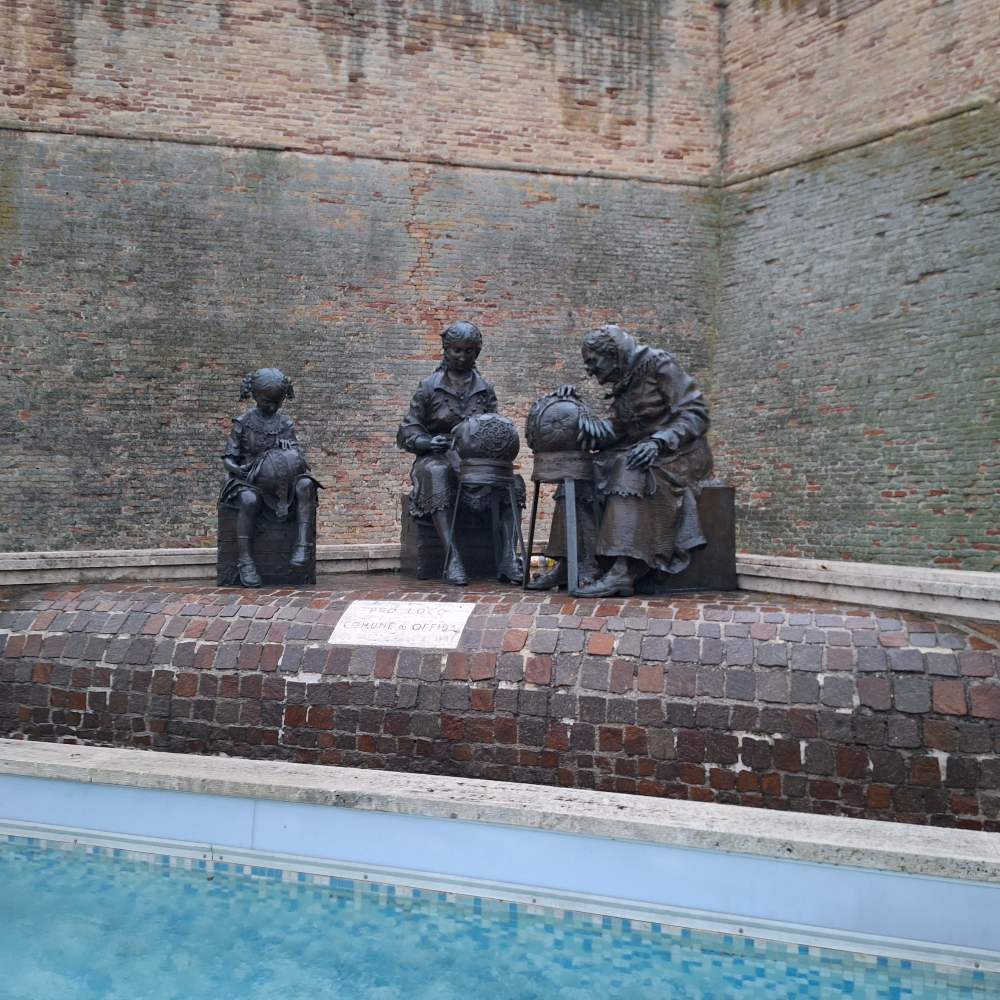
Continuing our journey in the Piceno area, the stop in Offida opened the doors to a universe made up of centuries-old artisan traditions. Welcoming us at the entrance of the fortified village we found the evocative Monument to the lace makers, a tribute to the women who for over six centuries have handed down the complex art of bobbin lace from mother to daughter.
@RebeccaManzi/GreenMe
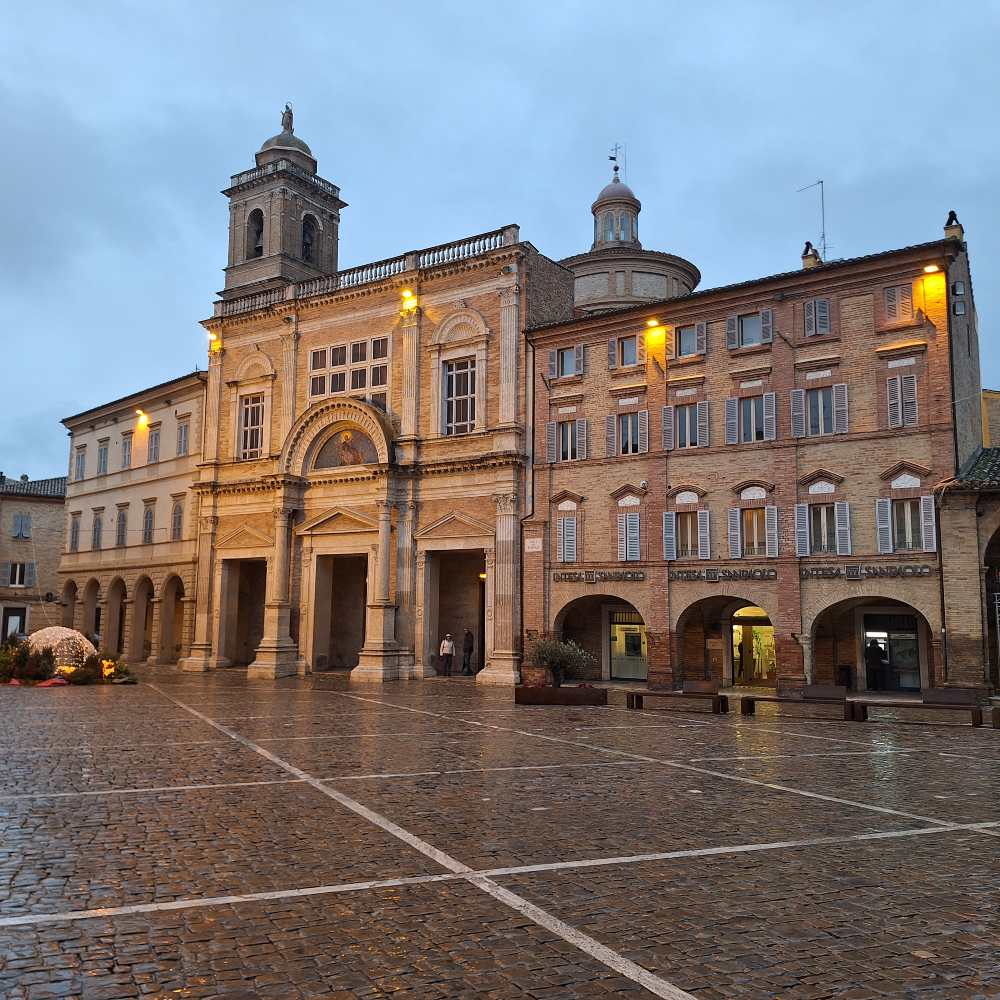
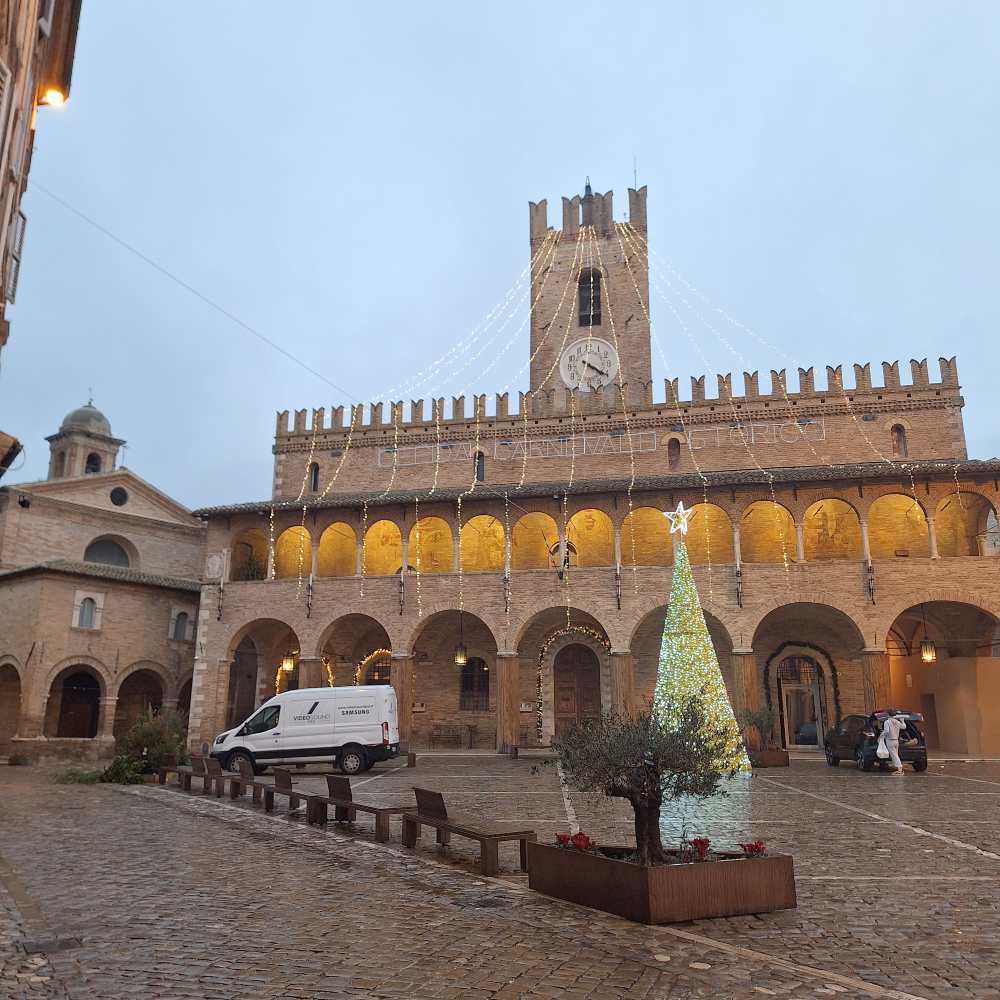
Walking along the narrow and characteristic Via del Merletto, we arrived in the scenic Piazza del Popolo, unique for its triangular plan. Overlooking the square are the fourteenth-century Palazzo Comunale, characterized by the 13-column portico, and the Serpente Aureo Theatre, a masterpiece by architect Pietro Maggi dedicated to the legend of the golden reptile.
@RebeccaManzi/GreenMe
We also visited the Collegiate Church, which houses a faithful stone reconstruction of the Lourdes cave designed by Professor Ghino Leoni. But the true gem of Offida remains the majestic Church of Santa Maria della Rocca, which dominates the valley from the top of its rocky spur.
@RebeccaManzi/GreenMe
Montecassiano: medieval geometries in the heart of Macerata
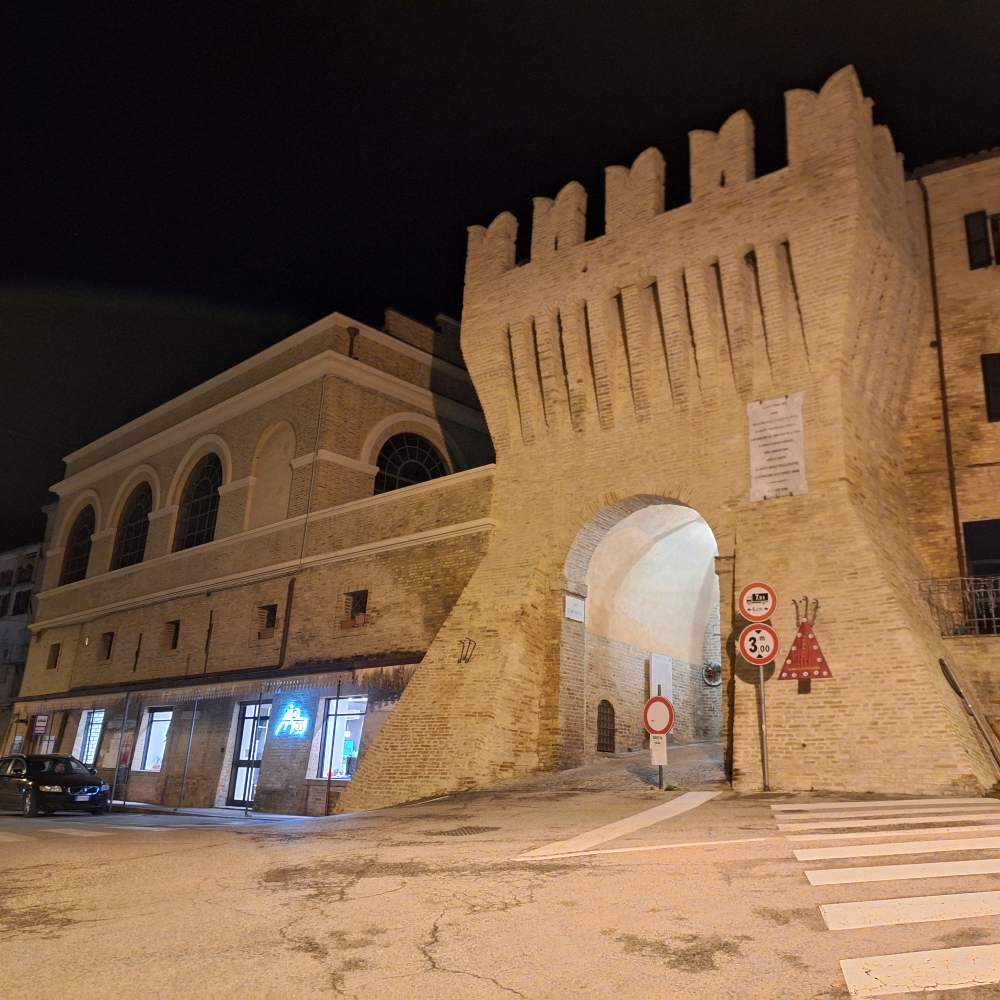
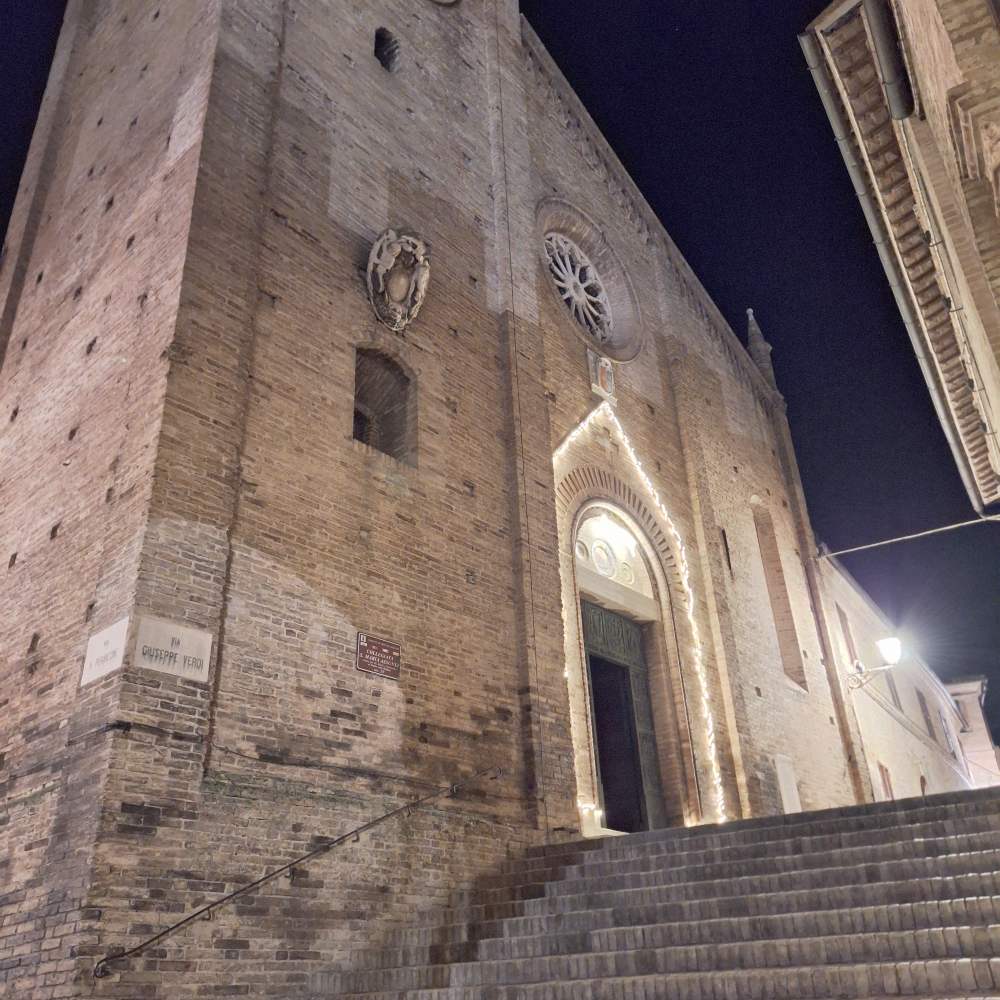
The last stop on our itinerary took us to the province of Macerata, to Montecassiano, a village with an unmistakable urban structure of concentric circles, defined as “onion leaves”. Having crossed the entrance from Porta Cesare Battisti, which still retains the signs of the ancient drawbridge, we arrived in Piazza Unità d’Italia, dominated by the majestic staircase of the Collegiate Church of Santa Maria Assunta.
@RebeccaManzi/GreenMe
Inside this sacred building we were enchanted in front of the grandiose glazed terracotta altarpiece by Fra’ Mattia Della Robbia, a seven meter high work of inestimable value.
@RebeccaManzi/GreenMe
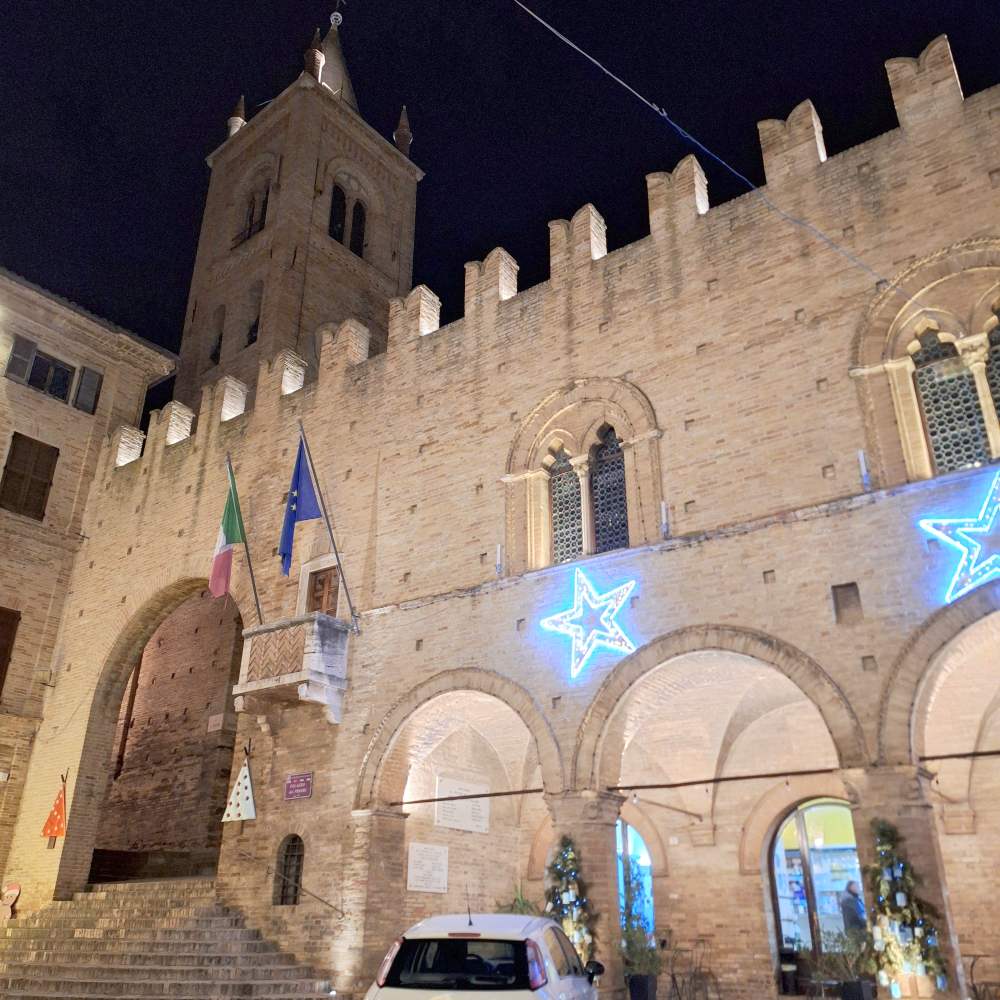
The nearby Palazzo dei Priori, with its crenellated Gothic façade revised by the architect Guido Cirilli, preserves the Roman stele of Cassia Orestina. Our walk ended between the Church of San Marco, guarded for centuries by the Augustinians and famous for the rare painting of the Madonna of Milkand the Girolamo Buratto Civic Art Gallery, which houses paintings by Ioannes Hispanus and Giovanni Cingolani.
@RebeccaManzi/GreenMe
The indelible memory of the Marche lands
Our journey ends with the awareness that these villages are not simple tourist destinations, but living guardians of the Italian identity. From the geometric shapes of Mondavio to the traditions of Offida, passing through the history of Cossignano and Montecassiano, each stone has been able to give us an authentic emotion that we will always carry with us.
