
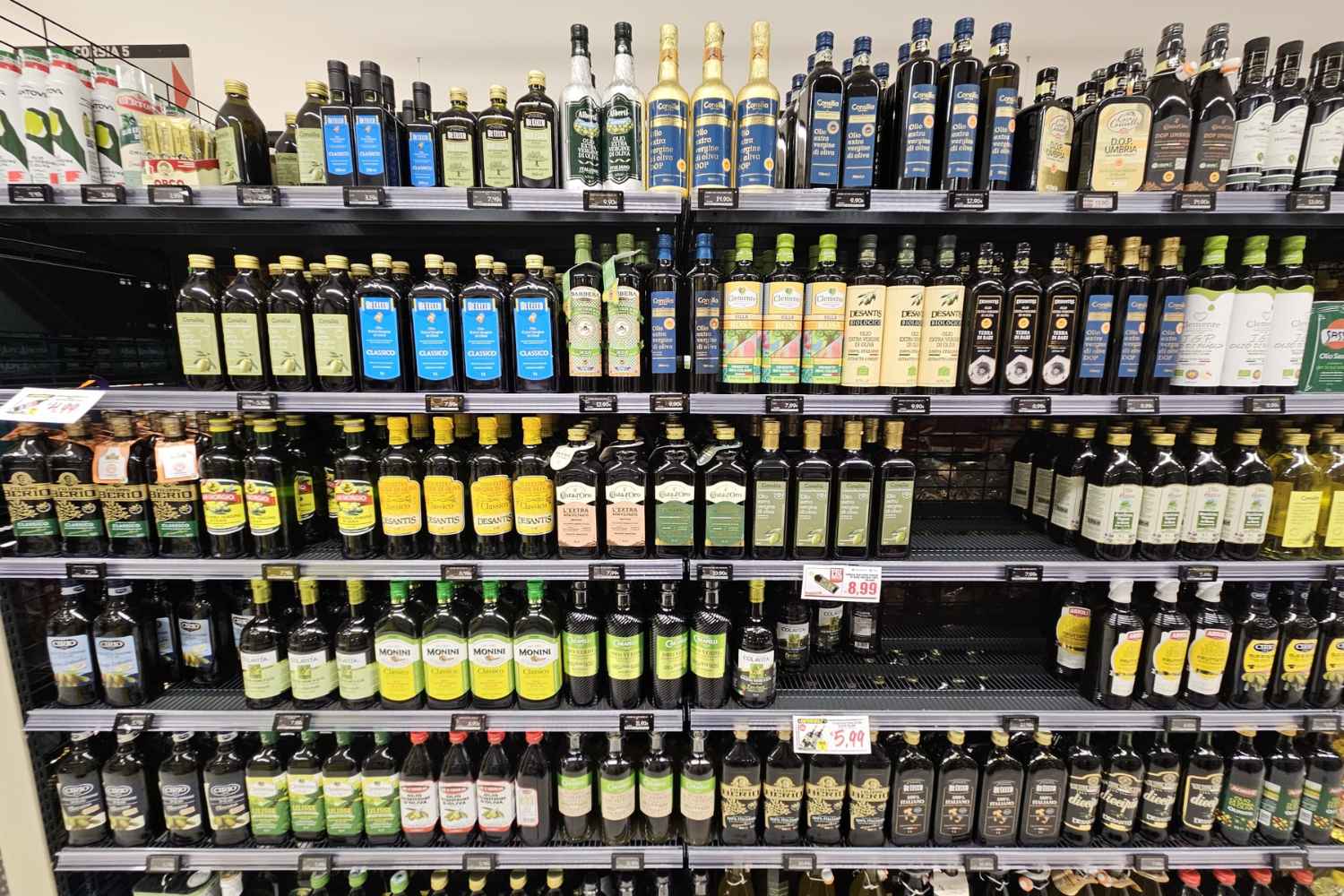
Buying a bottle of extra virgin olive oil at the supermarket may seem like one of the simplest things in the world. Then you stop in front of the shelf and realize that the possibilities are many: Italian oils, blends of oils from different countries of the European Union, products obtained with olives harvested in multiple territories, organic oils, DOP and IGP. And if what we are looking for is, specifically, an extra virgin obtained from Italian olives, we need to pay a little more attention.
For this reason we did a small investigation at the supermarket, we stopped in the oil aisle and checked the labels looking for products that declared 100% Italian origin.
Before seeing what we found, a clarification is necessary. Choosing an oil produced with Italian olives can have different reasons: supporting the national supply chain, favoring a closer origin or simply wanting to know more precisely the origin of what we bring to the table. This, however, does not mean that an Italian oil is automatically better than one produced in Spain, Greece, Portugal or other countries.
The quality of the oil depends on many factors such as the variety and quality of the olives, the cultivation conditions, the time and method of harvesting, the extraction and conservation techniques and, of course, the organoleptic characteristics of the final product. In short, provenance is important information, but alone is not enough to establish the quality of an extra virgin olive oil.
What we found at the supermarket
Looking at the bottles in the supermarket, you very easily come across oils obtained from olives from different countries. There is not necessarily anything negative, it is an foreseen possibility and the origin must be indicated according to the rules established for labelling.
The point, however, is another: if we want to buy an oil of Italian origin, we cannot simply rely on the brand we know or what the packaging communicates. The information that really matters is found on the label, where the origin of the olives and oil is indicated.
And it is precisely here that an interesting detail is discovered: the same brand can market oils of different origins. On the shelf we can therefore find, next to an extra virgin olive oil obtained from olives from several European countries, also a product of the same brand expressly declared as 100% Italian. Furthermore, the packages can be very similar to each other, making it even easier to get confused.
For this reason, it is always worth turning the bottle and reading the label, one by one. That’s where we find the information about the origin.
It is precisely starting from this indication that we went among the shelves of a supermarket in Rome, looking for extra virgin olive oils of Italian origin. And the choice, at least in the store we visited, turned out to be quite wide.
Italian oils at the supermarket
Naturally, ours is not intended to be an exhaustive list of Italian oils that can be found in the supermarket, nor a ranking or quality test, in fact we have not tasted or subjected these oils to laboratory analysis.
It is simply a survey carried out among the shelves to understand which 100% Italian alternatives were available in the store we visited.
Furthermore, the assortment can change a lot depending on the chain, the city, the period and even the individual supermarket.
Here are the oils we found:
Black Elk
Monocultivar Biancolilla organic extra virgin olive oil
@GreenMe
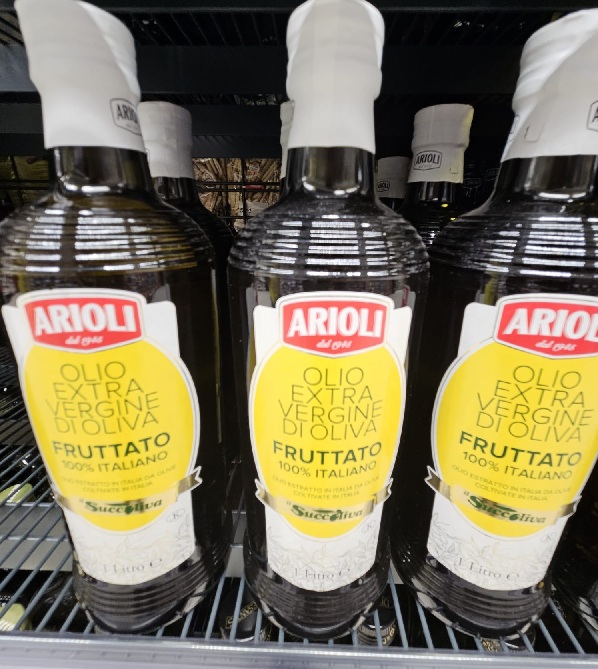
Arioli
100% Italian fruity extra virgin olive oil
@GreenMe
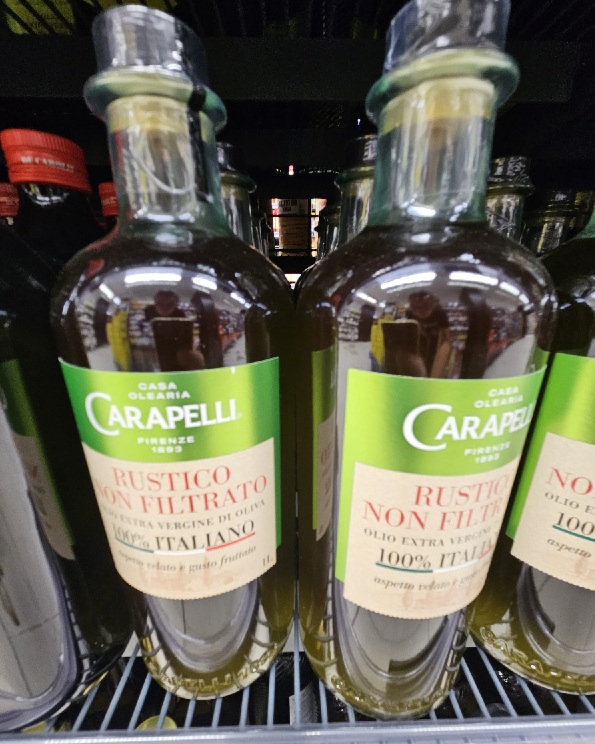
Carapelli
Rustic Unfiltered 100% Italian
@GreenMe
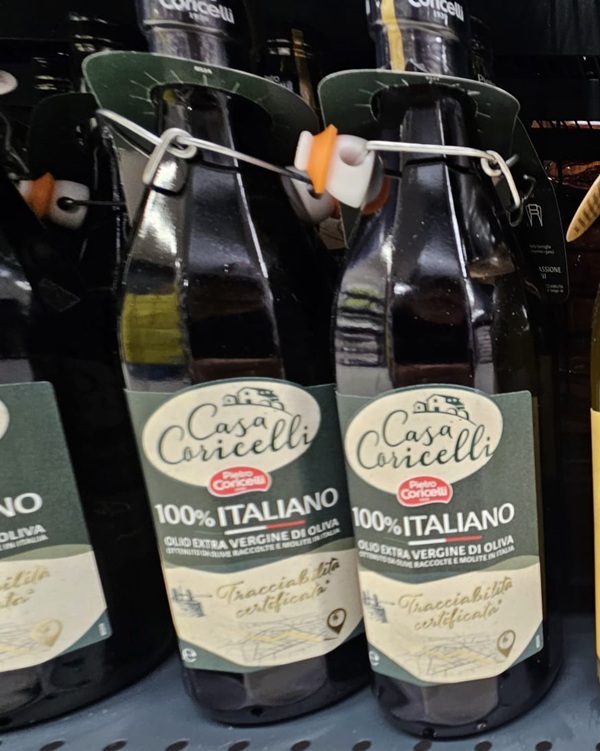
Coricelli House
100% Italian extra virgin olive oil, certified traceability
@GreenMe
Clemente PGI Organic Puglia Oil
100% Italian, 100% from a traced supply chain, cold extracted
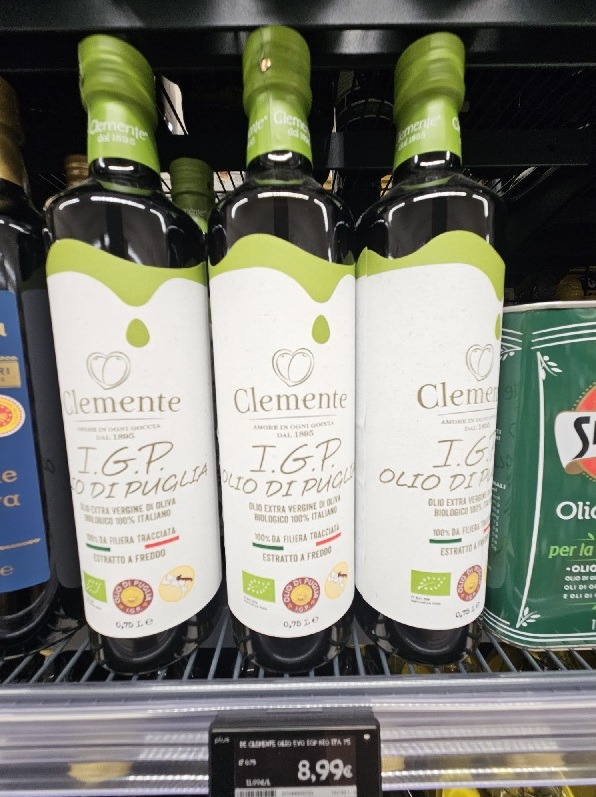
@GreenMe
Recommend Optima
Tuscan PGI extra virgin olive oil
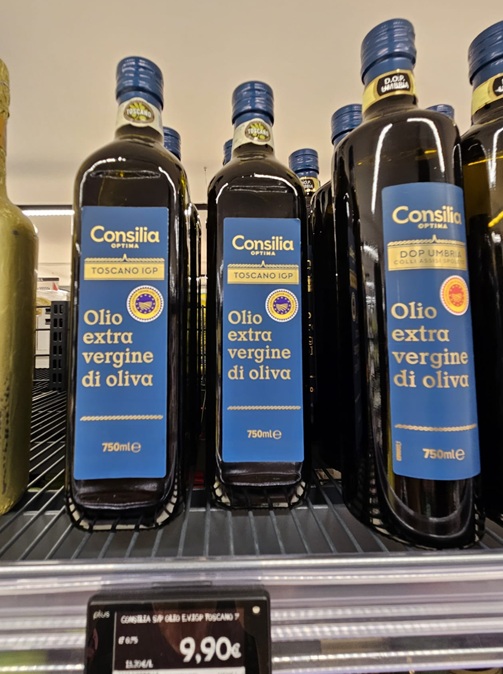
@GreenMe
Costa d’Oro DOP
Umbria Colli Assisi-Spoleto, unfiltered
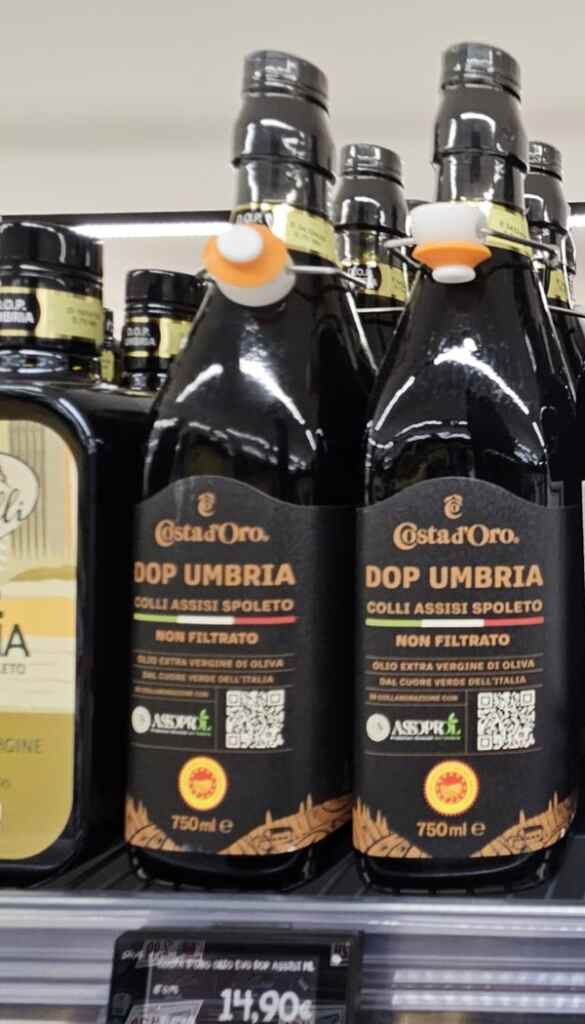
@GreenMe
Gold Coast
100% Italian Raw, unfiltered
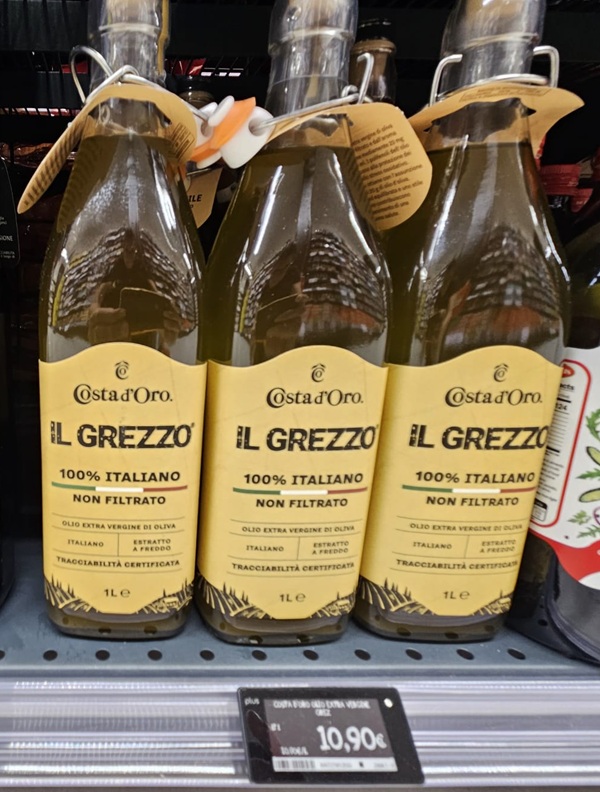
@GreenMe
De Cecco
Family selection, 100% Italian, cold pressed
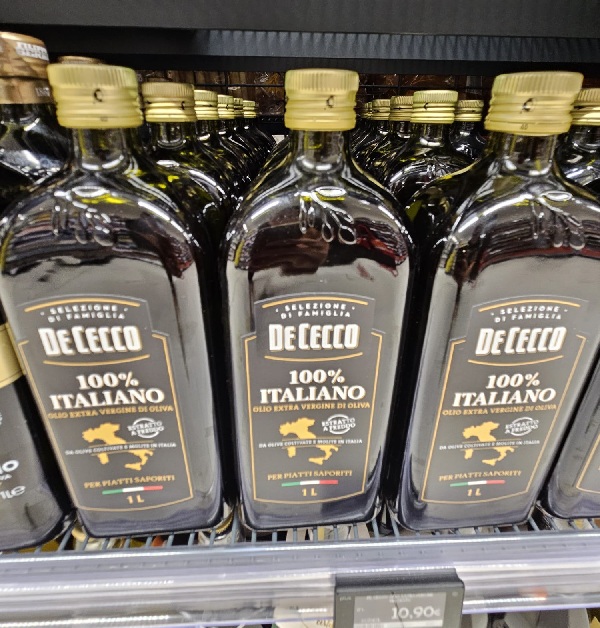
@GreenMe
De Santis organic
100% Italian organic extra virgin olive oil, cold extracted
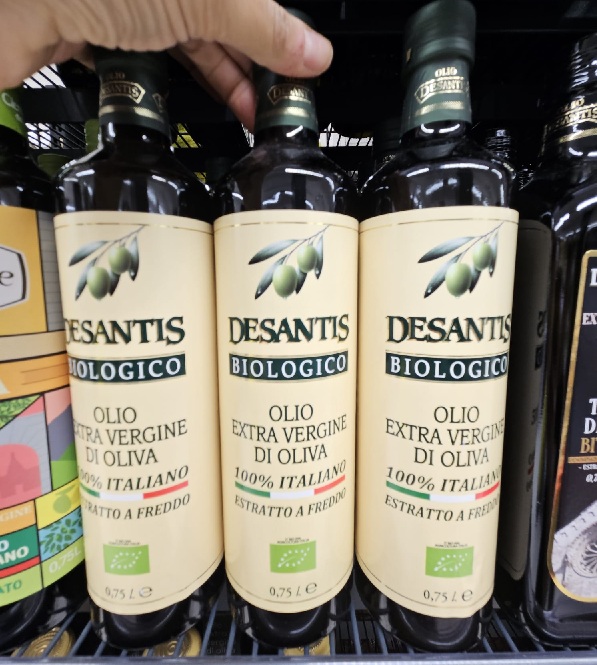
@GreenMe
De Santis – Ten More
100% Italian extra virgin olive oil
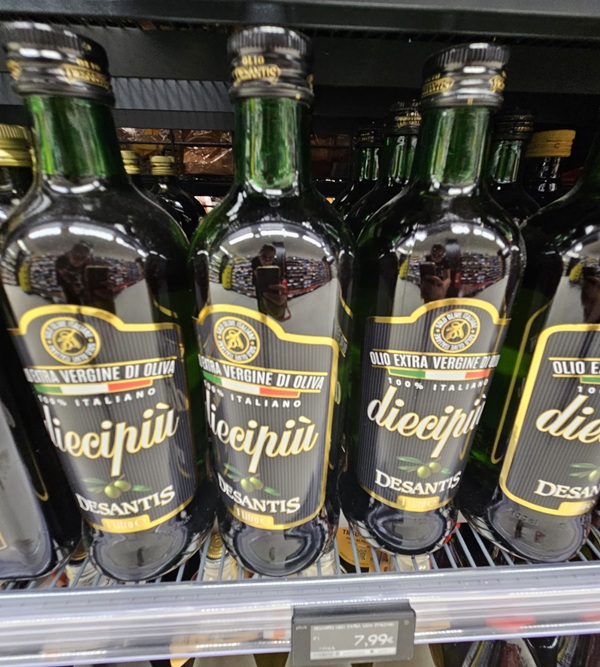
@GreenMe
Filippo Berio
100% Italian extra virgin olive oil, cold extracted
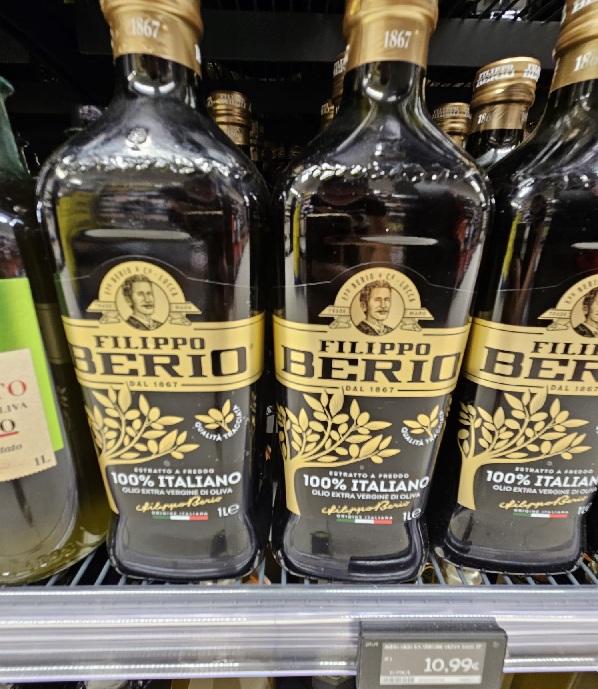
@GreenMe
Spud
Extra virgin olive oil DOP Dauno del Gargano, organic, cold extracted
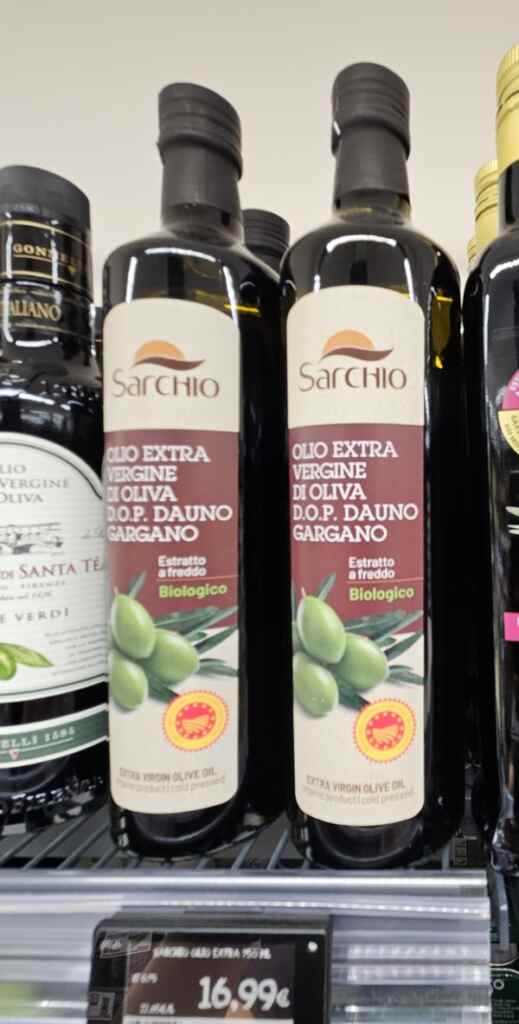
@GreenMe
Ancient Villa
100% Italian cold-produced extra virgin olive oil
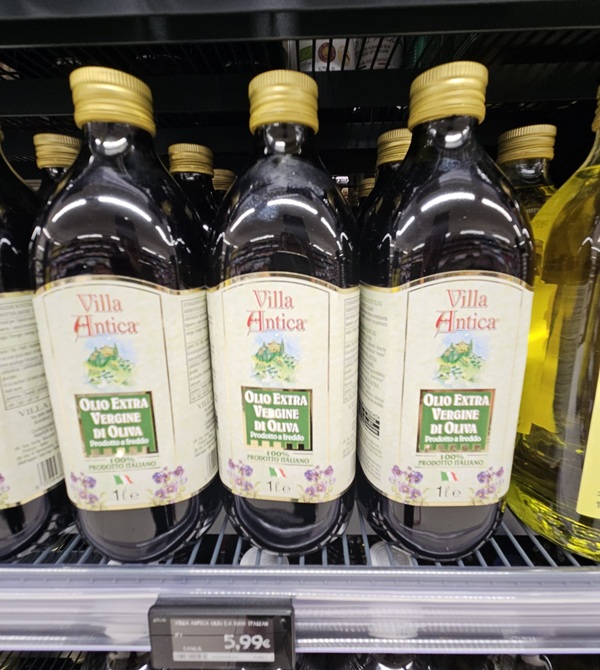
@GreenMe
How to choose oil
The first rule always remains the same: read the label and don’t rely only on the packaging. If our goal is to purchase a 100% Italian oil, we look for a clear indication of the origin and check every single bottle, even when we already know the brand.
We can then evaluate other elements – for example DOP or PGI certifications, organic, cultivar, production area, extraction method, format and price – depending on what we consider most important.
Because when faced with a shelf full of very similar bottles, dedicating a few extra seconds to reading the label can make a big difference. Not necessarily to find “the best oil”, but to buy the one that really corresponds to what we are looking for.
