
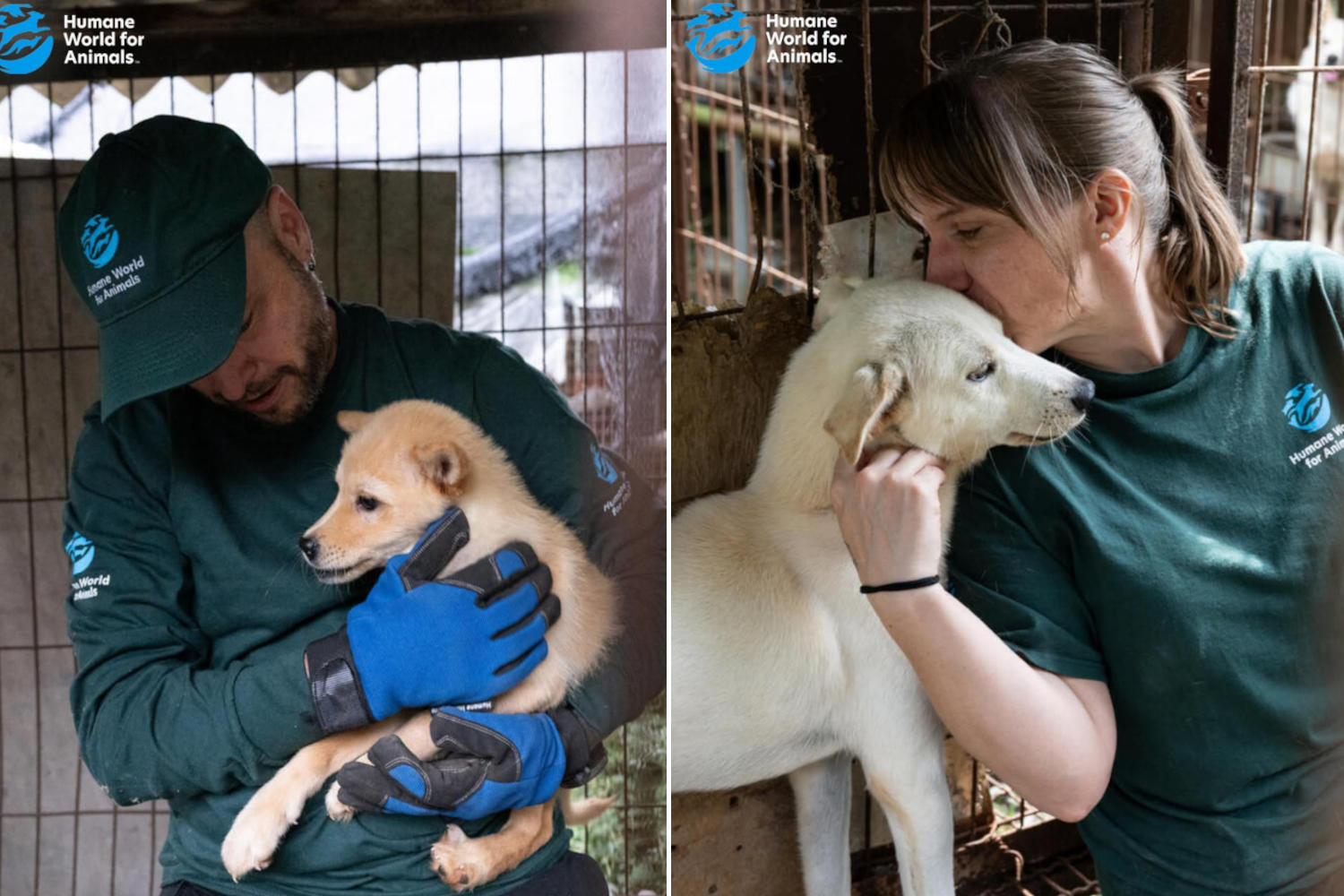
A few months after the planned total ban on dog meat consumption comes into force on February 7, 2027, South Korea is starting to turn the page on one of the darkest pages of its recent past. An unmistakable signal of this epochal change comes from the latest major intervention conducted by the organization Humane World for Animals, which brought 70 dogs to safety from a breeding farm located in Gangjin.
The facility, run by an 80-year-old man and once capable of slaughtering up to 1,000 animals a year, was in bleak conditions amidst rusty cages and bone remains. Among the dogs rescued thanks to a citizen’s report and the subsequent agreement with the local authorities are Jindo, a German shepherd and various crossbreeds, including Corgi, Husky and Spitz. This operation ideally closes a ten-year cycle in which the association has saved almost 3,000 animals from death in the Asian country, offering them a second chance at life.
The balance of the transition and the future of international shelters
The disposal of the farms responds to the dictates of the Special Act on Ending Breeding, Slaughter and Distribution of Dogs for Consumption, the law approved unanimously by the National Assembly in January 2024. The data provided by the Ministry of Agriculture, Food and Rural Affairs updated in May 2026 certifies that 82% of the initial 1,537 structures have already closed their doors, reducing the active centers to 272.
Nonetheless, the overall picture highlights dramatic critical issues: out of approximately 394,000 dogs registered in abandoned farms, just 0.3% – equal to just over 1,100 specimens – managed to save themselves through adoption or shelters, while the vast majority were unfortunately destined for slaughter or transferred elsewhere.
The last 70 dogs released represent the last survivors of an industry now in decline. After leaving South Korea from Incheon International Airport, the animals were transferred to the United States and Canada, where they will undergo a medical recovery process to be welcomed by new families. With the conclusion of this historic mission on Korean soil, the association will shift its scope to monitoring legislation and combating illicit trafficking in other areas of the Asian continent.
