
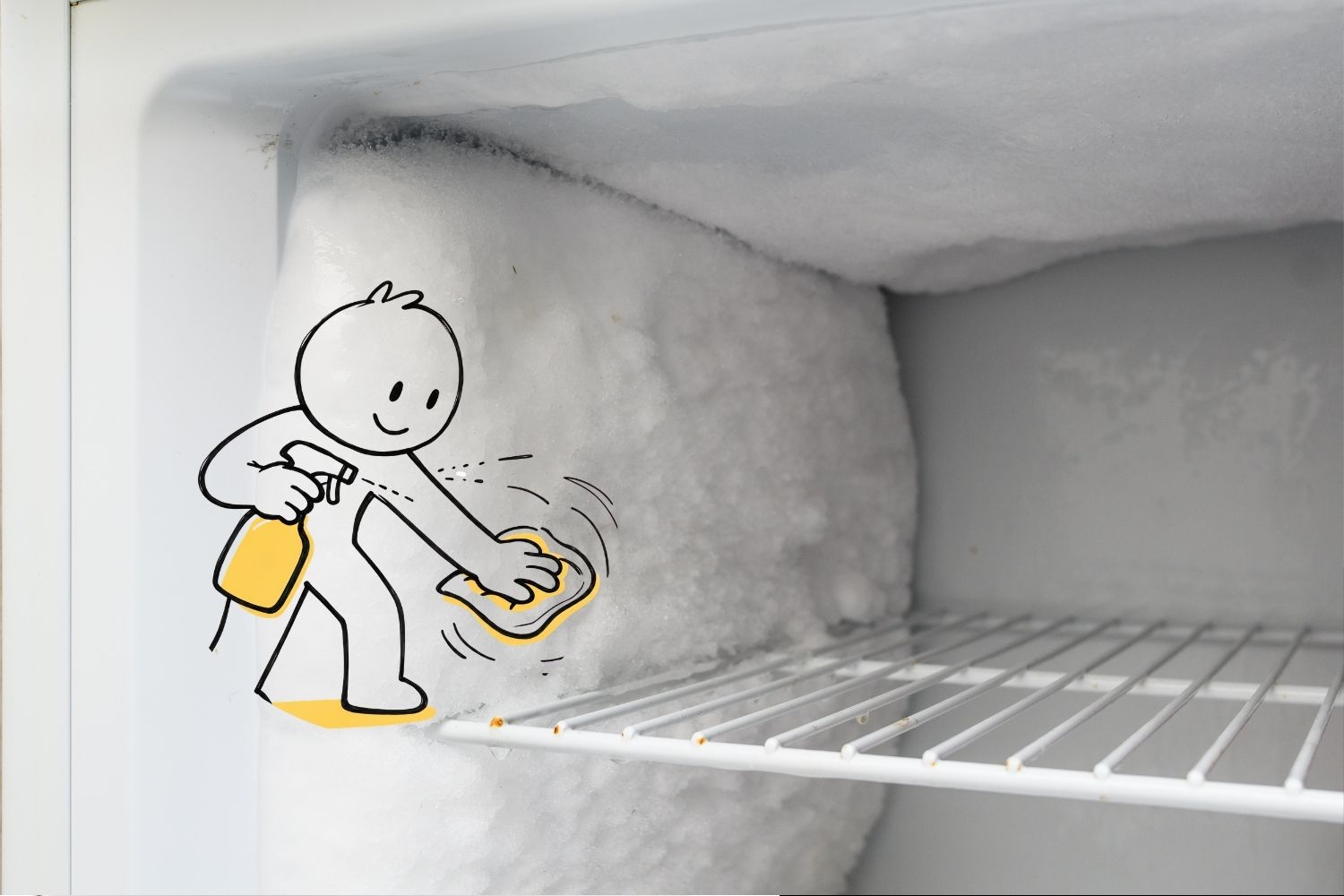
Between three and five millimeters is the thickness beyond which, according to the Electrolux user manuals, frost in the freezer ceases to be a simple aesthetic nuisance and becomes yet another household chore to complete. In the United States, the federal ENERGY STAR program moves the bar a little higher, to a quarter of an inch (about six millimeters), and adds a detail that almost sounds like a joke: manually defrosting freezers consume half as much as automatic ones, but the savings only come if they are defrosted regularly. With a static freezer, without the no frost function, sooner or later you have to empty it, the point is to do it without fish, meat and vegetables spending the afternoon “sweating” on the kitchen table.
Where does ice come from?
Every time the door is opened, warmer and more humid air from the surrounding environment enters, so the vapor it contains settles on the cold surfaces of the evaporator and freezes there. An experimental study published in the journal Thermo describes the effect on two fronts: the frost acts as an insulator between the evaporator and the air and narrows the flow passages, with the result that the heat exchange worsens. In short, the compressor works harder to obtain the same cold. A group of researchers measured how much more when they subjected a domestic freezer to periodic openings at 32 degrees and 85% humidity: between 220 and 270 grams of frost accumulated in the compartment, with consumption increasing by 7.6-11.2% compared to the phase with the door closed.
The cold is put aside the day before
The game to save frozen foods is played well before unplugging. For example, Electrolux manuals recommend lowering the temperature about twelve hours in advance, so as to accumulate a cold reserve, Whirlpool, on its website, indicates setting the coldest level at least six hours in advance and then wrapping the food (using blankets or sheets of newspaper) in a cooler bag. Then you turn off the appliance, empty the compartment and transfer everything into a thermal bag with the cooling tiles, with the packages tightly packed together. The principle is the same that the US Department of Agriculture applies to blackouts: a full and closed freezer maintains the temperature for about 48 hours, half full for about 24. The frozen mass shields itself, as long as you don’t reopen the bag every ten minutes to check.
Hot water yes, knives and hairdryer no
To speed up melting, the manufacturers indicate only one shortcut, that is, a container of hot water placed inside the compartment, with the door open, with the pieces of ice removed as they come off. It is different to pour boiling water directly into the drawers or onto the walls, as many online guides suggest (there is no trace of this practice in the manuals consulted) and the same manuals prohibit spraying water or using steam for cleaning. In this regard, the DIY chain Lowe’s warns of a possible risk: a hot pan on a frozen glass shelf can cause it to shatter. As regards the tools to be used, the instructions are even clearer. No knives, forks or sharp metal utensils, which can puncture the evaporator and damage the refrigeration circuit, at most a plastic spatula, which some models include as standard. As for the hairdryer, often presented as the five-minute trick, it should be categorically excluded, like any electrical device not recommended by the manufacturer. A power appliance above a puddle of water, moreover, does not need too many comments.
Cleaning and restarting
Once the ice has melted, the compartment should be washed with warm water and a neutral detergent, as prescribed in the manuals, or with a bicarbonate solution. Then you need to dry carefully, because every drop left will become the next frost. The advice to spread a thin layer of vegetable oil on the walls to slow the formation of ice is also circulating online, even if none of the manuals consulted mentions it and there are no studies proving its effectiveness. Electrolux suggests turning the freezer back on and waiting about three hours before putting the food back in, the time needed for the compartment to return to the right temperature.
If anything has softened
The common fear is that a slightly soft frozen food should be consumed immediately. The US Department of Agriculture’s guidance is less drastic: food that still contains ice crystals, or is at 4 degrees or below, can be refrozen safely, although the quality may suffer. It must be evaluated piece by piece, and anything that has remained above 4 degrees for more than two hours must be thrown away. Additionally, the temperature increase during defrosting can shorten the shelf life of products, a good reason to use those before others.
