
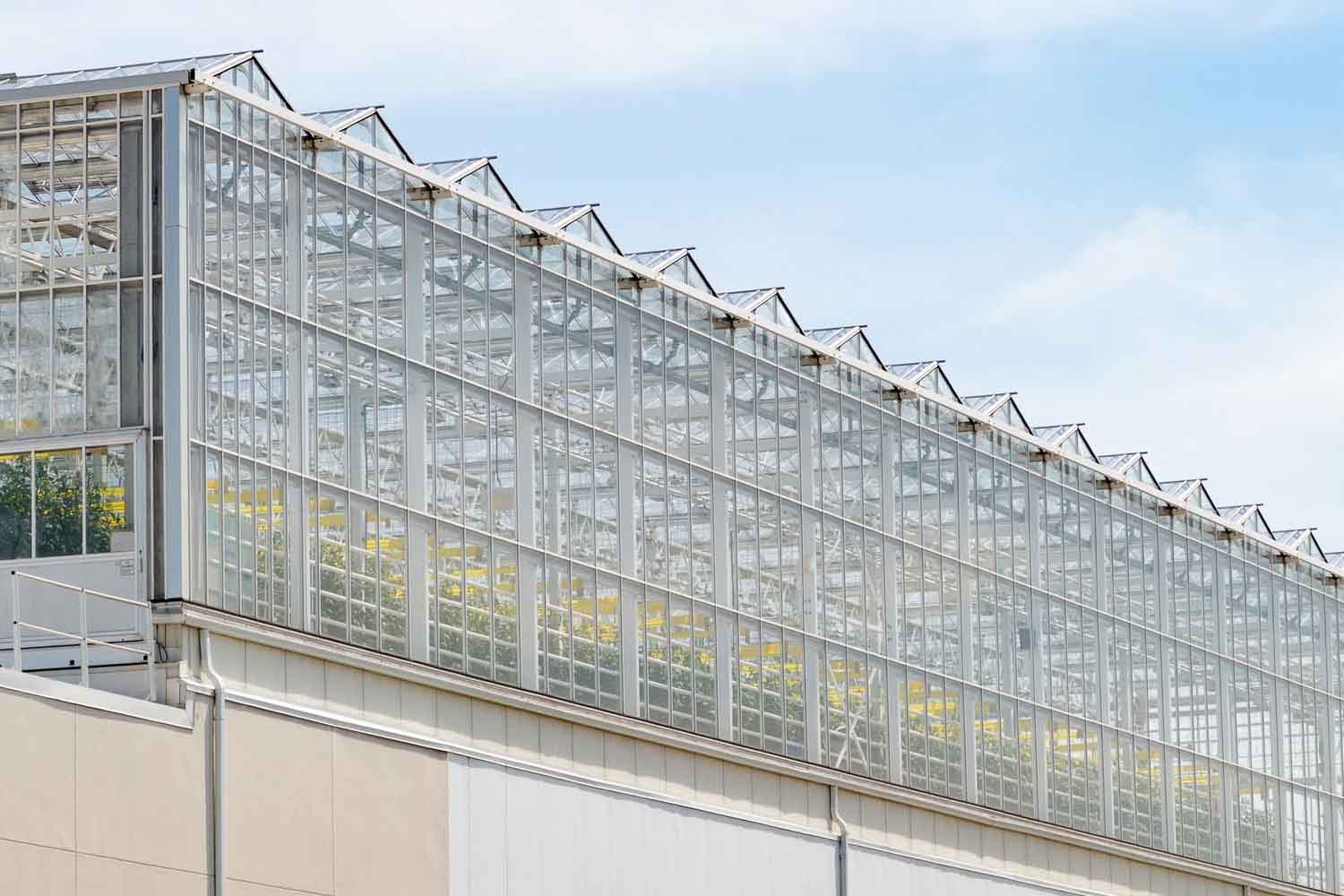
Above an old Sears warehouse in Montreal there are 15,217 square meters of glass, pipes, tomatoes, cucumbers and eggplants. It is the largest rooftop commercial greenhouse in the world according to Guinness World Records: 163,800 square feet in the Ville Saint-Laurent neighborhood, completed in 2020 where previously there was, quite simply, an industrial rooftop.
It was built by Lufa Farms, a company founded in Montreal in 2009. Its first commercial rooftop greenhouse opened in Ahuntsic in 2011 and occupied approximately 2,880 square meters. That of Ville Saint-Laurent is more than five times as much and, once fully operational, it doubled the company’s production capacity. The estimate stated at the time was enough to serve the equivalent of around 10,000 families, around 2% of the city’s households according to Guinness.
An industrial roof transformed into agricultural land
The choice of the roof first of all solves a rather concrete problem: finding space to grow within a city without taking up new land. The Ville Saint-Laurent greenhouse uses an existing building and concentrates production mainly on climbing and vertical crops. Tomatoes, cucumbers and aubergines climb towards the glass instead of spreading across acres of land on the edge of the city.
It’s the grown-up version of an experiment that began fifteen years ago. The first Lufa greenhouse measured 31,000 square feet; then came Laval in 2013, Anjou in 2017 and finally the gigantic Saint-Laurent plant. The principle has remained the same: use urban surfaces that normally serve above all to catch sun, rain and snow. Not exactly the most promising agricultural resume.
The water makes more than one turn
The interesting part is also found under the plants. Rainwater and water from melting snow are collected and integrated into a closed-loop hydroponic system. Irrigation water and nutrients are filtered and recirculated instead of being discharged after a single use.
According to data published by Lufa Farms, this system allows you to save more than half the water compared to a greenhouse that does not recirculate. It is a much more precise comparison than the generic “hydroponics consumes very little water”: it depends on the system used and, above all, on how many times that water is recovered.
The roof itself also enters into the energy balance. The heat coming from the building below helps to keep the temperature of the greenhouse higher, while the double glazing and two sets of thermal curtains reduce losses. According to Lufa, its greenhouses require about half the heating needed by similar structures built at ground level.
However, this does not make the structure self-sufficient from an energy point of view: on the coldest winter nights the company claims to also use high-efficiency heaters powered by natural gas. A less photogenic detail than the cherry tomatoes suspended above Montreal, but important enough to understand how the system really works.
Wasps arrive against aphids
Then there are the smaller workers in the greenhouse, who are decidedly less likely to be unionized. Lufa uses biological control of harmful insects instead of relying on synthetic pesticides: among the organisms introduced there are also parasitoid wasps used against aphids.
When biocontrol is not enough, the staff directly checks the crops, identifies the affected plants and removes the compromised ones. It is high-tech agriculture, therefore, but with part of the work entrusted to insects that do exactly what they would do elsewhere: eat or parasitize other insects. Only with a more elegant job description.
Another greenhouse arrived in 2024, smaller and more technological
Meanwhile Lufa continued to occupy rooftops. In 2023, an indoor farm with hydroponic cultivation on a single level for leafy vegetables and aromatic herbs also opened in the same Ville Saint-Laurent building. The fifth greenhouse built by the company then arrived in 2024, above the Marché Central shopping complex.
It measures 127 thousand square feet, approximately 11,800 square meters, and was built above the buildings that house Walmart and Decathlon. It is smaller than the record holder, but Lufa calls it its most advanced greenhouse: it uses high intensity LEDs, double insulating glass, a diffuser glass cover and blackout curtains.
The project has also grown outside the greenhouses. Lufa Farms has over 400 producers and partner companies and around 25 thousand baskets shipped every week through its online marketplace. The products grown on the roofs end up inside, but also those of farmers, bakers and other local producers. In short, the urban farm has also become a distribution network.
The company’s stated vision remains that of a city full of rooftop farms. For now, its largest example is still there: over 15 thousand square meters of crops above a former Sears warehouse. Farmland that, on maps, still looks like just a building.
