
From 1970 to 2022, monitored wild vertebrate populations worldwide declined by an average of 73%. It is the central data of the WWF Living Planet Report 2026, developed by the Zoological Society of London (ZSL), which updates the picture of global biodiversity through thousands of time series. The photograph is worrying, but it also tells a less uniform reality than the average suggests: some populations resist, others increase and various conservation programs have already produced measurable results.
The report is based on the Living Planet Index, an indicator that analyzes changes in the abundance of animal populations over time. The 2026 edition includes 35,803 trends relating to 5,790 vertebrate species. The average decline is in line with that reported in 2024, but the new assessment integrates additional data and a longer time series.
Fresh water, the heaviest decline
Freshwater environments recorded the greatest decline, equal to 85%. This is followed by terrestrial ecosystems, with a decrease of 69%, and marine ones, with 59%.
The pressures most frequently associated with decline include habitat loss and degradation, followed by species overexploitation, climate change, pollution, invasive species and disease. Factors that are intertwined with the way in which food production, the energy system and the financial system are organised.
The WWF underlines that intervening on individual species is fundamental, but it is also necessary to change the economic systems that fuel these pressures. An objective that requires the implementation of international commitments already signed, from the Paris Climate Agreement to the Kunming-Montreal Global Framework for Biodiversity.
Tigers and elephants, conservation delivers results
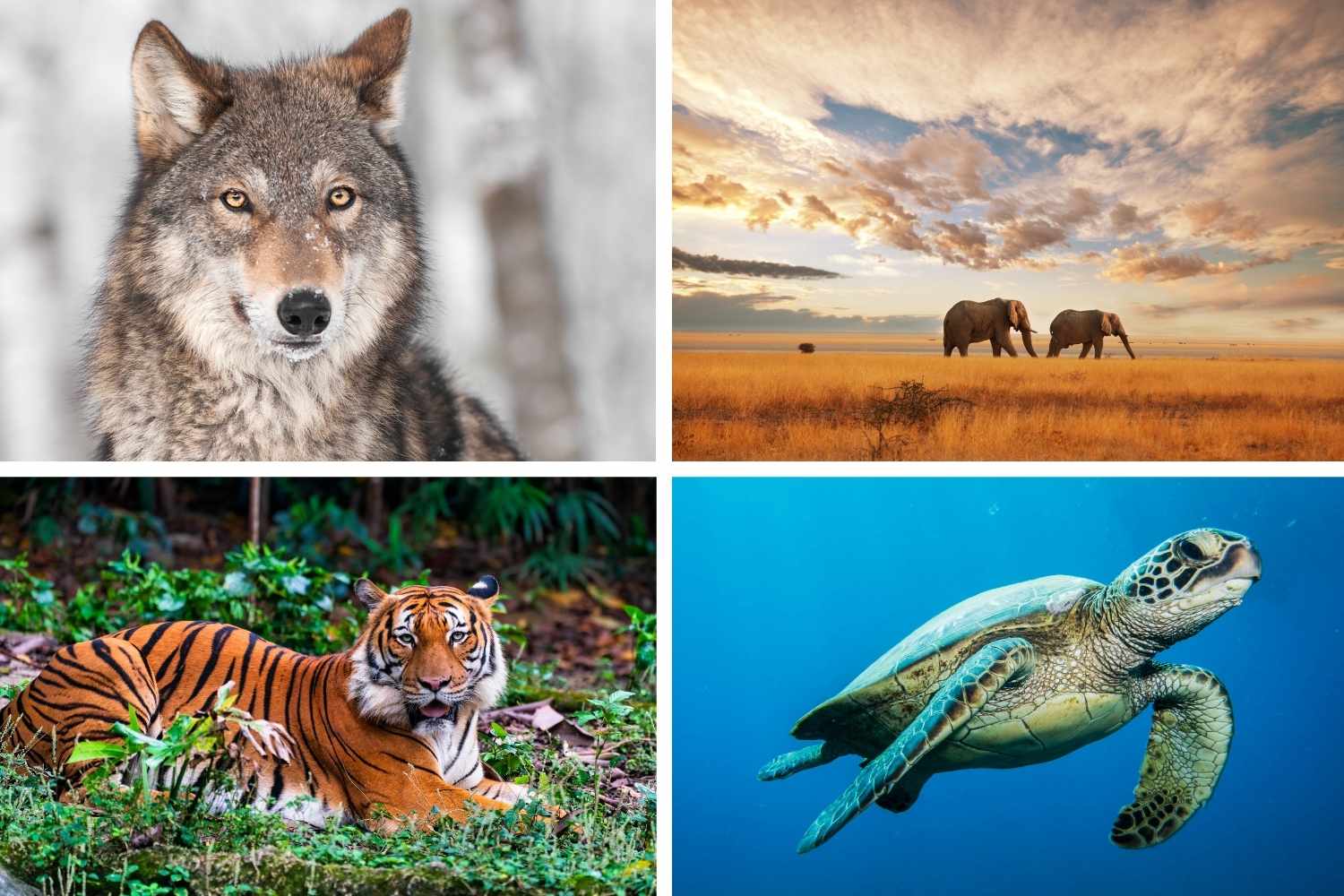
The global picture leaves room for positive signs. About half of the populations considered by the Living Planet Index are stable or increasing. The report highlights, in particular, the recovery of tigers, African savannah elephants, green turtles and bluefin tuna.
Between 2010 and 2025, the global wild tiger population grew by more than 70%, from approximately 3,200 to 5,700 individuals. The result is linked to the collaboration between governments, local communities and organizations involved in protecting the species. However, the tiger remains endangered and occupies less than 8% of its historical range.
African savanna elephants also show encouraging signs in southern Africa, where around 293,000 individuals live in stable or growing populations in some areas. The availability of extensive and connected habitats, community resource management and anti-poaching measures contribute to these results. Problems related to conflicts with human activities and the continuity of animal movements remain open.
@Canva
Sea turtle nests are growing in Italy
The recovery of fauna also concerns our country. According to Luciano Di Tizio, president of WWF Italy, 30% of Italian vertebrates and 25% of Mediterranean marine animal species are at risk of extinction. However, there are protection experiences that indicate a possible reversal of the trend.
The wolf, close to extinction in the 1970s, has regained much of its historic range in Italy. The Sardinian deer has emerged from the risk of extinction thanks to conservation interventions. Bonelli’s otter and eagle also show signs of recovery.
A particularly significant fact concerns the sea turtle Caretta caretta. The WWF Italy network, active for over 25 years together with researchers, institutions, fishermen and volunteers, monitors the coasts, protects the nests and rescues specimens in difficulty. The nestings monitored by the network went from 17 in 2017 to 338 in 2025.
These are results that require continuity, resources and collaboration with local communities. At an international level, the next decisive event will be COP17 on biodiversity, scheduled for 19 October in Yerevan, Armenia. Governments will be called upon to accelerate the implementation of the 2030 objectives, with adequate investments and measures capable of impacting the causes of nature loss.
