
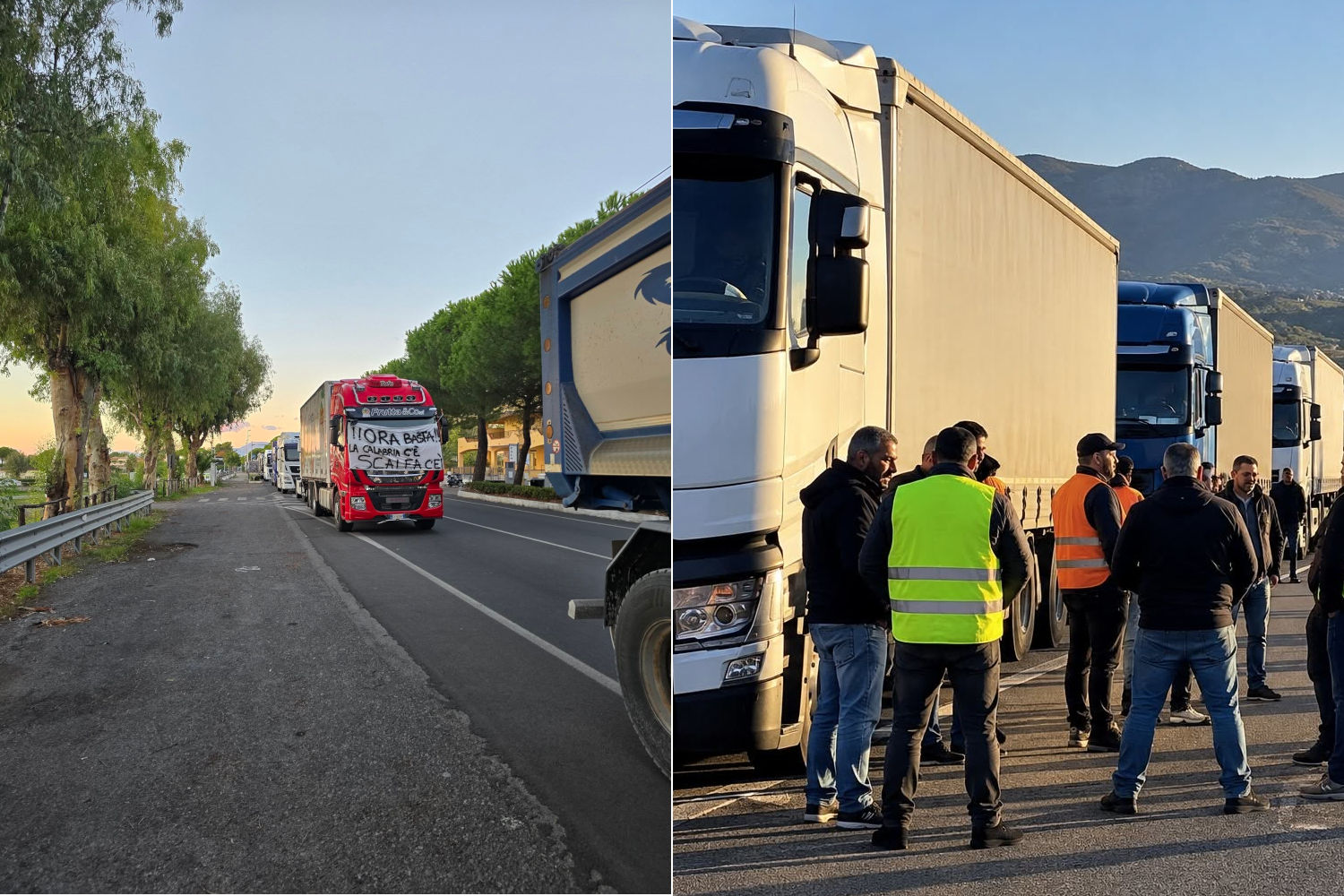
The wave of protests against the increases in diesel prices shakes the entire South, pushing (finally) the Ministry of Infrastructure and Transport to make an emergency financial intervention. After a maxi mobilization that has been going on for days, yesterday during the meeting with the category acronyms and the autonomous delegations Matteo Salvini and Edoardo Rixi announced the release of over 1 billion euros in total to support the road transport sector. The main measure concerns the immediate disbursement of 480 million euros, the result of 430 million already allocated to which 50 million of new coverage have been added, to satisfy the over 32,000 applications received by 30 August 2026.
This contribution covers 70% of the increased costs incurred by businesses between March and October. These resources are accompanied by over 500 million intended for the renewal of the vehicle fleet and approximately 104 million foreseen for the years 2023 to 2026 of the Sea Modal Shift program. Further aid for the months of September and October 2026 will be granted in the form of tax credits that can be used in 2027.
The rift between the Regions: the revocation in Sicily and the garrisons in San Gregorio
The outcome of the negotiations produced a clear split in the mobilization of Southern Italy. The Sicilian Transporters Committee has ordered the formal revocation of the strike to facilitate the restoration of logistical flows on the island, while maintaining the state of unrest. The committee welcomed the government’s commitment to the establishment of the Permanent Southern Table, aimed at controlling ferry prices on the Strait of Messina.
However, the worker base was divided: at the San Gregorio motorway toll booth in Catania, dozens of protesters decided to continue the blockades indefinitely, judging the postponement of the tax credits to 2027 to be insufficient. In the meantime, many urban centers including Messina are recording heavy shortages of goods in supermarkets and the suspension of waste collection in 15 municipalities in the Ionian area.
The hard line in Campania, Calabria and Puglia and the risks for the supply chain
In the rest of the South, the protest shows no signs of abating and will remain active at least until the next ministerial summit set for 27 October. In Campania there are kilometre-long queues of heavy vehicles along the A1 motorway in the Caserta Sud area and on the A30 near Nola, in addition to checkpoints in the Salerno area along the A2 del Mediterraneo between Polla, Atena Lucana and Sala Consilina. Vincenzo Parisi confirmed that the closure will continue to protect small businesses.
In Calabria, trucks patrol the state road 106 in Cassano Ionio and the state road 534 in Firmo, causing a shortage of fresh milk and fruit and vegetables in Cosenza. In Puglia the events involve the provincial road 231 in Bitonto and the territory of Cerignola, where Antonio Manzi awaits the technical checks of the category. The economic impact also extends to Abruzzo, where Fabrizio Lobene of Confagricoltura raised the alarm over the blockade of the Fucino plain, an area that guarantees 60% of national horticultural production. Solidarity came from Nicola Zampella of Federbeton, who recalled how electricity reached 207 euros per MWh in September 2026, causing transport costs to rise up to 50% of the value of the product.
