
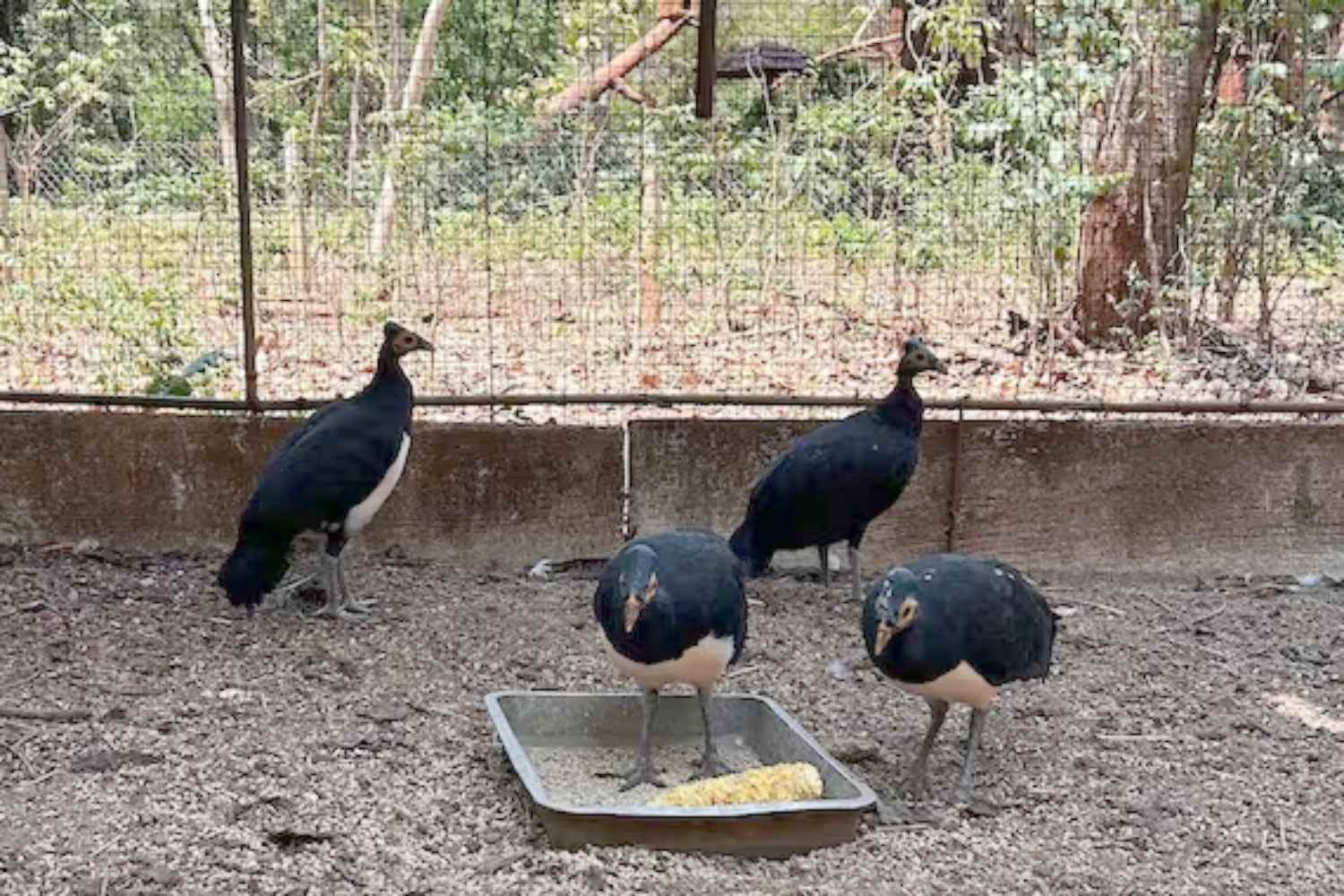
A new and insidious threat threatens the survival of the maleo (Macrocephalon maleo), a very rare land bird endemic to the island of Sulawesi, Indonesia. Already listed as critically endangered with just 5,000 pairs estimated in the wild, the species has ended up at the center of the international trade in exotic animals. Research published in Journal of Asian Ornithology by Chris Shepherd, head of conservation at the Center for Biological Diversity, and elaborated with the scholar Uttara Mendiratta, revealed the seizure in 2024 of 25 young specimens removed from their natural environment and destined for the black market of harpies and collectors in India.
@Journal of Asian Ornithology
The peculiar reproduction of the species and the hypothesis on theft in health centers
Belonging to the megapodid family, the maleo is distinguished by its black plumage, pink belly and a showy dark protuberance on its head. Its extraordinary reproductive peculiarity lies in laying its eggs under the sand of the beaches or in soil heated by geothermal energy, abandoning them to the natural heat of the soil. Upon hatching, the chicks emerge autonomous and ready to fly, but the absence of parental care leaves the eggs vulnerable. Marcy Summers, director of the Alliance for Tompotika Conservation, hypothesized that the 25 seized hatchlings – all of similar age – did not come from occasional captures in the forest, but were taken directly from conservation and protected hatchery centres.
The role of couriers and demand fueled by social networks
Investigations led by Chris Shepherd and Uttara Mendiratta have uncovered a well-structured smuggling network that employs unsuspecting couriers, such as families with children, single mothers and young couples who are offered paid trips to transport the birds. Traffic routes pass through the airport hubs of Jakarta, Bangkok and Mumbai. Uttara Mendiratta highlighted how the demand for these rare specimens in India is also fueled by social networks, where influencers and public figures show rare wild animals as pets.
The experts’ appeal to save the last five thousand maleo pairs
Faced with incalculable ecological damage, Chris Shepherd and the authors of the study call for an immediate intensification of customs controls at ports in Indonesia, Thailand and India. The scholars call for rigorous checks on breeding centers and the stipulation of international agreements for the return of specimens confiscated in Sulawesi, so that they can be reinserted into their natural habitat. With only 5000 pairs remaining, the loss of even a few dozen individuals compromises the survival of the species.
