
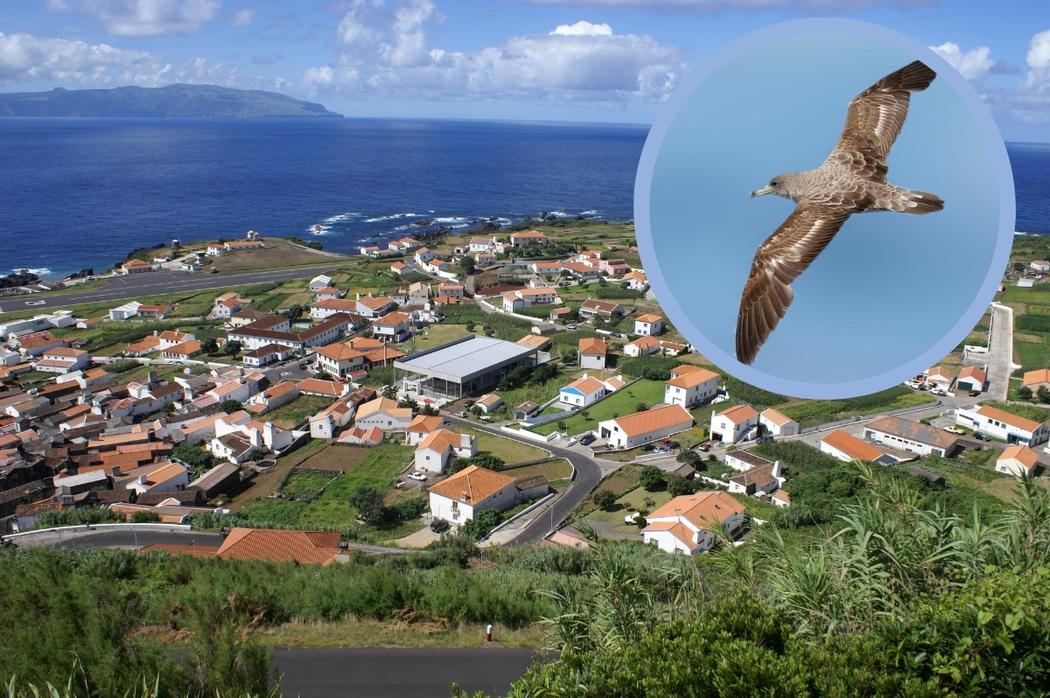
For a few nights a year, on the island of Corvo, in the Portuguese archipelago of the Azores, the streetlights go out and the streets remain dark. The approximately 450 inhabitants have chosen to temporarily give up public lighting to help hundreds of young seabirds reach the ocean without losing their way.
The protagonists are the young Atlantic shearwaters (Calonectris borealis), called cagarros in Portuguese. After about three months spent in the nests, hidden among the rocks of the cliffs, between October and November they face their first flight towards the sea.
@Wikimedia
To protect them, this year the Municipality has planned to turn off the lights from 9pm to 5am, between 25 and 30 October, and interventions in the hours after midnight also from 21 to 24 October and from 31 October to 5 November. The calendar is reported by the Sociedade Portuguesa para o Estudo das Aves (SPEA), the Portuguese ornithological association that collaborates on the initiative.
View this post on Instagram
Why are city lights dangerous for shearwaters?
Young shearwaters leave their nests at night, when the risk of encountering predators is lower. They use the natural brightness of the sky to orient themselves, but street lights, car headlights and house lights can draw them in the wrong direction. The birds thus end up on the streets or between buildings, where they risk being run over, attacked by cats and other predators or dying from injuries and dehydration. The problem is particularly serious in the Azores, which, according to SPEA, is home to around 75% of the world’s breeding population of the species.
The inhabitants come out at night to save the fallen birds
It all started in 1991, when the inhabitants of Corvo noticed numerous young shearwaters dead or in difficulty. They began to collect them and put them in a safe place, giving rise to an experience that contributed to the birth, in 1995, of the regional SOS Cagarro campaign. Today, volunteers travel the streets with ventilated cardboard boxes, rescue the disoriented animals and guard them until they are released, usually the next day, near the ocean.
As documented by the Guardian, over 30 thousand young shearwaters have been recovered in the Azores since 2015, around 6 thousand in Corvo alone.
Does turning off the lights really work?
The results collected by the European scientific project EELabs, which studies light pollution, are encouraging. During a previous campaign on the island, a total of 662 shearwaters were rescued, while in the week of general shutdown just nine falls were recorded. A positive fact, even if it alone does not allow us to precisely measure the effectiveness of the blackout.
Corvo’s experience shows how artificial lighting can interfere with the lives of animals, especially in coastal areas. And it suggests a solution elsewhere too: reduce unnecessary lights in the most delicate periods for wildlife, without compromising those necessary for safety. For the young shearwaters of Corvo, a few darker nights may mean the possibility of finally reaching the sea.
