
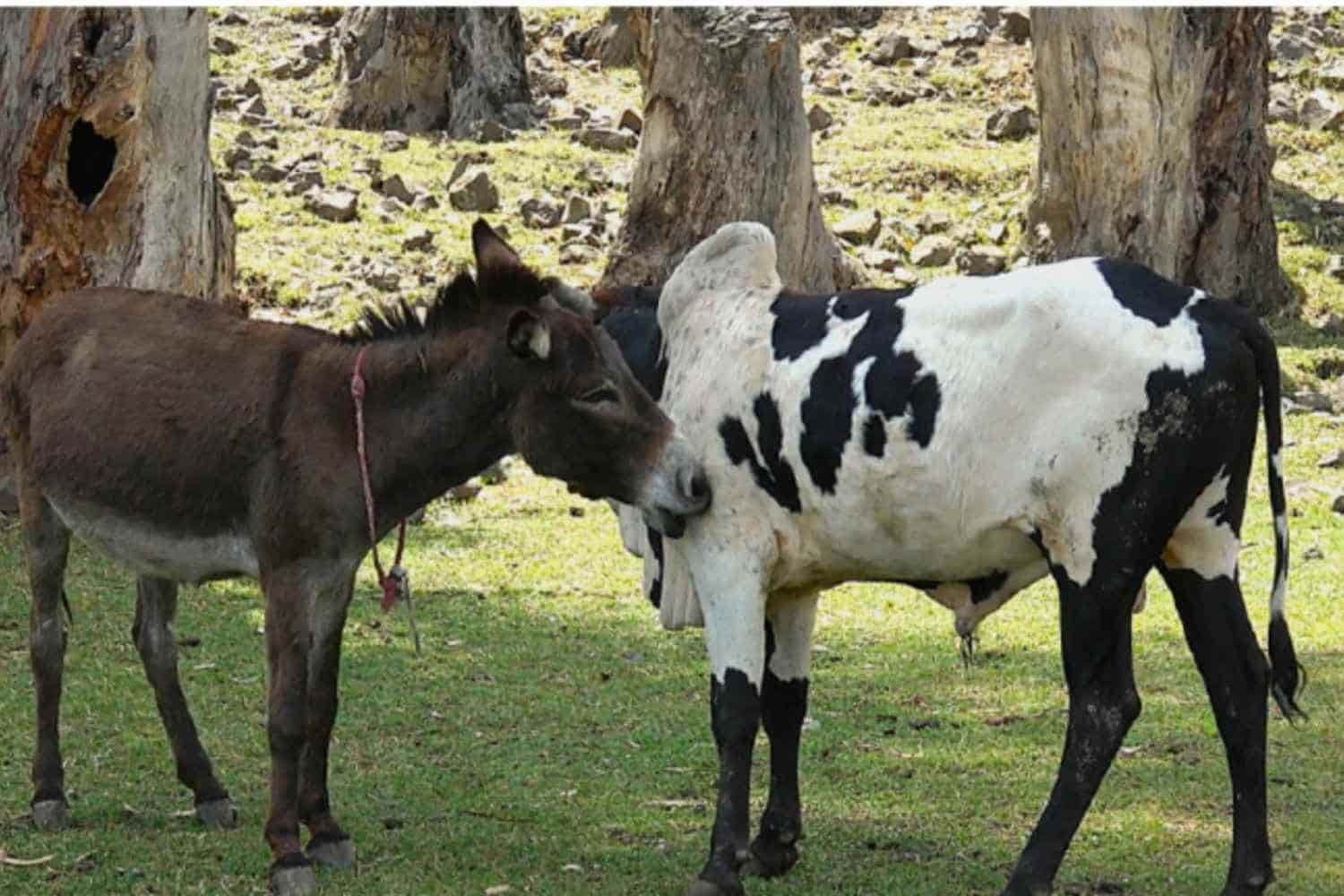
They are called Achilles and Patroclus, just like the two heroes of the Iliad, but this time the story does not come from ancient Greece. It takes place in the highlands of Ethiopia and the protagonists are a bull and a donkey, both male, who have developed a decidedly out of the ordinary relationship.
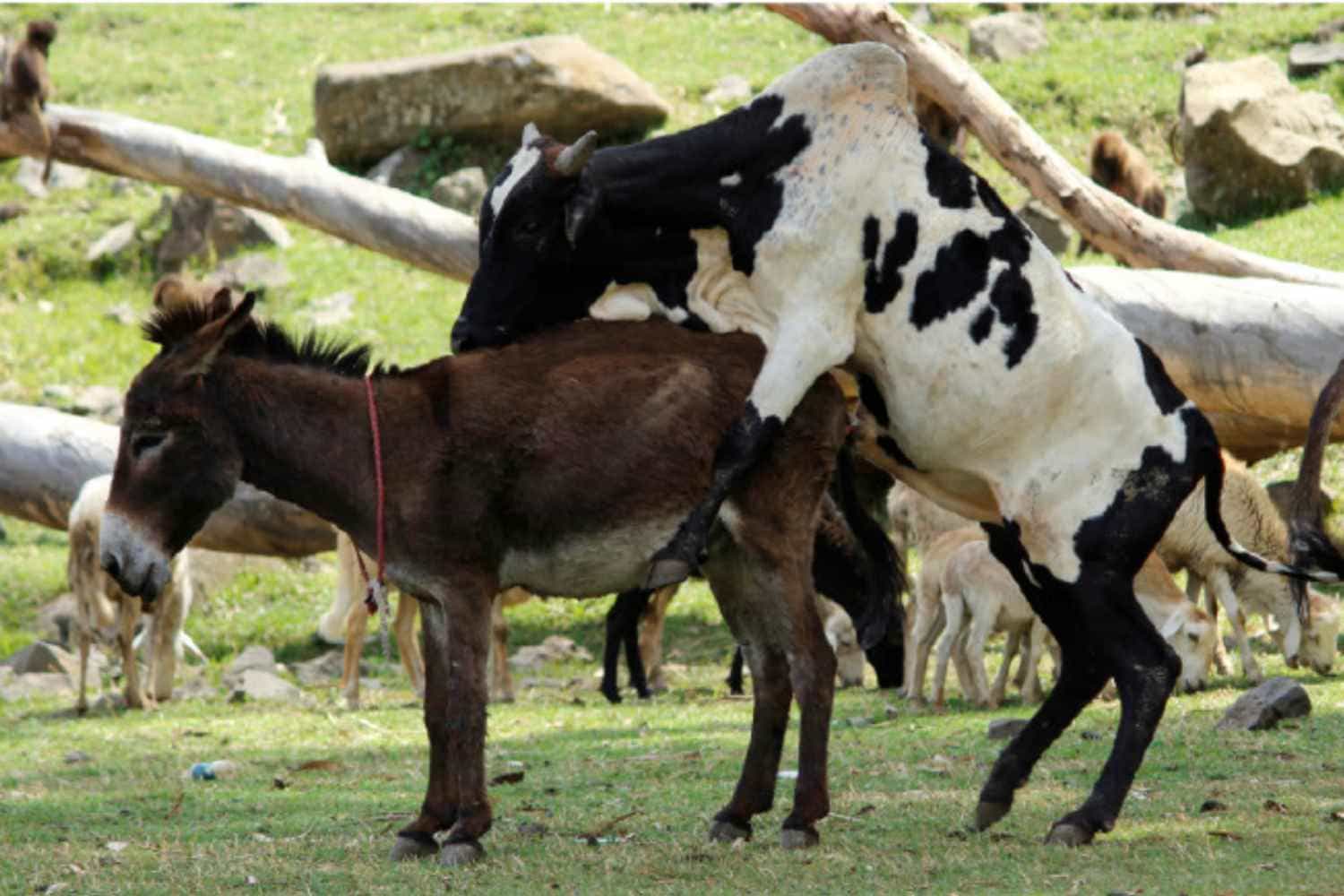
Every day, when their respective shepherds take them to pasture, the two meet again. They come close, rub each other’s heads, lick each other and spend a lot of time together. They also have sexual relations, but it would be a mistake to stop at this detail. Because it is above all what happens before and after that makes their relationship so interesting to scientists.
It was documented by a group of researchers from the University of Pisa, who published the results in the scientific journal Current Biology. The observations tell of something rarely described in nature: a socio-sexual relationship between two individuals of the same sex belonging not only to different species, but even to different zoological families.
And above all they show that, even among animals, sex does not necessarily serve to reproduce.
They meet in the pasture, but each time they choose each other
André B. da Cruz, Martina Francesconi and colleagues, Current Biology (2026)
The discovery occurred almost by chance in Debre Belgios, in the Ethiopian highlands, where a research group was studying geladas, primates that live in the mountainous regions of the country. During the observations, the researchers noticed the unusual interactions between the bull and the donkey. Intrigued, they decided to follow them more carefully, recording their sexual behaviors, physical contacts, time spent together and reactions towards other animals.
There is a detail that makes this story even more surprising: Achilles and Patroclus do not share the same enclosure and did not grow up together. They belong to different owners, spend the night apart and meet when accompanied to pasture.
Around them are other bulls, cows, donkeys and donkeys. There is therefore no lack of the possibility of interacting with individuals of one’s own species or of the opposite sex. Yet, when they meet again, the two show a mutual preference.
In just four days of systematic observation, scholars recorded 51 episodes of mounting by Achilles, 34 of which involved penetration. Patroclus did not show the avoidance signals observed in other male donkeys approached by the bull. On the contrary, on several occasions he actively sought contact, even positioning himself in such a way as to encourage interaction. A behavior that particularly struck the research group.
Licking and rubbing tell something that goes beyond sex
If the relationship between Achilles and Patroclus had been limited to mating, it would still have represented an interesting case for ethology. But the researchers observed much more.
The two animals lick each other, gently rub their heads against each other and remain close even when they are not having sexual intercourse. These are what ethologists call affiliative behaviors, gestures that contribute to creating or maintaining positive social bonds.
André B. da Cruz, Martina Francesconi and colleagues, Current Biology (2026)
The frequency of these contacts is particularly significant. During the observation period, they appeared in about a quarter of interactions before mating, but in almost three-quarters of cases immediately after. In other words, the contact between the two did not end with the sexual act. It often continued through a series of friendly gestures.
The analyzes also showed that Achilles and Patroclus spent significantly more time close together than apart, with affiliative interactions that were more frequent and long-lasting than those observed with other animals.
And when Achilles tried to approach another donkey, Patroclus happened to catch up with him, bringing the bull’s attention back to himself. On some occasions the donkey even chased away other bulls that approached Achilles.
We cannot know if behind these behaviors there are emotions comparable to jealousy or human falling in love. It would be a stretch to attribute feelings to them that we cannot directly measure. However, we can recognize what the observations show: between these two animals there is a preferential social relationship, accompanied by reciprocal sexual behaviors.
Why the story of Achilles and Patroclus is so important to science
Sexual behavior between animals of the same sex is by no means a rarity. They have been observed in numerous species, from primates to marine mammals and birds.
The explanations proposed by the research are different. In some cases these interactions can help consolidate social relationships, reduce tensions or strengthen alliances. In others they may depend on the availability of the partners or on particular circumstances.
But the case of Achilles and Patroclus presents characteristics that are difficult to reduce to the simplest interpretations. First of all, the two belong to different zoological families: Achilles is a bovine, Patroclus an equid. Furthermore, both have the possibility of interacting with other animals, male and female, and the observed behavior does not seem to be explained by a simple lack of alternatives.
Then there is the participation of Patroclus, who does not limit himself to passively tolerating the bull’s attentions, but seeks him out on several occasions. For Elisabetta Palagi, ethologist at the University of Pisa and coordinator of the study, this is precisely one of the most surprising elements. Research suggests that, in this particular relationship, sexual interactions may also have a social function, contributing to maintaining the bond between the two individuals.
It is a possibility that deserves to be explored further, because it highlights how reductive it is to consider all animal sexual behavior exclusively as a function of reproduction.
We don’t know if they are in love. But nature doesn’t follow our rules
The research team is cautious in its conclusions. The study concerns only two individuals, systematically observed for a limited period. It therefore does not allow us to establish how long their relationship has existed, nor whether sexual behaviors strengthened the bond or whether it was a pre-existing social relationship that favored them.
It’s not even enough to talk about sexual orientation in the meaning we attribute to this expression when we refer to human beings. Yet what was observed has a precise scientific value. It demonstrates that two male animals, belonging to different species, can develop repeated sexual interactions within a relationship also characterized by closeness and selective affiliative behaviors.
The story of Achilles and Patroclus reminds us above all of how partial our knowledge of the social life of other animals still is. And how easily we risk interpreting it through categories built on our experience.
Because in the natural world there are bonds that do not have an obvious reproductive function, behaviors that do not fit into the most immediate explanations and relationships that science is still learning to recognize. Achilles and Patroclus, meanwhile, continue to meet in the pasture. We don’t know what one means to the other. However, we know that, when they have the chance to be together, they look for each other. And this, for those who study animal behavior, is already a fact that deserves attention.
