
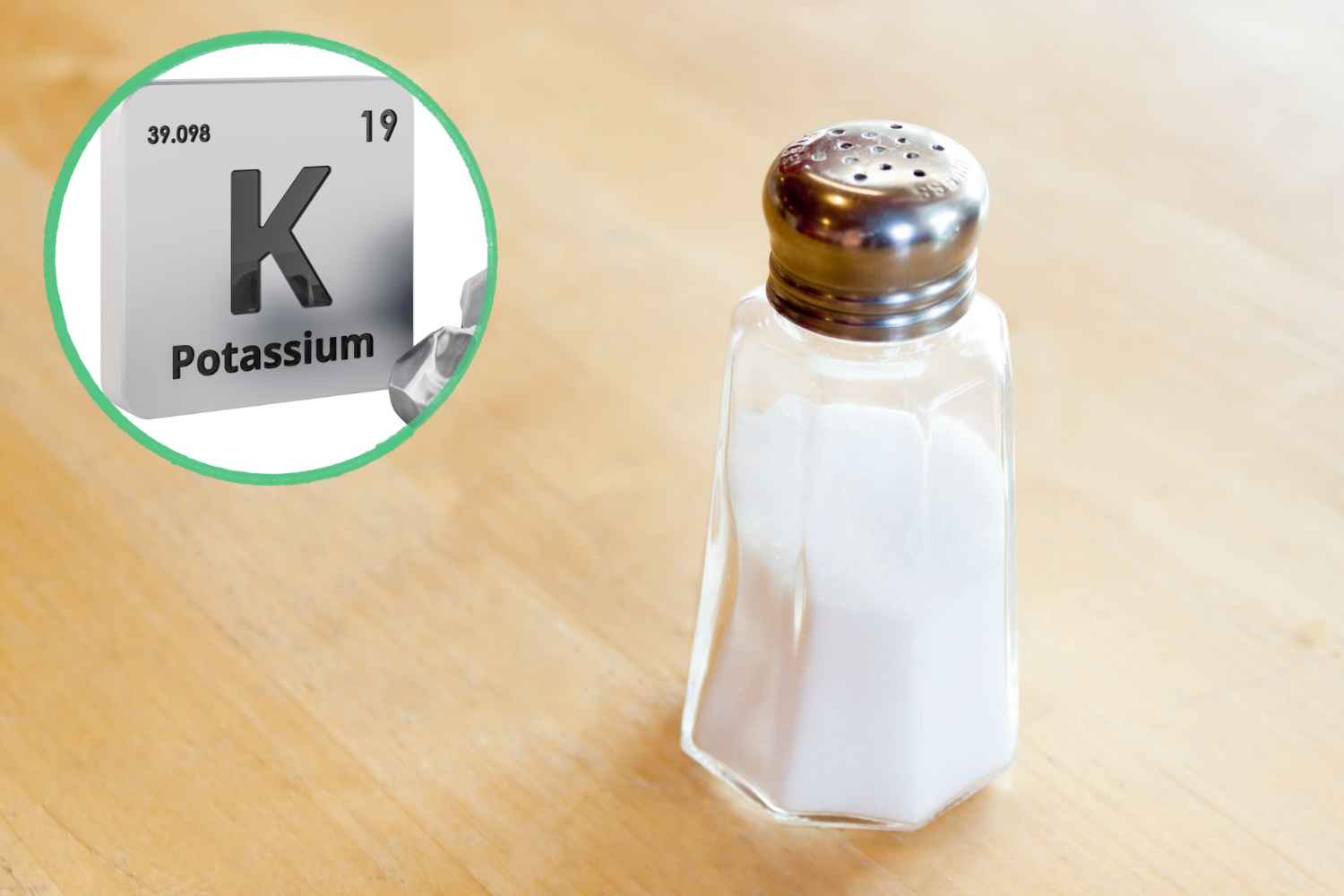
What if to reduce the risk of heart attack and stroke it was enough to start with something we use every day in the kitchen? A new study suggests that replacing regular table salt with potassium-enriched salt could have enormous effects on public health: nearly 3 million deaths and more than 10 million new cases of cardiovascular and kidney disease avoided every year worldwide.
The numbers come from research published on November 4, 2026 in the scientific journal Nature Healthconducted by an international group of researchers from the George Institute for Global Health and other scientific institutions, who examined the possible effects of replacing traditional salt in 193 countries.
Be careful, however: it does not mean that changing the salt in our cooking can, on its own, produce these results. Scholars have developed various scenarios through mathematical models, hypothesizing a very wide diffusion of potassium-enriched salt, including in industrial foods and restaurants.
What is potassium-enriched salt and why it could be good for your health
Regular table salt is mostly made up of sodium chloride. In potassium-enriched salt, however, part of the sodium chloride is replaced with potassium chloride.
In the main scenario analyzed by the researchers, the mixture contains 75% sodium chloride and 25% potassium chloride.
The advantage is twofold: less sodium is consumed, the excessive consumption of which promotes hypertension, and at the same time the intake of potassium, a mineral that contributes to the regulation of blood pressure, increases.
High blood pressure is a major risk factor for stroke, heart attack and kidney disease. Reducing it, even through changes in diet, can therefore have important consequences on health.
Nearly 3 million preventable deaths every year: study results
The researchers evaluated five different scenarios, from replacing the salt used at home to replacing the salt contained in industrial foods and dishes served in restaurants.
In the broader scenario, which involves the replacement of all traditional salt with potassium-enriched salt, estimates indicate that each year the following could be avoided:
The estimated reduction in deaths would be equal to 14.6% compared to the annual total attributed to the pathologies considered.
Even a partial replacement could have significant effects. Changing just the salt added during home meal preparation could prevent around 1.85 million deaths a year, according to the model. Intervening exclusively on the salt present in packaged products and in restaurants would instead lead to an estimated reduction of 1.56 million deaths.
They are projections, of course, and their realization would depend on the possibility of concretely changing eating habits and industrial production.
Because in Italy it is not enough to change the salt in the salt shaker
The issue becomes more complicated when you look at what we eat every day.
An important part of the sodium we consume, in fact, is already contained in the foods purchased: bread, cheeses, cured meats, packaged products and ready meals.
In Europe and North America, according to the George Institute for Global Health, more than 70% of salt intake can come from industrial foods and meals eaten outside the home.
For this reason, according to the authors, the involvement of the food industry would be crucial. Changing the salt used in cooking can be a useful choice for many people, but the benefits hypothesized by the study would require much more extensive interventions.
The WHO already recommends it, but it is not suitable for everyone
The World Health Organization had already addressed the issue in 2025, publishing specific guidelines on the use of salt substitutes with reduced sodium content.
The WHO suggests that adults, when choosing to use table salt, prefer substitutes with less sodium and containing potassium, as part of a diet that aims to reduce overall salt consumption.
However, there is a fundamental precaution: potassium-enriched salt is not suitable for everyone, particularly for people with kidney problems or conditions that compromise the elimination of potassium. An excessive accumulation of this mineral in the blood, called hyperkalemia, can cause serious changes in heart rhythm.
Even those taking medications that can increase potassium in the blood should seek medical advice before using these substitutes. The WHO recommendations are not aimed at children and pregnant women.
Anyone suffering from kidney disease or following specific therapies should therefore not replace traditional salt on their own.
The problem of price and diffusion
If the potential benefits are so broad, why isn’t potassium-enriched salt already used everywhere? One of the obstacles is the cost, currently higher than that of traditional salt. Then there is the need to adapt the production and distribution of potassium chloride, especially if its use were to extend to an industrial scale.
The authors recall the precedent of iodized salt, the diffusion of which contributed to preventing disorders due to iodine deficiency.
The study therefore indicates a possible way to reduce the burden of cardiovascular and renal diseases. Costs, application in the food industry and necessary precautions for people who cannot consume high amounts of potassium remain to be addressed.
And one thing doesn’t change: even if you choose a salt with less sodium, continuing to reduce the overall amount of salt in your diet remains one of the main recommendations to protect cardiovascular health.
