
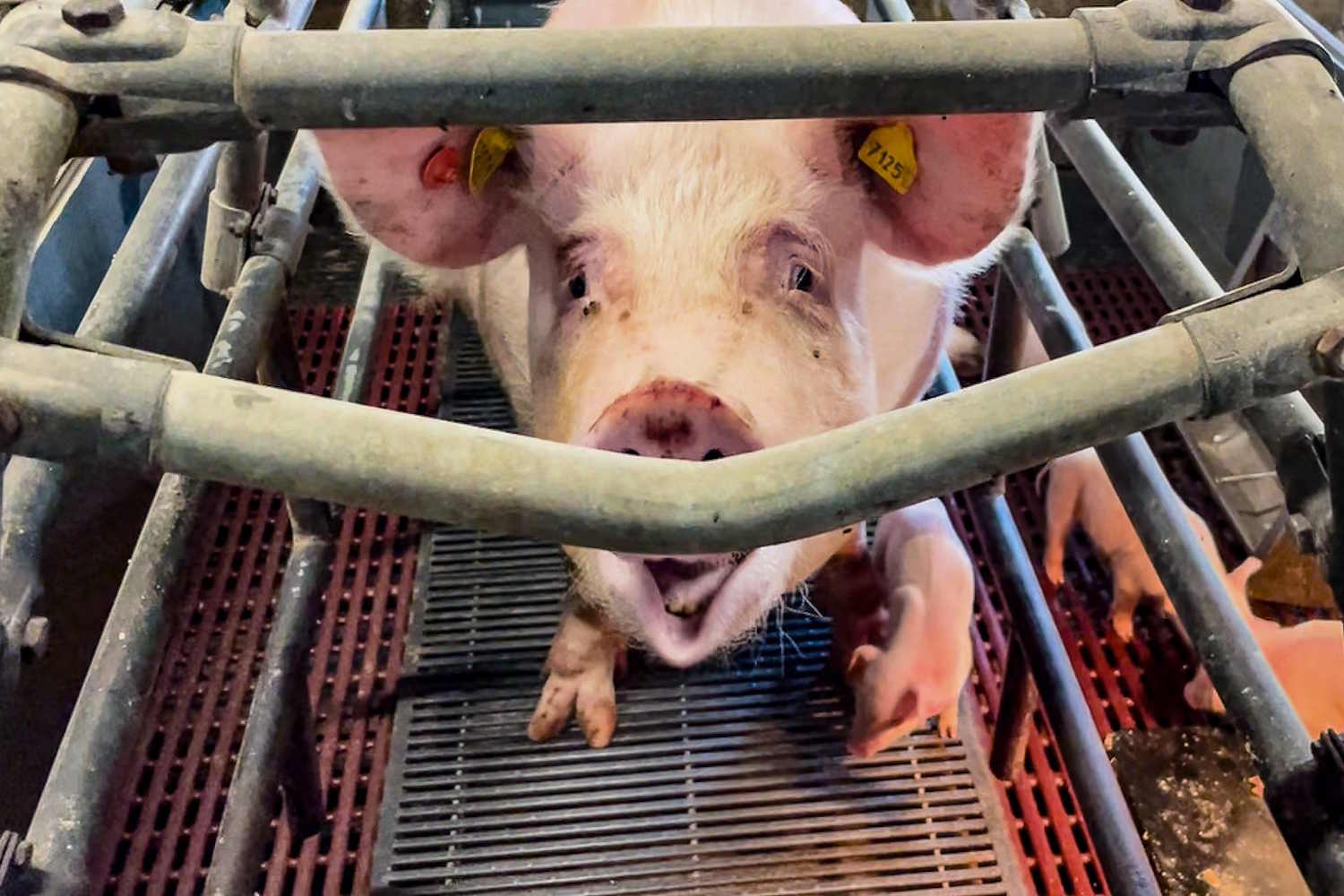
Five years of promises, 1.4 million signatures and still no European law to definitively put an end to cage farming. The latest signal comes from Brussels, where the European Commission’s work program for 2027, just published, contains no reference to the legislative proposal to ban sow cages.
Yet, only last July, the community executive announced that it would present the measure within the first half of next year. A new postponement? For the moment we cannot say, but the fact is that the absence of the reform from the official calendar has rekindled the concerns of animal rights associations, who for years have been asking the European Union to respect the commitments made to citizens.
Almost at the same time, however, a reassurance arrived from the European Commissioner for Animal Health and Welfare, Olivér Várhelyi: the proposal on sows remains expected by the second quarter of 2027. And the one on laying hens and broilers should arrive by the end of this year.
The law on cages
Last July 7th, with the EU Strategy on Livestockthe European Commission had announced a revision of the rules on animal welfare: by 2026 a proposal to eliminate cages in laying hen farms and intervene in the killing of male chicks, and by June 2027 new rules to eliminate individual cages for sows.
However, none of these measures appear in the work program for 2027. An absence that does not necessarily mean cancellation of the reform, but fuels doubts about meeting the deadlines.
Five years have passed since the European Commission undertook to present legislative proposals to ban cage farming. We expect him to keep this commitment, reaffirmed last July. Animals can no longer wait, denounce the nine organizations of the Italian End the Cage Age coalition: Animal Equality Italia, Animal Law Italia, CIWF Italia, ENPA,essere Animali, Humane World for Animals Italia, LAV, Legambiente and LNDC Animal Protection.
Meanwhile, a few hours after the publication of the work program, during the ceremony of Animal Welfare Awards organized by Compassion in World Farming in Brussels, Commissioner Olivér Várhelyi returned to the issue.
Animal welfare and economic competitiveness do not necessarily have to be in opposition. With the right approach, they can go hand in hand, he said, reiterating his intention to propose a targeted review of the rules relating to laying hens and broilers by the end of 2026, addressing the phasing out of cages, indicators for assessing animal welfare and requirements applicable to imports.
For pigs, however, it confirmed the objective of the second quarter of 2027, with a proposal that involves the transition from cages to pens for sows. The commissioner also reiterated his desire to intervene in the killing of day-old male chicks, a practice still used in the egg supply chain.
However, once again, these are proposals to be presented, not bans already approved. Even after their eventual publication, the texts will have to address the European legislative process and define the times and methods of the transition for livestock farms.
Meanwhile, on intensive farms, sows continue to spend some stages of gestation, birth and breastfeeding in individual cages so narrow that they cannot even turn over. Structures designed to facilitate animal management and reduce the risk of crushing piglets, but which severely limit natural behaviors, such as moving freely and preparing the nest before giving birth.
European legislation already limits its use during most of gestation, but still allows it in some reproductive phases. The future reform should intervene precisely on these restrictions, encouraging the transition to cage-free systems.
91% of Italians are against individual cages on farms
According to the Eurobarometer on animal welfare published in 2023, 89% of European citizens believe that animals should not be kept in individual cages. In Italy the percentage rises to 91%. A particularly broad consensus, which contrasts with the slowness of the legislative process.
According to estimates released by the End the Cage Age coalition, almost 300 million animals are still raised in cages in the European Union, considering different species, from chickens to pigs, from rabbits to quail.
For the associations, the review announced by the Commission represents only part of the initial commitment, which concerned the progressive elimination of cages for all the species involved.
We welcome the commitment confirmed by the Commissioner, but it would have been much more reassuring to see it put in black and white in the European Commission’s work programme, underlines the Italian coalition.
And the risk, according to activists, is that a reform announced as a historic turning point in 2021 will end up being reduced to a series of partial interventions, continually postponed.
The next appointment will therefore be the end of 2026, when Brussels should present the proposal on laying hens and broilers. Then it will be the sows’ turn, by June 2027. Only then will it be possible to understand whether the European Union really intends to transform the promises on animal welfare into binding rules.
Sources: European Commission / European Commission – Review of animal welfare rules and expected deadlines / EUR-Lex – End the Cage Age action against the Commission, case T-151/24
