
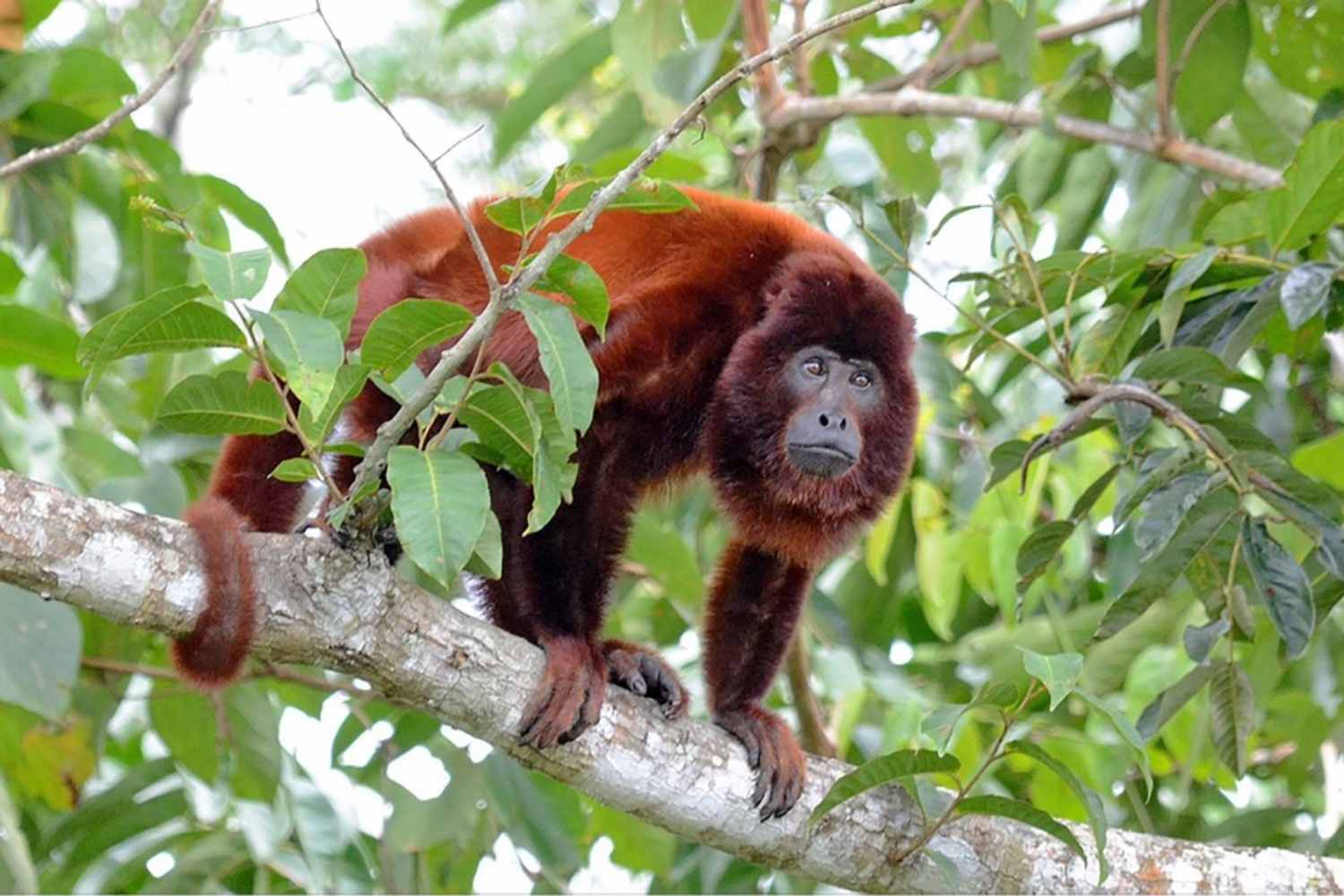
The Amazon rainforest continues to hold biological secrets of fundamental scientific importance. An international research group coordinated by the University of Salford in the United Kingdom, led by professors Jean Boubli and Romina Batista with the collaboration of zoologist Anneke van Heteren of the Bavarian State Collections of Natural History, has identified two new species of primates belonging to the genus Alouatta. The study, the results of which were published in the scientific journal Communications Biologymade it possible to officially describe Alouatta iroi and Alouatta matogrossensis. The taxonomic turning point comes 85 years after the last official description of a new species for this genus of primates, dating back to 1941.
The discovery was made possible through the analysis of DNA extracted from 11 species of howler monkeys distributed between Central America and South America. The genomic data were subsequently cross-referenced with the anatomical and chromatic study of the finds preserved in the museum collections. The surveys demonstrated how populations previously considered homogeneous actually belonged to distinct lineages. The Alouatta iroi, known as the Pantepui red howler monkey, occupies the northern portion of the Amazon basin between Brazil, Guyana and Venezuela and owes its name to the term iro used by the Yanomami natives. The Alouatta matogrossensis, renamed the Mato Grosso red howler monkey, populates the southern region of the Brazilian Amazon and has a particularly intense red coat color.
@Bruno Rennó
The threat of deforestation looms
The evolutionary reconstruction conducted by the researchers highlights how the region’s large waterways, including the Amazon River, the Rio Branco and the Rio Xingu, have functioned as insurmountable geographical barriers for hundreds of thousands of years. This isolation has prevented genetic mixing of populations, favoring the appearance of new species mainly in the last million years. Howler monkeys use the hyoid bone of the throat as a sounding board to emit calls that can be heard several kilometers away and use their prehensile tail to move across the crowns of trees, feeding mainly on leaves, fruits and flowers.
The identification of new species, however, turns into an urgent conservationist alarm. Alouatta matogrossensis resides in the area known as the deforestation arc, a territorial strip highly fragmented by the advance of pastures, roads and agricultural crops. Scholars believe that this primate meets the requirements to be included in the Critically Endangered category of the red list compiled by the IUCN. To counteract the isolation of tree groups caused by human infrastructure, territorial projects such as the Brazilian Reconecta program are installing suspension bridges and aerial cables between the trees to ensure the ecological continuity of their natural habitat.
