
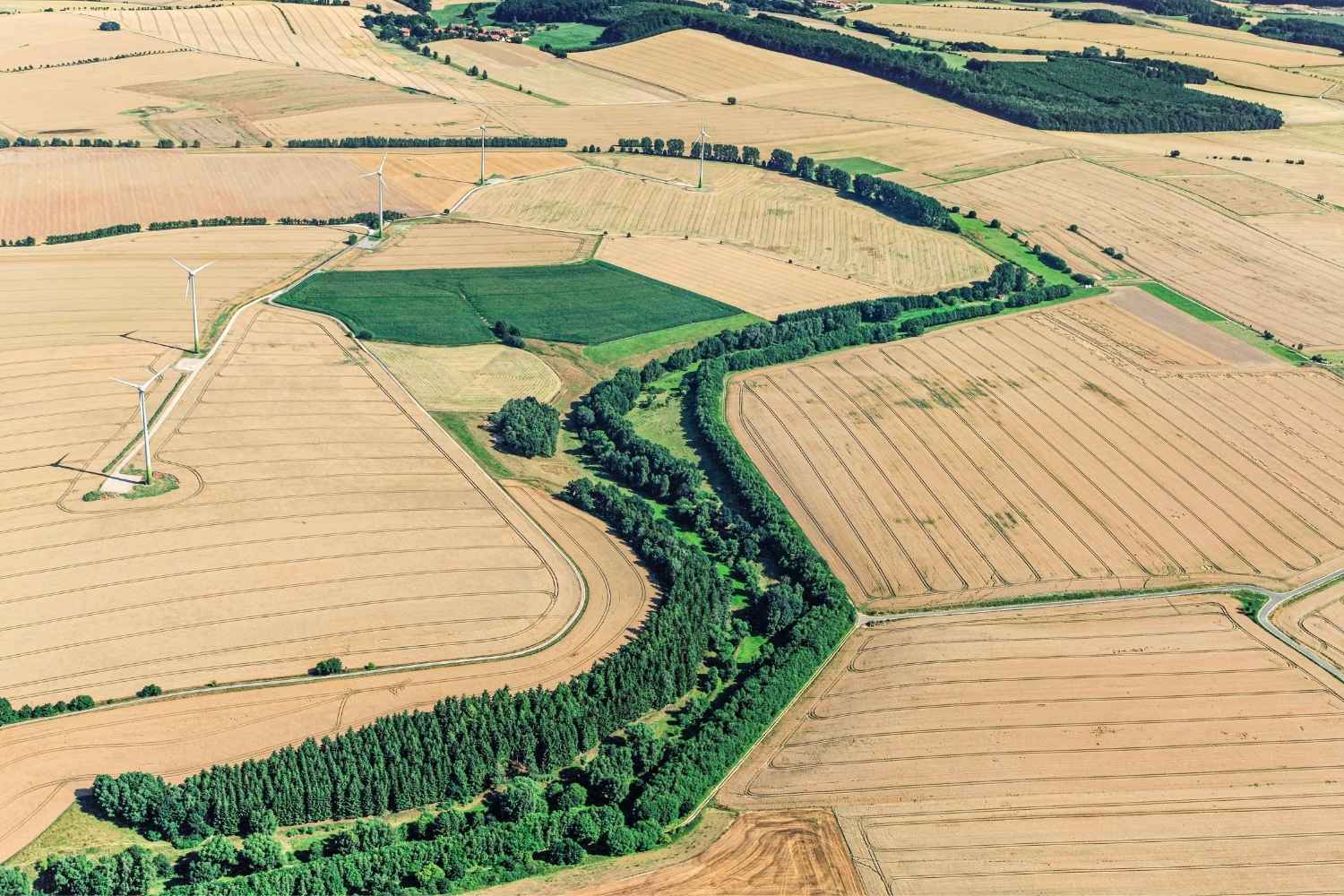
For decades it was one of the most heavily guarded and militarized borders in Europe. A frontier that humans could not cross freely, but where nature, undisturbed, continued to grow. While Germany was divided in two, between fences, watchtowers and barbed wire, thousands of animal and plant species found refuge right along that border which represented an insurmountable barrier for men.
When the Berlin Wall fell on 9 November 1989, the fate of that strip of territory also began to change. What had been a symbol of the Cold War would become one of the most important ecological corridors in Europe. Today it is called the Grünes Band and it is the Green Belt of Germany: almost 1,400 kilometers of natural habitats, from the Baltic Sea to the border with the Czech Republic, which are home to over 5,000 animal and plant species.
It does not exactly follow the urban layout of the Berlin Wall, but that of the former border between East and West Germany. And 37 years after that historic November 9th, the green corridor represents a precious heritage to be protected, which tells a story of rebirth.
From death strip to refuge for over 5 thousand species
During the Cold War, the border between the two Germanys was one of the most feared frontiers in Europe. Surveillance infrastructure, fences and access restrictions made it impossible to cross freely. However, the reduced human presence and the absence of intensive agriculture in many areas allowed the conservation of habitats that elsewhere were progressively transformed or destroyed. Meadows, wetlands, moors, watercourses and woods formed a mosaic of natural environments that is extremely precious for biodiversity.
According to data released in September 2025 by the German Federal Agency for Nature Conservation (BfN), the Grünes Band is home to over 5,000 animal and plant species, more than 1,200 of which are rare or protected. Among the animals that find refuge along the corridor are the European otter, the black stork, the lynx and the whinchat, a small bird linked to meadows and open environments. But its value does not only depend on the number of species present. The Grünes Band functions as a large network connecting different habitats, allowing animals to move and populations to maintain fundamental ecological connections.
View this post on Instagram
In a continent where roads, cities and crops increasingly fragment natural environments, this continuity represents a particularly important resource.
The idea was born a few weeks after the fall of the Wall
The transformation of the old frontier into an environmental project did not happen spontaneously. On December 9, 1989, just a month after the opening of the Wall, numerous environmentalists from East and West Germany met to discuss how to protect that extraordinary succession of habitats. From that meeting, promoted by the environmental association BUND, the idea of the Grünes Band was born. The concern was concrete: with reunification, the territories that had been inaccessible until then could have been quickly converted into agricultural fields, roads and building areas, erasing the very biodiversity that decades of isolation had helped to preserve.
©Klaus Leidorf/ BUND Niedersachsen
Since then, institutions, environmental associations and local communities have worked to transform the former border into a permanent system of nature protection. In 2005 the Grünes Band was recognized as part of the German national natural heritage. In subsequent years, large sections gained additional forms of protection. In 2026 new recognitions and interventions to protect the Green Belt The history of the Grünes Band did not stop in the nineties. Indeed, new steps forward have arrived in 2026.
On September 17, the government of Mecklenburg-Vorpommern recognized around 4,500 hectares along the former border, from the Baltic to the Elbe, as a National Natural Monument. With this measure, all the eastern German states crossed by the corridor have completed the recognition of their sections as national natural monuments.
Another project started in July 2026 in the area where Bavaria, Saxony and Thuringia meet. The federal government has allocated 813 thousand euros for the planning phase of an intervention intended to improve the connection between habitats and simultaneously enhance the natural and historical heritage of the area. The results of the Quervernetzung Grünes Band project, concluded in 2025, also show how important it is to take concrete action: the initiative led to the creation of 530 new ecological structures, including small bodies of water, islands for nesting, artificial nests for ospreys and piles of stones useful for fauna.
Sources: BUND Hessen/bund-naturschutz.de
