
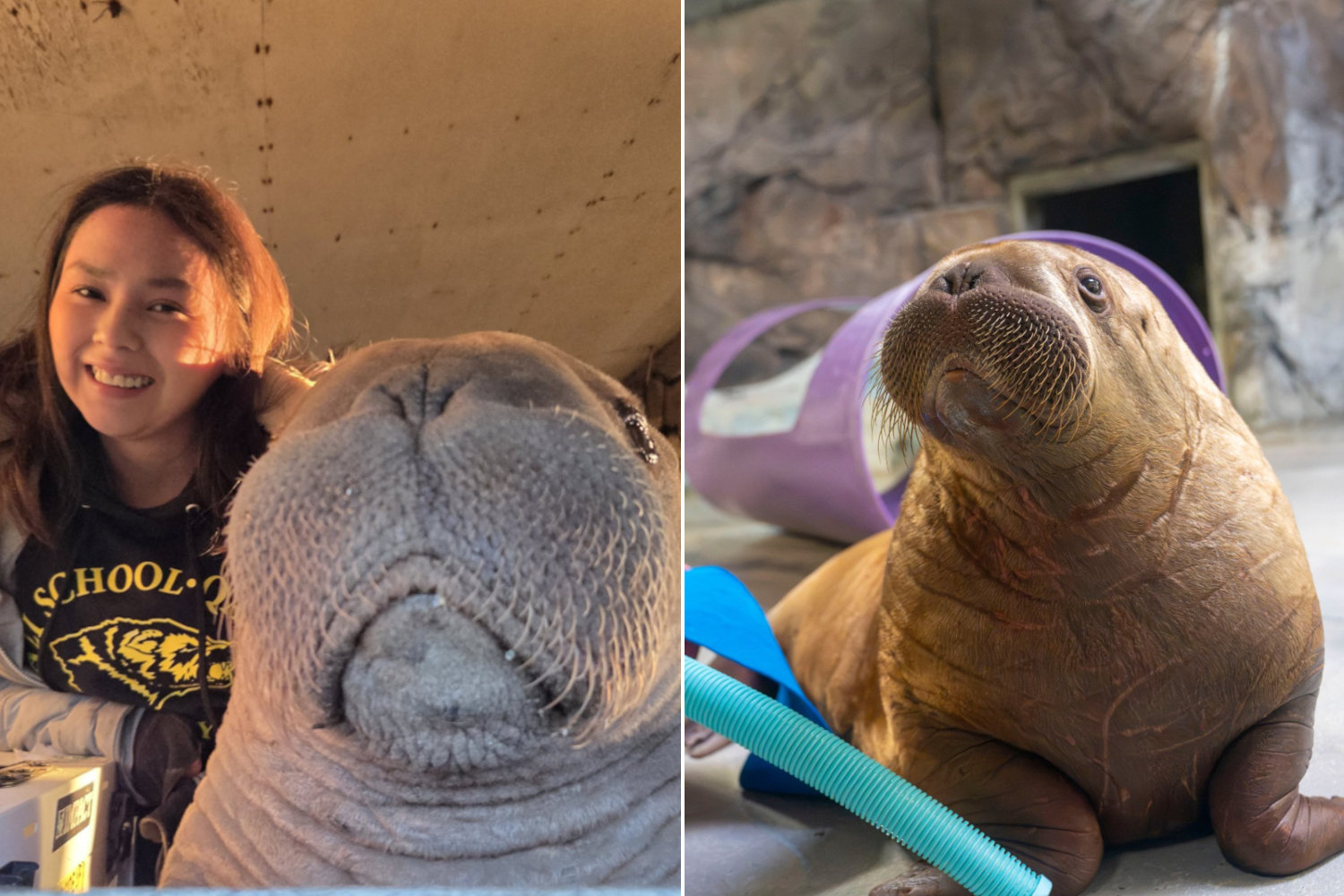
Solitude on the shores of the Arctic tundra can prove to be an immediate death sentence for a little one who is not yet self-sufficient. That’s what intern Violet Anniskett of Illisavik College and biologist Tony Fischbach of the United States Geological Survey came across in the middle of a scientific patrol along the shores of northern Alaska. Among the remains of two adult specimens, the moving shape of a Pacific walrus pup, just 5 months old and weighing around 100 kilograms, stood out. The animal had remained completely isolated from the rest of the group following a violent storm that had forced the herd to move away.
View this post on Instagram
Having obtained timely authorization from the USFWS, the two scholars camped next to the child for over 96 hours, facing prohibitive weather conditions. The primary objective was to defend the animal from bird attacks and the imminent danger of polar bears, carrying it in arms to a makeshift shelter while waiting for the weather to improve. As soon as the sea calmed, a local rescue team picked up the cub by boat, organizing a long 6,400 kilometer air transfer to the Alaska SeaLife Center to provide initial medical care.
View this post on Instagram
The choice of the name Iñupiaq and the future, unfortunately, in captivity
The medical evaluation conducted by the facility’s veterinarians unfortunately confirmed the impossibility of reintroducing the puppy into its natural habitat. Growing up without maternal protection actually prevents them from learning fundamental hunting and survival strategies in the open sea. To ensure the protection of the specimen, the transfer was organized to SeaWorld Orlando in Florida, where the animal arrived last October 21st. The initial period includes 30 days of rigorous health quarantine and a food routine consisting of 6 daily bottle administrations.
View this post on Instagram
The insertion process involves subsequent integration with the three Garfield, Kaboodle and Uki specimens already present in the structure. The local Iñupiaq community, for which these mammals represent a fundamental resource for sustenance and traditional craftsmanship, has made respect for indigenous origins a clause. At Violet Anniskett’s suggestion the little one was baptized Annautaq, a term which means ax in the local dialect. The presence of the young walrus in Florida will also serve to raise global awareness of the environmental threats affecting the North Seas due to the progressive melting of glaciers.
View this post on Instagram
