
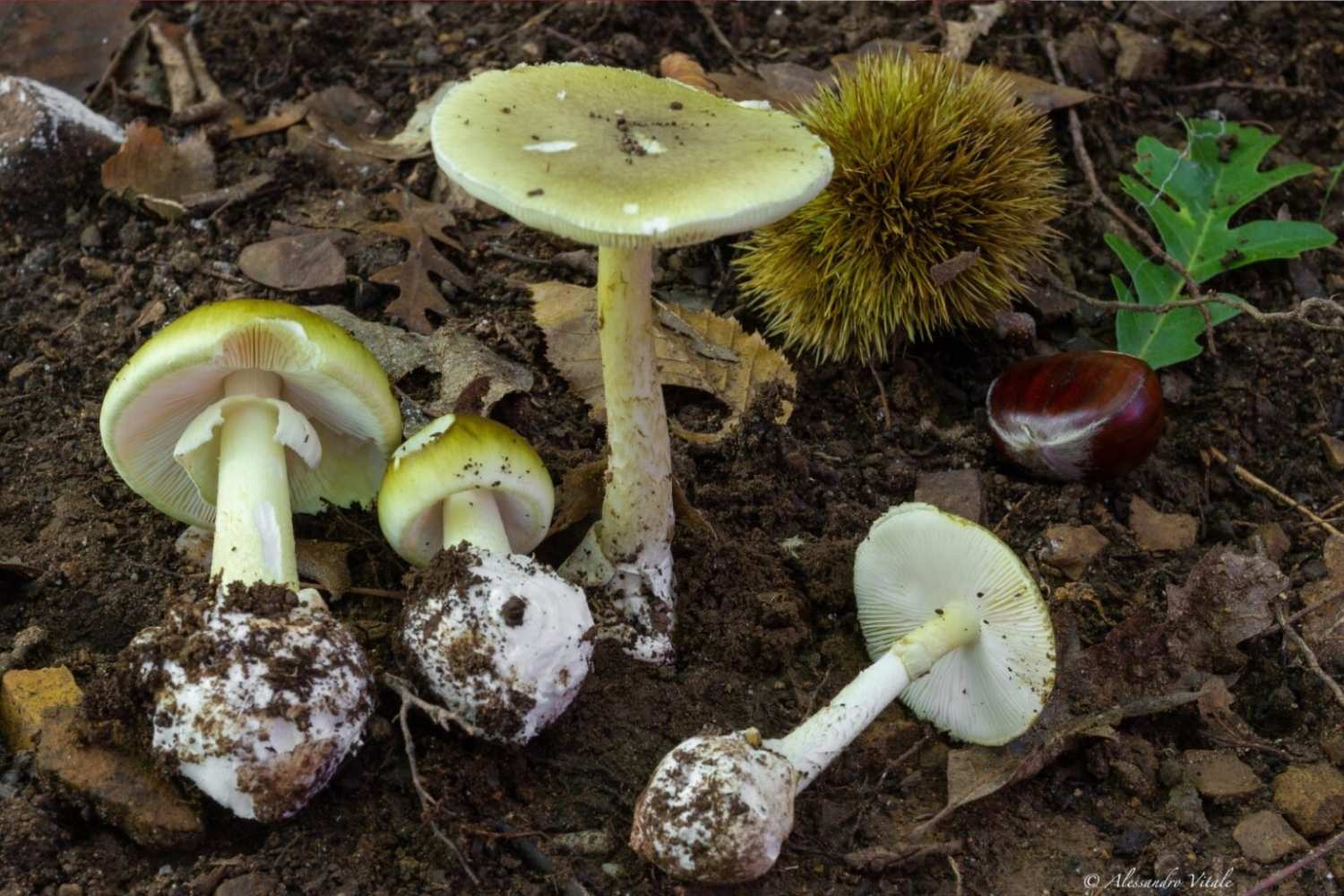
They had taken them for tacks, the most common autumn mushroom, the one that ends up in the pan without too much thought. In reality they were specimens of Amanita phalloidesone of the most venomous species in the world. Four people from the province of Frosinone are now hospitalized in Rome, between the Gemelli Polyclinic and the Umberto I Polyclinic, where they were transferred on Monday 9 November. It is the most serious episode of a series that worries the healthcare company. Between 28 October and 9 November in Ciociaria there were five cases of mushroom poisoning, with around ten people involved. The Frosinone Local Health Authority announced this through a press release on its website.
A toxin that affects the liver
The danger of Amanita phalloides lies in amatoxins. According to the ASL, they can cause very serious liver damage, up to potentially fatal liver failure. What was misleading, as mentioned at the beginning, was the similarity with another type of mushroom: in the last case the lethal species was mistaken for theArmillaria melleathe little nail, which in many areas is also called “famigliola”.
@asl.fr.it
The nail is eaten, but must be boiled first
The nail, moreover, must be handled with care. The day before, Sunday 8 November, another poisoning had been caused by Entoloma sinuatum and from poorly prepared tacks. They were cases of gastrointestinal syndrome, which the local health authority describes as serious. The health company reminds us that the nail is the only widely consumed species that necessarily requires pre-boiling. The cooking water must be thrown away before serving it, otherwise you risk gastrointestinal poisoning.
Rapid diagnoses, immediate transfers
Immacolata Verdicchio, head of the Uoc Sian (Food and Nutrition Hygiene Service) of the Frosinone Local Health Authority, highlighted the importance of the work of the mycological surveillance network. These are his statements:
Thanks to the skills of the mycologists of the ASL of Frosinone, it was possible to obtain mycological diagnoses very quickly which allowed clinicians to adopt the most appropriate support therapies and, in the most serious cases, promptly arrange for the transfer of patients to specialized hospital facilities.
The check is free
The ASL reminds you that the mycological inspectorates check the collected mushrooms for free, and that you can contact them on 0776 8294231 or at ispettoratomicologico@aslfrosinone.it. The service exists at all Italian local health authorities, with mycologists qualified to certify whether a mushroom is edible or not. The check must obviously be carried out before eating them, because afterwards, as these two weeks in Ciociaria show, the emergency room will have to deal with it.
