
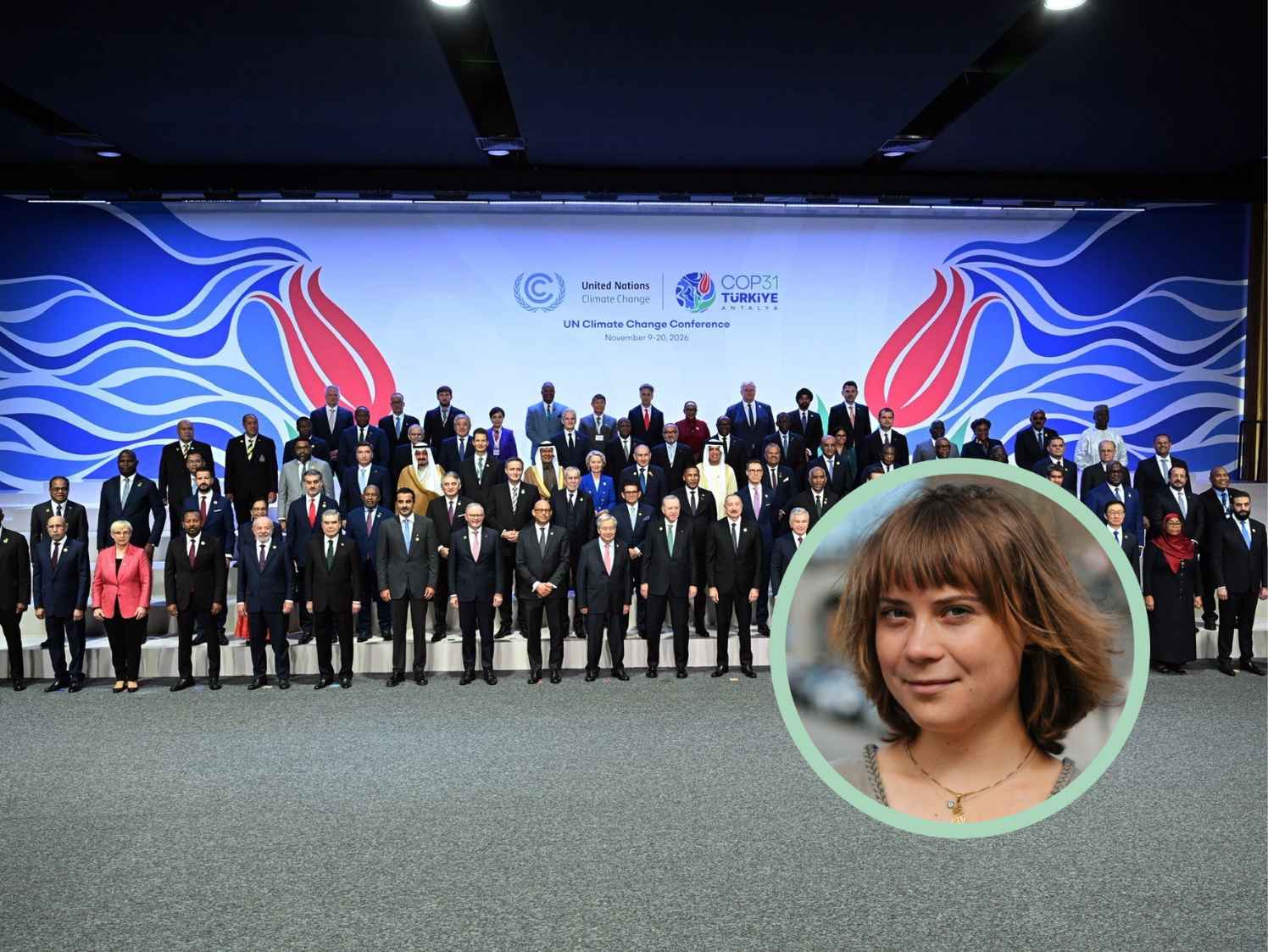
Greta Thunberg returns to the world climate conference after five years and points the finger at the fossil fuel lobbies. Arriving in Antalya, Turkey, for COP31, the Swedish activist accused governments of using the negotiations to clean up their environmental image, while the industries responsible for much of the emissions continue to exert their influence. His words arrive in a country where, a few hundred kilometers from the summit, the inhabitants of some villages risk trials and convictions for opposing the expansion of coal mines.
Swedish activist Greta Thunberg arrived at COP31, her first time attending the climate summit since 2021. She said the impact of the talks could have ‘life or death consequences on ‘countless people’ https://t.co/0BDyPxe0Tt pic.twitter.com/cMZjiFj89l
— Reuters (@Reuters) November 10, 2026
“Every year it is hypocritical that host countries are given the opportunity to clean up their image,” Thunberg said on Nov. 10, the Associated Press reported. The activist denounced the presence in the negotiations of representatives paid by industries that profit from the current energy system.
The forest that Turkey sacrifices to coal
The most emblematic case comes from the province of Muğla, in the south-west of Türkiye. Here the inhabitants of İkizköy have for years opposed the expansion of a lignite mine, a type of coal used to fuel power plants.
The expansion of mining activities threatens the Akbelen forest, olive groves and surrounding agricultural lands. According to an investigation by Human Rights Watch, around three-fifths of the forest had already been cut down by August 2023, despite judicial appeals lodged by the inhabitants. In 2026, an expropriation measure affected 649 parcels of land, causing new demonstrations. The Turkish government justifies mining expansion with the need to guarantee security of energy supplies.
As documented in a Reuters report, the inhabitants ask the leaders gathered in Antalya to personally visit the areas affected by extraction, to ascertain the environmental and social consequences of mining activity.
Arrests and convictions for those who protest
The Akbelen affair also took on a judicial dimension. On October 13, Human Rights Watch published a report based on 23 testimonies, denouncing arbitrary arrests, criminal proceedings and intimidation against those defending the territory. Since 2023, six local residents have been prosecuted and at least 55 others have come under investigation. Among them Esra Işık, 26 years old, arrested on March 30 during a protest against the expropriations. After 42 days of pre-trial detention, on 6 July she was sentenced to two years and one month in prison for resisting a public official. She appealed and is currently free.
The pressure documented by the organization also concerns journalists and lawyers. In the Black Sea region, where some communities protest gold mining projects, Human Rights Watch collected testimonies from protesters stopped and held for hours. According to the organization, authorities also used fines and repeated checks to discourage protests.
What will be decided at COP31
The United Nations conference, scheduled to run until November 20, is expected to accelerate emissions reductions and the transition away from fossil fuels. Among the initiatives promoted by Türkiye is the goal of bringing electricity to 35% of global energy consumption by 2035, compared to the current 23%. The objective is to progressively replace oil, gas and coal in transport, buildings and industry, favoring electricity produced from renewable sources.
My message to world leaders at #COP31:
We know that change is possible.
History has handed us a remarkable opportunity to build economies that are cleaner, societies that are fairer & a world that is safer.
This is not only about climate. It’s also about sustainable… pic.twitter.com/Je2VYTsmEi
— António Guterres (@antonioguterres) November 11, 2026
UN Secretary General António Guterres also criticized the weight of fossil fuel companies, asking governments to tax their extra profits and accelerate the energy transition. The question of rights remains open. Human Rights Watch calls on governments attending COP31 to take action on restrictions imposed on Turkish environmentalists and to defend civil society participation in climate decisions. The conference will end on November 20. The commitments to reduce the use of fossil fuels and the guarantees offered to the communities involved in energy projects will be two concrete elements for evaluating the results.
