
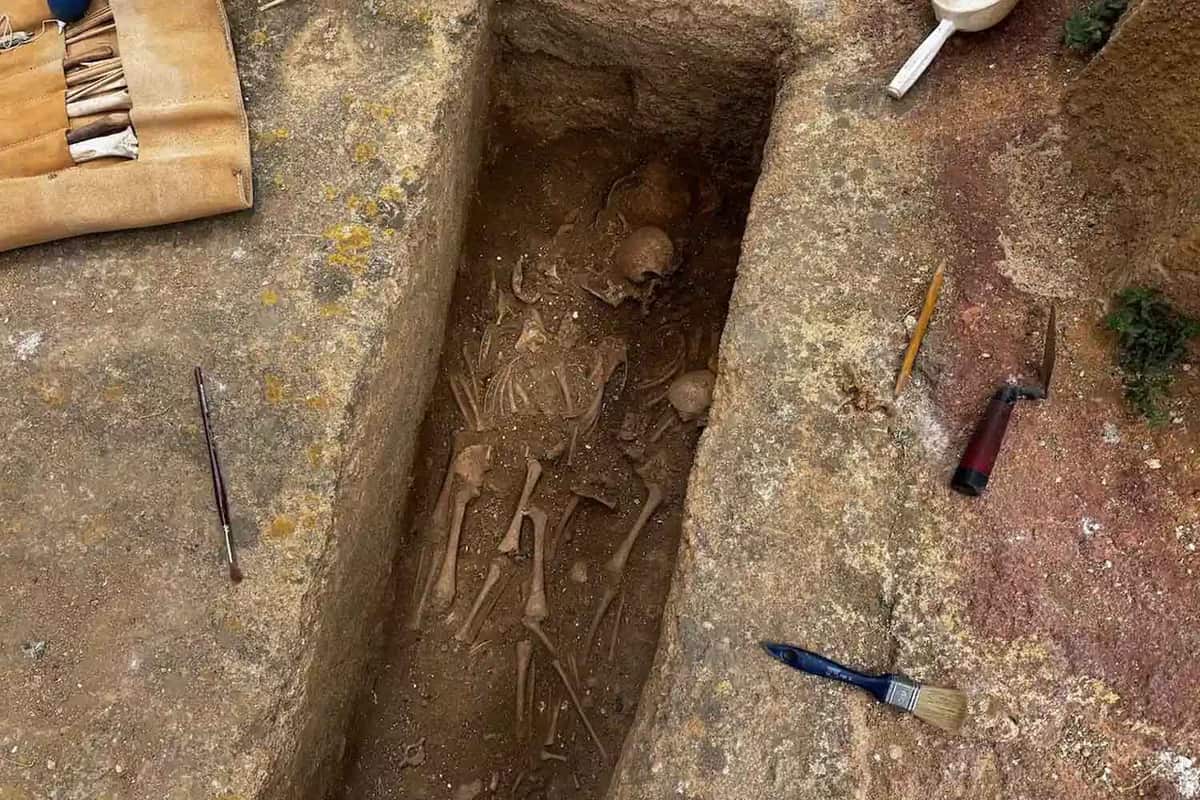
Three skeletons of children, buried in the same tomb dug into the floor of an ancient Greek temple. It is the discovery that emerged during a new excavation campaign at Temple of Concordia, in the Valley of the Temples of Agrigentowhere archaeologists returned to investigate one of the lesser-known phases of the monument’s history.
The remains belong to at least three children, according to an initial assessment by experts. Their era is yet to be established, but the discovery could help reconstruct when the ancient building, transformed into a Christian church, also began to be used as a burial place.
From the Greek temple to the Christian church
Built in the 5th century BC, the Temple of Concord is one of the best-preserved Greek monuments in the world. A fortune that also owes to its transformation into a Christian church, which occurred several centuries after its construction. According to the tradition reconstructed by the Archdiocese of Agrigento, the conversion took place on the initiative of Bishop Gregory, who lived between the end of the 6th and the beginning of the 7th century. The story appears in the biography of the religious written by the monk Leonzio in the 8th century and is generally associated with the birth of the Basilica of the Apostles Peter and Paul.
The architectural transformations are still visible, while archaeologists seek more precise confirmation of the era in which they occurred. A first clue to the funerary use of the building had already come from the excavations of 2018 and 2019, conducted as part of the project The Valley after the ancients.
Inside the pronaos, the front part of the temple, archaeologists had identified a burial. Subsequent carbon-14 analyzes had dated the bone remains to 12th century, in the Norman era. A dating compatible with the historical sources which attest to the presence of the church and monastery of San Gregorio in the area. However, it remained to be understood how much older the habit of burying the deceased inside the building was.
Three children in the same grave: the new discovery
The new excavation campaign, commissioned by the director of the Archaeological Park of the Valley of the Temples Roberto Sciarratta, is conducted by the archaeologist Maria Serena Rizzo and the archaeoanthropologist Roberto Micciché. The first works have already brought to light a burial containing the remains of at least three childrenplaced in the same tomb created in the floor of the temple.
The bones will be subjected to scientific analysis to establish which period they date back to and obtain information on the living conditions and nutrition of the children. The discovery could therefore help archaeologists to identify the most ancient phases of the building’s funerary use, adding new information to the history of the Valley of the Temples, a UNESCO world heritage site since 1997.
A site known above all for its Greek monuments, but which continued to be inhabited, frequented and transformed in the following centuries. From the religious ceremonies of ancient Akragas to Christian worship, up to medieval burials, the same building has passed through very different eras and civilizations.
Now it will be the analyzes on the children’s remains that will provide another date to this long story. And, perhaps, to move the funerary evidence preserved under the floor of the temple even further back in time.
