
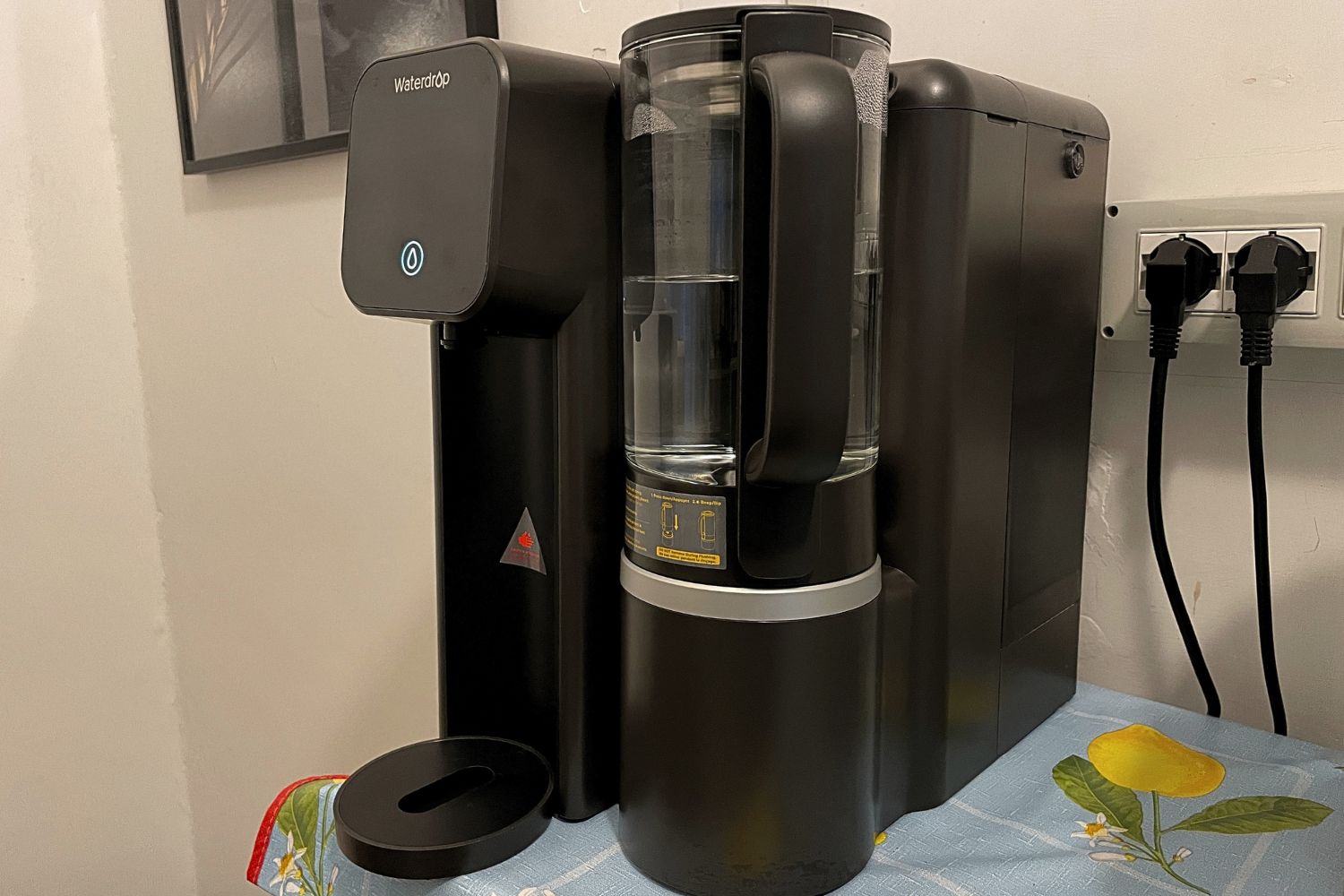
The electric kettle has found a competitor who, at least on paper, should do a different job. It’s called Waterdrop M6HG, it’s a reverse osmosis purifier to be placed on the kitchen worktop and, in addition to filtering tap water, it dispenses hot water when needed for tea or herbal tea. It wants a power outlet and nothing else, because it doesn’t have connections under the sink, so no plumbers to call for installation. We tried it to understand if the convenience compares with the price and, above all, with the water that such an appliance leaves behind.
How the Waterdrop M6HG works
All you have to do is fill the tank with tap water, the machine will take care of the rest. The filtration takes place in eight stages and has its heart in a reverse osmosis membrane which the manufacturer declares to be 0.0001 micrometres, supported by a UV ray treatment. Since osmosis retains almost everything, including salts, a final step returns some of the minerals to the water (calcium, magnesium, potassium and sodium among others) and brings its pH to 7.5 or more. It is a question of taste because attributing health benefits to that number would be a leap that no technical data sheet could ever authorize.
The filtered water collects in a 1.2 liter glass jug, which the machine tops up itself when the level drops below half. Dispensing is at room temperature or hot, with five preselections reaching 95 °C and an adjustable quantity starting from 150 milliliters. One of these, at 45 °C, is associated by the manufacturer with powdered milk. Obviously, for newborns the pediatrician’s instructions and those printed on the package apply.
As for contaminants, the product sheet lists fluorides, PFOA and PFOS, chlorine, lead, chromium and other heavy metals, without reduction percentages. The model is declared compliant with NSF/ANSI 58 and 372 standards, the second of which concerns the absence of lead in the materials.
The test in the kitchen, between tea and herbal teas
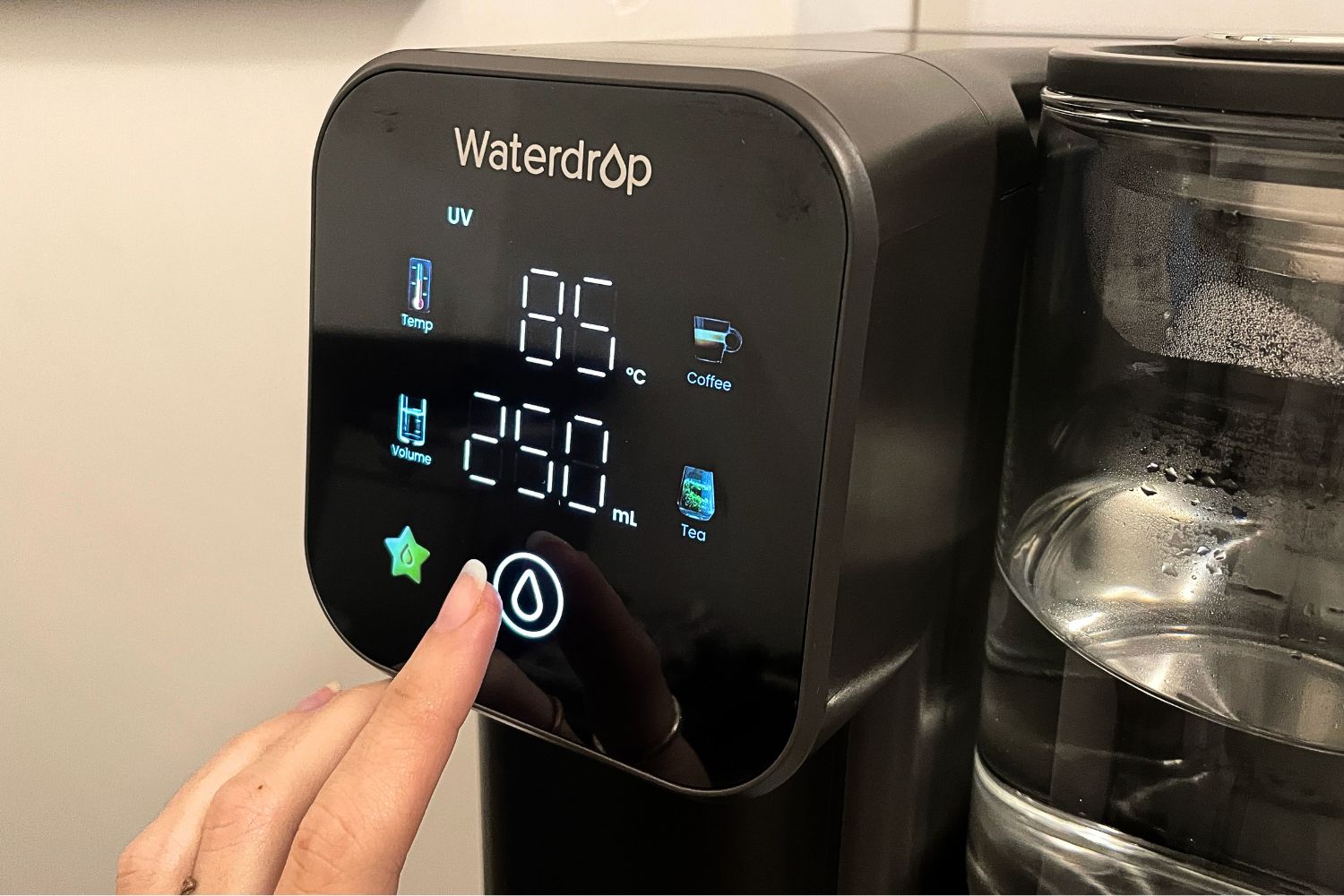
The advantage you notice first concerns the hot water, which arrives in a few seconds, at the chosen temperature, and which puts the kettle ritual, consisting of the filling phase and above all the waiting, into retirement.
Autonomy is also promoted, between the 4 liter supply tank and the carafe you will not be forced to continually top up, and the carafe itself can be removed to end up on the table, or in the fridge.
The third plus point is the absence of work, as mentioned at the beginning: no holes in the sink or modifications to the system, aspects that will please everyone. The only constraint is space, given that the appliance measures approximately 40 × 24 × 37 centimeters and weighs approximately ten kg, enough to recommend an accurate measurement of the work surface.
The waste to be emptied and the display to fog up
The most serious limitation has the shape of a tray: during use the waste water compartment fills up and must be emptied by hand. In our test the accumulation seemed anything but negligible.
The second flaw is trivial, if not completely negligible: when hot water is dispensed, the steam fogs up the display, which for a while is difficult to read.
Fewer plastic bottles, but how much water is thrown away
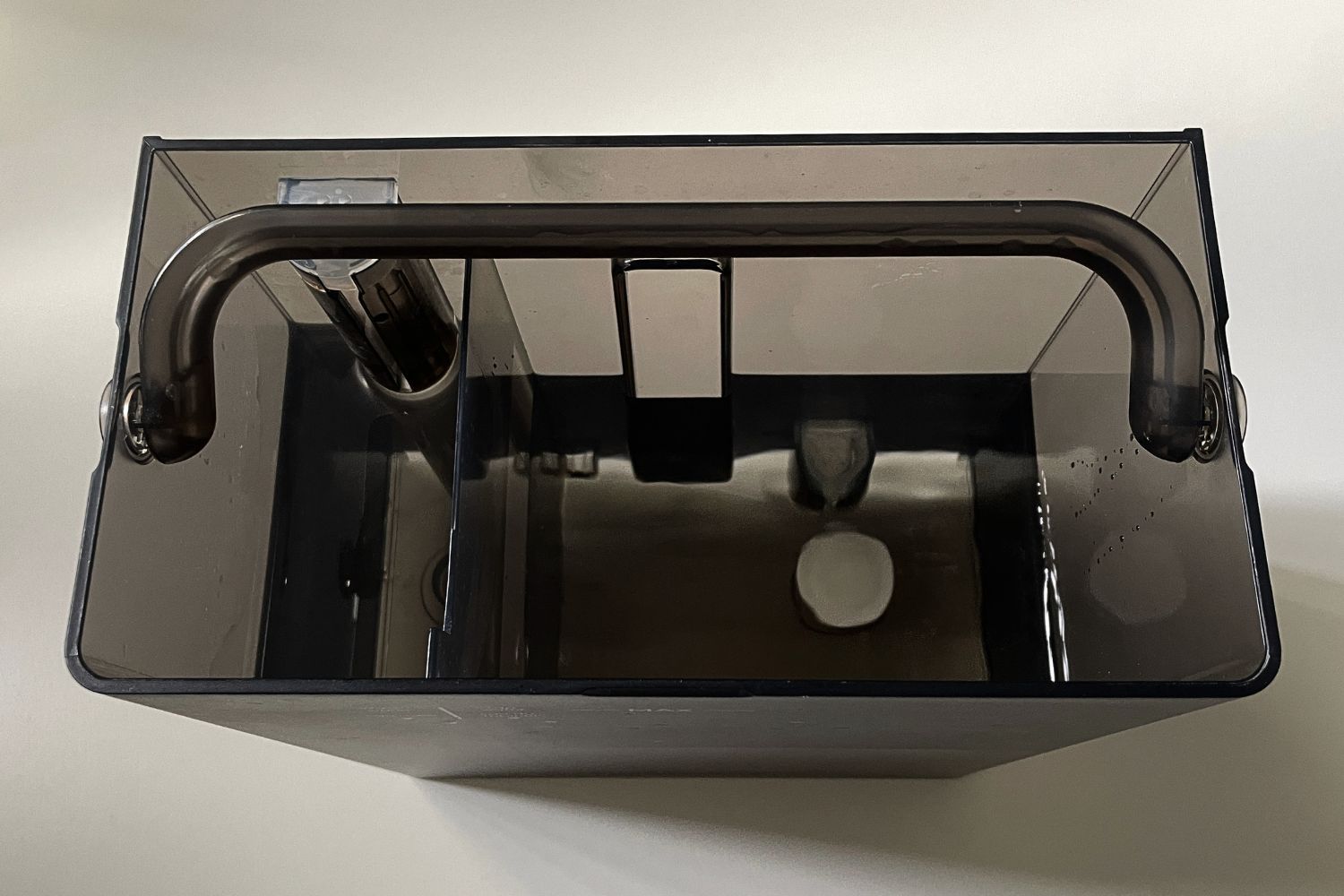
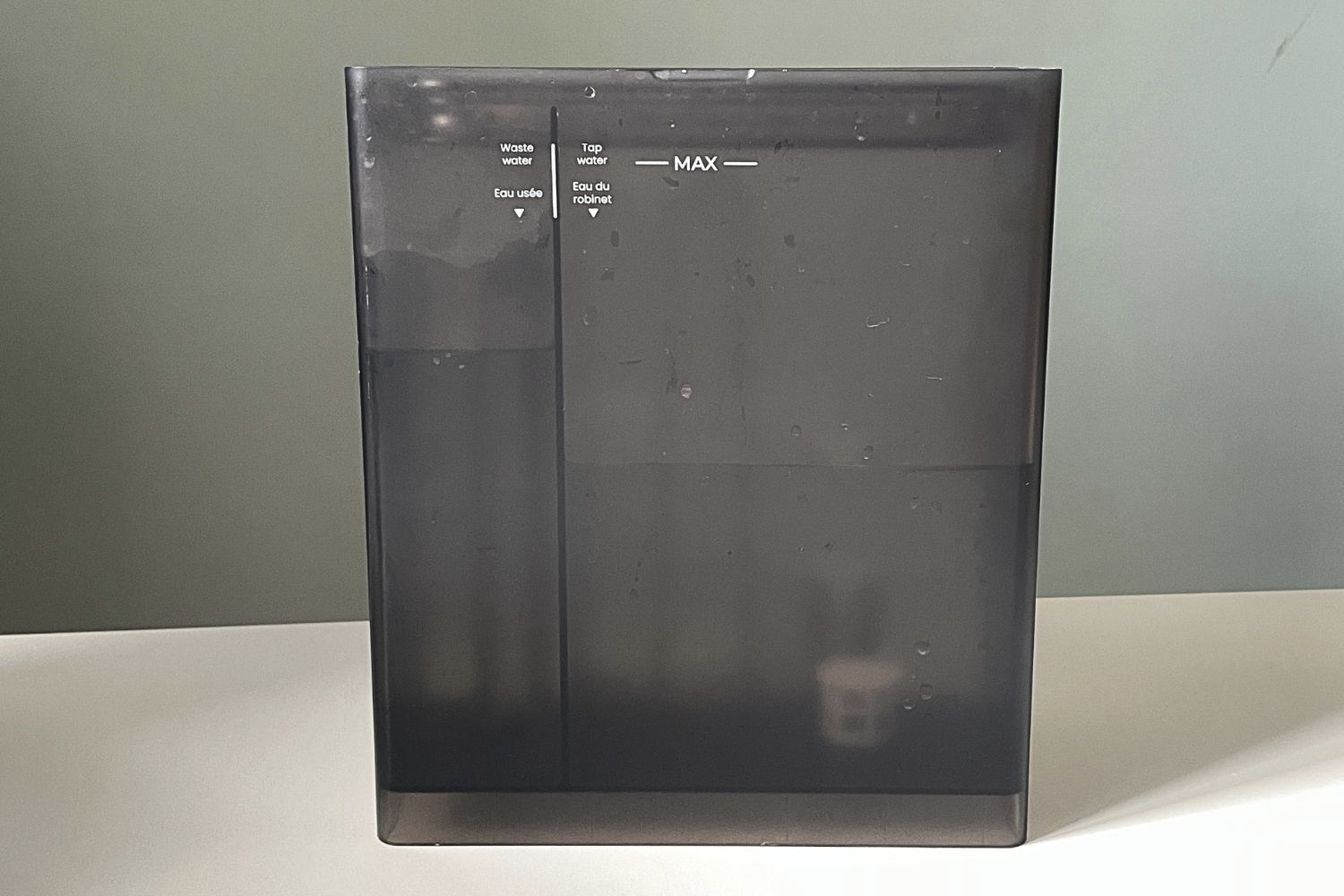
Every reverse osmosis system produces waste, because the membrane lets the water pass and rejects the rest, which has to go somewhere. Waterdrop declares a ratio of 3 to 1 for the M6HG, i.e. three liters filtered for every liter discarded. Translated into practice, of four liters poured into the tank, one is wasted. A family that consumes three filtered liters a day sends approximately 365 down the drain at the end of the year. The 5.5 liter tank is built on this proportion, with 4 liters for the water to be treated and 1.5 for the residual water.
So far the nameplate data, our impression of use, as mentioned, has been of a wide margin, but an impression is not a measurement. Without having checked with a graduated container how much water enters and how much exits, it cannot be claimed that the appliance wastes more than declared. It can be said that a quarter of the water poured, even if we take the official figure at face value, is not a small amount for a house that pays attention to consumption.
On the other side of the scale we put the plastic bottles that you will not have to buy, transport and dispose of. It must be said that the environmental bill would only add up if the device replaced packaged water, because for a kitchen where you already drink from the tap it would only add waste that wasn’t there before.
Regarding the issue of reuse, the manufacturer suggests using the residual water for cleaning or for plants. Nothing to say about cleaning, more caution is needed with plants, because the waste in question concentrates the salts and substances retained by the membrane, and the quality depends on what comes out of the tap at home.
How much does it cost to maintain
On the European Waterdrop website the M6HG is on promotion for 359 euros, compared to the 429 on the list, on Amazon the price follows current offers and should be checked before purchasing. The replacement filter costs 69.99 euros and lasts up to twelve months according to the manufacturer, less than twenty cents a day.
Then there is the current, the card does not report the power absorbed and simply warns that the appliance must be connected to the electricity mains. Bringing the water to 95 degrees costs energy in any case, including the kettle, even if the data deserves the same evidence reserved for the micrometers of the membrane.
To whom it suits
The M6HG makes sense in a house where hot water for drinks is used several times a day and where an under-sink system cannot or does not want to be installed. It is less convincing if the objective was only to drink water with the minimum expense: let’s remember how the water from the Italian network is already subjected to the controls required by Legislative Decree 18 of 2023 and can be safely drunk as it is.
