
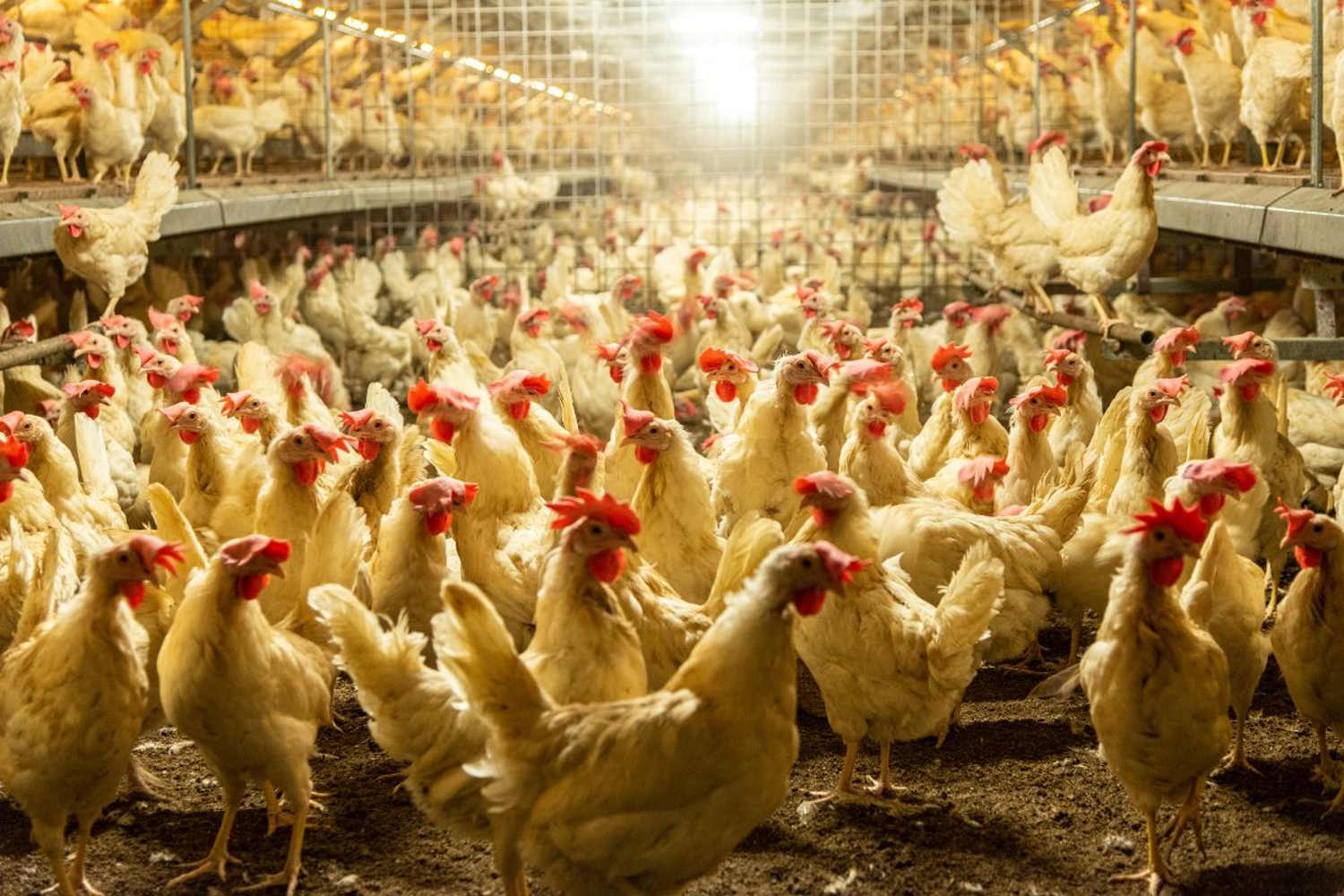
A new intensive farm capable of hosting up to 160 thousand broiler chickens in an area already burdened by pollution linked to animal husbandry. It happens in Somaglia, in the province of Lodi, where the project for a large industrial plant could not fail to rekindle concerns about the quality of air, water and the sustainability of a production model that would now have exceeded the limits of the territory.
The complaint comes from Legambiente Lombardia, which asks the Region to review the criteria with which the funding of the Common Agricultural Policy (CAP) is distributed, avoiding continuing to support farms with a disproportionate number of animals compared to the available land.
The problem, in fact, and we know it well, does not only concern Somaglia. The entire livestock system of lower Lombardy is under pressure.
The Po Valley
Between Lodi, Cremona, Mantua and the lower Bresciana area, according to data recalled by the environmental association, the quantity of manure produced by livestock is almost three times higher than that which crops can absorb.
A fact that helps to understand why the concentration of intensive farming represents such a delicate environmental issue.
Manure, sewage and manure (all the excrement of chickens and other farmed birds) can be valuable fertilisers, of course, because they contain nutrients such as nitrogen and phosphorus, but when they are distributed in excessive quantities, what should nourish the soil risks turning into a source of pollution. Excess nitrogen can contribute to the formation of ammonia, which promotes the production of secondary fine particulate matter in the atmosphere, and nitrates, responsible for the contamination of groundwater. It can also generate nitrous oxide, a potent greenhouse gas. Phosphorus, however, can reach rivers and lakes through land runoff, fueling eutrophication phenomena that compromise aquatic ecosystems, up to the Po basin and the Adriatic.
It is no coincidence, underlines Legambiente, that the ARPA control units in the areas near Somaglia record some of the worst air quality levels in Lombardy.
Furthermore, not everyone knows that many Lombardy farms depend to a large extent on feed purchased externally, while the available agricultural land is not sufficient to support the number of animals raised. According to Legambiente, Lombardy imports approximately three-quarters of the corn and almost 90% of the protein feed intended for regional livestock farming. A system which, the association observes, increasingly resembles a processing industry, in which raw materials coming from other continents are converted into meat, milk and eggs, while the territory must take charge of the manure produced.
The request to the Region
For Legambiente, the solution must start from the distribution of public resources.
Up to now the Region has fed, with the resources deriving from the Common Agricultural Policy, the CAP, the unsustainable density of animals raised in the territory, denounces Damiano Di Simine, scientific director of Legambiente Lombardia.
The proposal is to introduce a limit to the number of animals per hectare of agricultural land that can benefit from European aid, excluding from contributions companies without land or with an excessive livestock load compared to the area dedicated to fodder crops.
CAP aid must respect the European principle according to which activities supported by public contributions must not cause significant environmental damage, concludes Di Simine.
The case of Somaglia, therefore, brings to the center a question that concerns the entire Po Valley: does it make sense to continue to finance the expansion of intensive farming with public resources in territories that already struggle to manage their environmental impact?
