
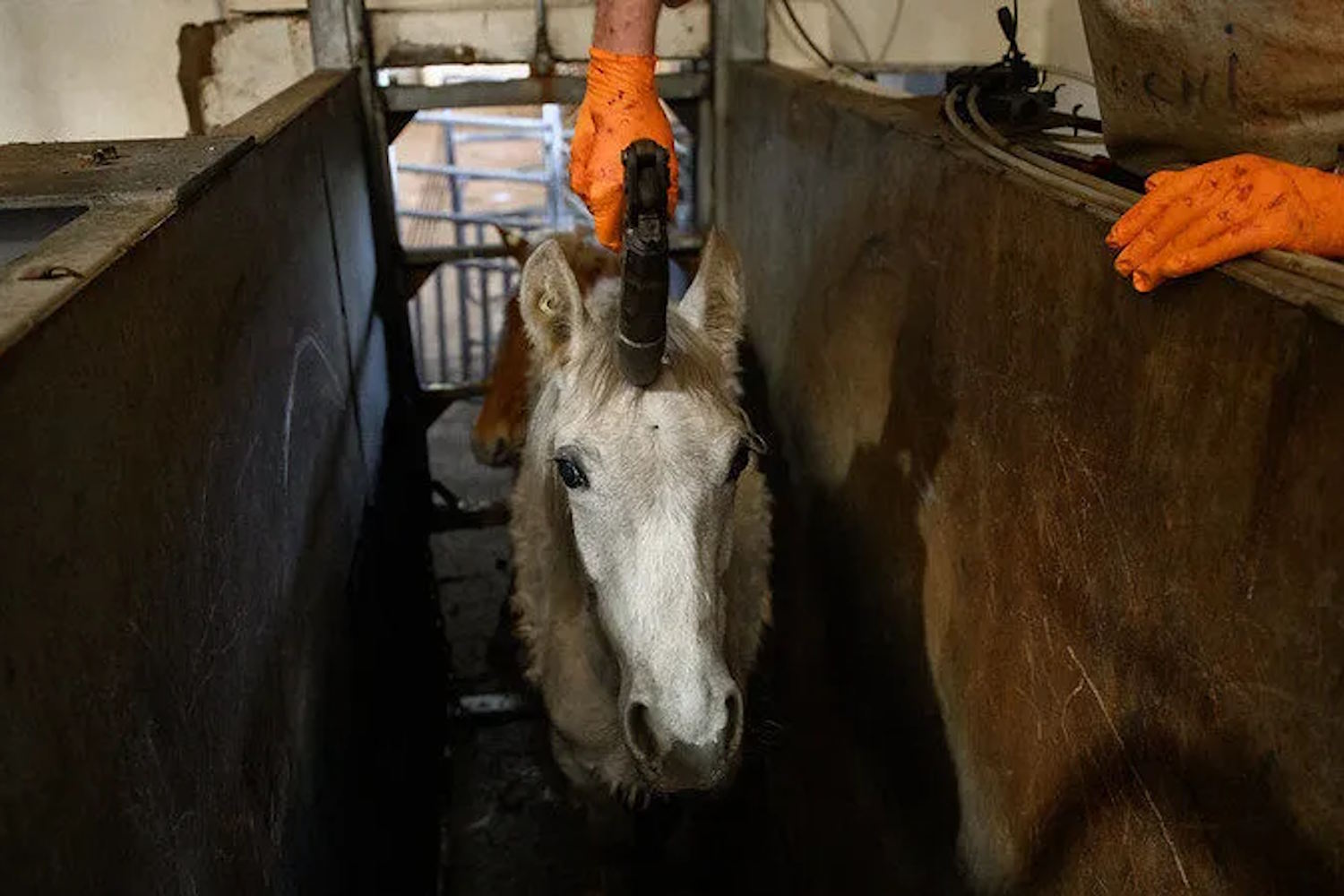
There is an antibiotic that should be used with particular caution in food-producing animals. Yet, according to a new investigation by Animal Equality Italia, traces of this substance were found in more than half of the horse meat samples purchased in Italian supermarkets and butchers.
Let’s talk about enrofloxacina veterinary drug whose use requires specific precautions due to its possible contribution to the phenomenon of antibiotic resistance.
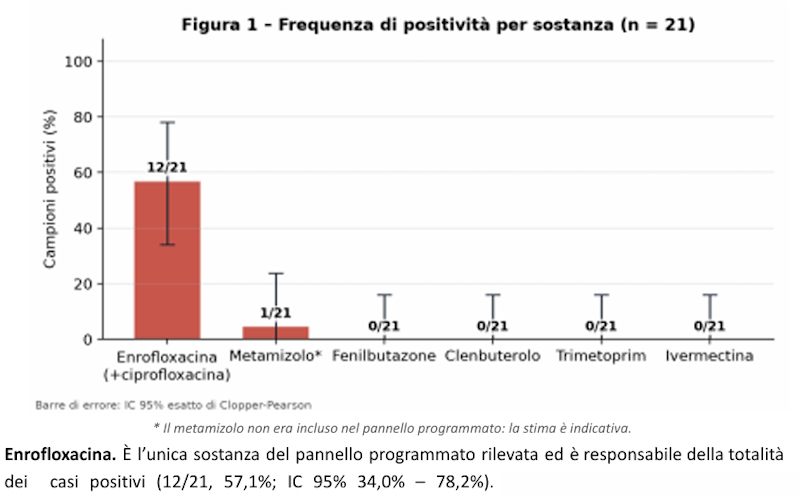
The numbers are those published by the animal rights organisation: out of 21 samples of horsemeat analysed, 12 tested positive, equal to 57%. A result that Animal Equality decided to report to the Carabinieri Health Protection Command (NAS), asking for clarification on the methods of use of the drug and on controls along the supply chain.
Be careful, however: it does not mean that 57% of all horse meat sold in Italy contains antibiotics. The survey concerns a limited number of samples and does not represent a statistical survey of the entire national market. The data, however, raises questions that deserve answers.
What the analyzes found on horse meat
The survey, published exclusively by The Independentwas conducted on samples purchased during 2026 in seven Regions:
Three samples for each Region, coming from different sales points, were subjected to laboratory analysis to search for the presence of some pharmacological substances.
@Animal Equality
The results show a particular distribution: all three samples examined in Veneto, Lazio, Puglia and Sicily tested positive for enrofloxacin, while those from Lombardy, Emilia-Romagna and Campania did not show the presence of the antibiotic.
However, the analyzes did not reveal any findings phenylbutazone, clenbuterol, trimethoprim And ivermectin. The presence of metamizole, a painkiller, was also found in one sample.
Another element concerns the ciprofloxacinactive metabolite of enrofloxacin, detected together with the antibiotic in the 12 positive samples. A result compatible with the administration of the drug to animals before slaughter, according to the interpretation provided by the organization.
But knowing the presence of a residue is not enough, in itself, to reconstruct when the medicine was administered, whether the withdrawal periods were respected and whether there were irregularities in the veterinary prescriptions. To establish this, further checks on the health documentation and traceability of the animals are needed.
What is enrofloxacin and why is it a concern
It is a veterinary antibiotic used to treat certain bacterial infections. It belongs to the fluoroquinolone family, a particularly important class also in human medicine.
The European Medicines Agency (EMA), through its classification of veterinary antibiotics, places fluoroquinolones in category B, called Restricti.e. “to be limited”.
This means that their use in animals must be carefully evaluated, favoring antibiotics belonging to less critical categories where possible.
@Animal Equality
For horses intended for food production, in Italy there are no enrofloxacin-based veterinary medicines specifically authorized for this species. The veterinarian can use it in certain conditions through the system of prescription in derogation, provided for by European legislation, respecting specific obligations.
The point raised by Animal Equality is therefore the frequency with which the drug was detected in the samples analyzed: if a medicine should only be used in particular circumstances, how can its presence in 12 out of 21 samples be explained?
This is the question that the organization asked the health authorities.
Is meat dangerous?
According to the results released by Animal Equality, the antibiotic concentrations detected in the samples are lower than the maximum residue limit established by European legislation. The maximum residue limit, or MRL, indicates the legally permitted maximum concentration of a pharmacologically active substance in foods of animal origin, established on the basis of scientific assessments relating to consumer safety.
A food that respects these values is not automatically considered irregular simply due to the presence of drug residues. This also means that the published analyzes do not demonstrate that the consumption of those samples represents an immediate health danger.
Animal Equality, however, draws attention to another issue: antibiotic resistance. the excessive or improper use of antibiotics, including in livestock, favors the selection of drug-resistant bacteria, making it more difficult to treat some infections in humans and animals.
According to Ilaria Ferri, technical-scientific consultant involved in the investigation, the repeated presence of residues of an antibiotic whose use should be limited represents a signal to be investigated further. The consultant highlights the risk that exposure to low concentrations of antibiotics could contribute to the selection of resistant bacteria.
In any case, it should be noted that the discovery of residues below the legal limits does not in itself demonstrate that those who consume that meat develop antibiotic resistance. To assess the actual risk, data on concentrations, dietary exposure and microbiological effects are needed. However, the question is part of the principle OneHealthaccording to which human, animal and ecosystem health are closely linked.
Finally, it is not only antibiotic residues that are of concern, but also the traceability of horse meat. In recent days, the NAS of Ragusa have dismantled an alleged system of clandestine slaughter of horses not intended for human consumption (seven people were involved in the investigation, including a veterinarian from the ASP of Syracuse who ended up under house arrest). Last September, however, an international operation supported by Europol brought to light an alleged horse trafficking network between Belgium, France, Ireland and the Netherlands, with falsified documents and manipulated microchips to hide the identity of the animals and illegally enter them into the food supply chain.
Events that are distinct from the investigation into antibiotics, but which put the spotlight back on the critical issues of the sector.
For Animal Equality, all this reinforces the need to definitively ban the slaughter of equids, recognizing them as companion animals. A request supported together with the Islander Foundation through a popular initiative bill.
HERE you can find the complete investigation.
