
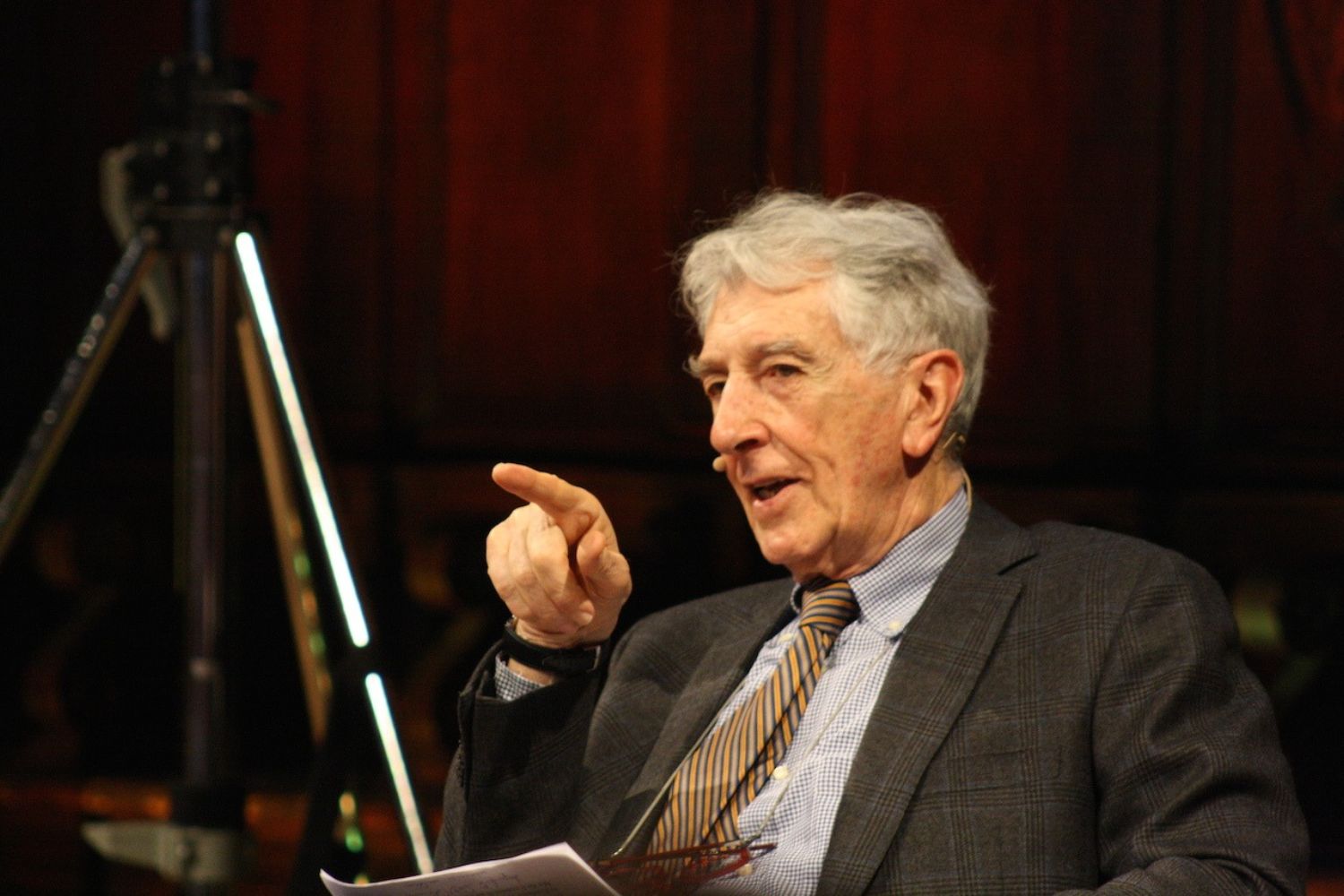
Italy mourns the passing of Corrado Augias. The famous journalist, writer and television host passed away at the age of 91: the news was reported by Repubblica, a newspaper to which Augias was very attached.
With him disappears one of the most authoritative figures of Italian culture, an intellectual capable of narrating history, literature, philosophy and the great issues of society with an unmistakable style, made of rigor, elegance and clarity. For over half a century, Augias has represented a precise way of doing journalism: explaining without trivializing, questioning without claiming to always have an answer and cultivating doubt as an instrument of knowledge.
From his debut on television
Born in Rome on 26 January 1935, to a Sardinian father, an Air Force officer, and a French mother, Augias took his first steps in Rai in the 1960s, and then established himself in cultural journalism. Over the course of his career he collaborated with some of the main Italian newspapers, including L’Espresso, Panorama, La Stampa and la Repubblica, also working as a correspondent in Paris and New York.
It is precisely with la Repubblica that he ties an important part of his activity, becoming one of the most recognizable names in the newspaper thanks also to the famous letters column, through which he addresses political, moral and social issues, often transforming readers’ questions into collective reflections.
From Yellow Telephone to The Tower of Babel
For millions of Italians, Corrado Augias was above all one of the most representative faces of cultural dissemination on television. The great success came with Telefono giallo, broadcast since 1987, an innovative program dedicated to the mysteries and unsolved cases of Italian news.
This was followed by programs such as Babele, Enigma, Le storie – Diario italiano, Quante storie, Città segrete, Rebus and La gioia della musica. In 2023, after a very long career in Rai, he arrived at La7 with La Torre di Babele. Different programs, united by the same belief: culture must not be a privilege for the few, but a heritage accessible to all. Augias managed to talk about complex topics without raising his voice, without chasing the spectacle at all costs and without underestimating the intelligence of the audience.
Augias’ books and civil and environmental commitment
Alongside television, Augias has built a prolific literary career. Among his best-known books are The Secrets of Paris, The Secrets of Rome, The Secrets of Italy and Inquest on Jesus, written together with Mauro Pesce. He has also written detective novels, including the trilogy dedicated to Inspector Sperelli, and autobiographical works such as La vita si impara, published in 2024.
His intellectual activity has always been accompanied by a strong civil commitment, by the defense of the secular state and democratic values. Augias also wanted to shine a spotlight on the climate crisis and environmental protection. During an episode of The Tower of Babel dedicated to global warming Augias uttered this phrase: “Either all together we will be saved or all together we will be condemned to a worse, much worse life.” A warning to collectively face this challenge that concerns us all, without exception. Between 1994 and 1999 he was also a member of the European Parliament, elected as an independent on the lists of the Democratic Party of the Left.
The precious legacy he leaves us
In a media landscape increasingly dominated by speed and the search for confrontation, Corrado Augias represented another idea of journalism and television: one in which knowledge counts more than hype and complexity is not an obstacle, but something to be understood. He leaves behind his wife Daniela Pasti and his daughter Natalia, a Rai journalist. With his passing, Italy loses a voice that accompanied generations of readers and viewers. But above all a man who made intellectual curiosity a profession and critical thinking a life lesson. His most precious legacy remains perhaps that of never stopping asking questions, even when the answers seem already written and obvious.
