
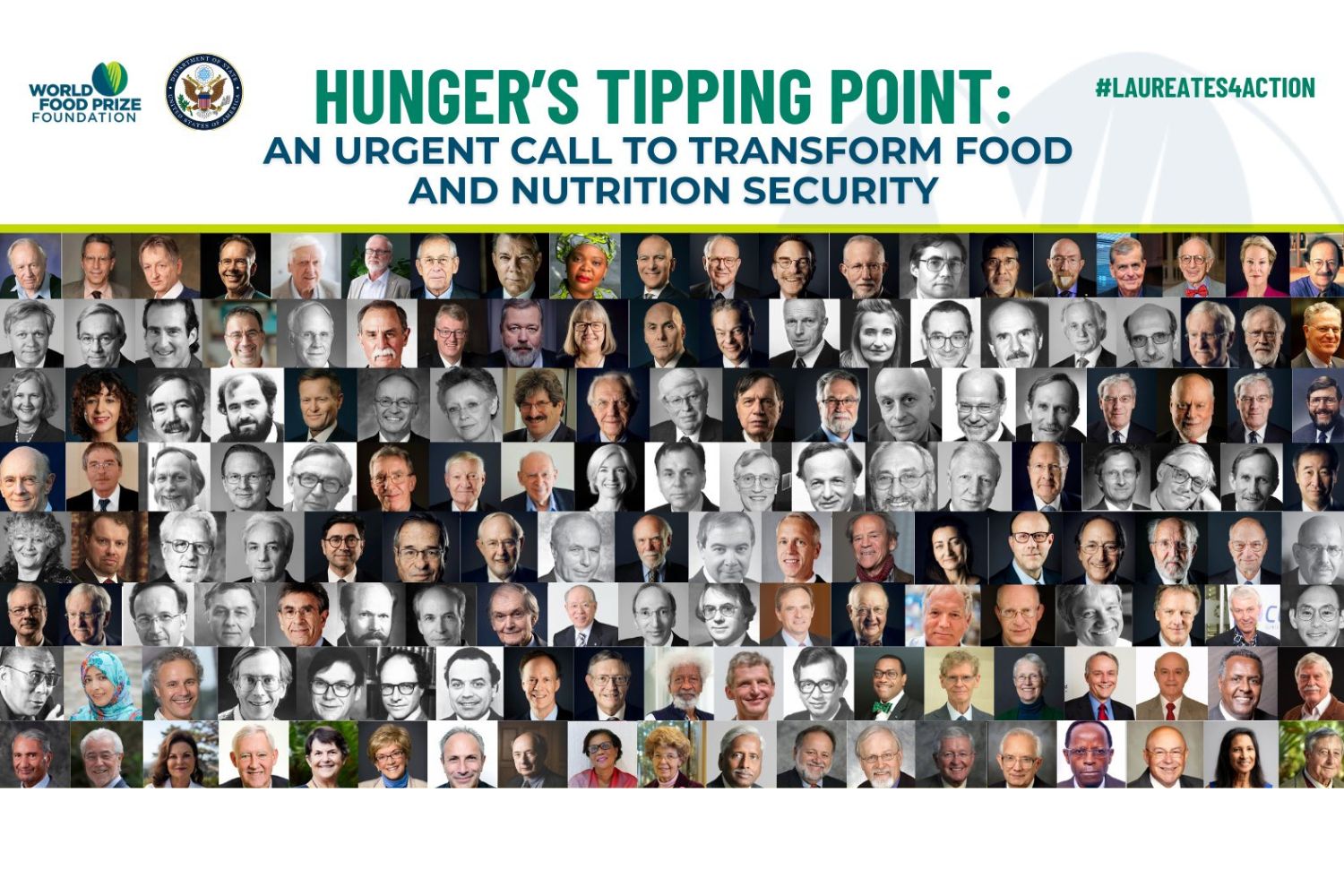
An unprecedented appeal, an unprecedented awareness. Over 150 prominent figures, among Nobel Prize winners and World Food Prize winnershave decided to put world hunger in the spotlight, calling for radical political and economic support for agricultural research and innovation. The goal? Avoid a food catastrophe of dramatic proportionswhich could hit our planet within the next 25 years.
153 Graduates warn:
Hunger Tipping Point Ahead!
Science & innovation are critical to feed 9.7B by 2050. It’s time for a moonshot to tackle food insecurity.
Learn more: https://t.co/LygGcoMqKf#Graduates4Action #MoonshotForHunger pic.twitter.com/WiqxHpe3hy
— World Food Prize Foundation (@WorldFoodPrize) January 14, 2025
The 2025 open letter — referred to as “Laureate Letter 2025” — is a very clear warning: “We are facing a dangerous trajectory towards a tragic gap between the supply and demand of food around the world” . Current estimates speak of 700 million people suffer from hunger today and 60 million children under the age of five who grow up with nutritional deficiencies that compromise their cognitive and physical development forever. AND the number of individuals to feed will increase by a further 1.5 billion by 2050.
The combination of armed conflicts, growing economic instability, market pressures and climate change puts agricultural production under siege. THE extreme weather phenomenathe progressive erosion of the soil, the loss of biodiversity and the scarcity of water resources create an alarming picture: in particular, fundamental crops such as corn – a staple food for much of the African continent – are already seeing declining productivity today, and future prospects are even worse.
According to the letter, “today’s food access challenges will be exacerbated by tomorrow’s production difficulties”. A phrase that reveals all the urgency to act, because “we are not even close” to achieving it the goal of producing the food that will be needed by the future population. Despite the efforts inherited from the Green Revolution of the last century, experts underline how investments in agricultural research and development have suffered a drastic slowdown, with regulations that are often too restrictive and limit the diffusion of new technologies.
Yet, science offers promising solutions. In particular, the letter underlines the need to promote those research projects with “high risk and high reward” — defined as real “lunar missions” (moonshots) — capable of generating technological leaps in agricultural production. We talk about improve photosynthesis in staple crops such as rice and wheatto develop cereals capable of biologically fixing nitrogen (reducing dependence on chemical fertilizers) and to transform annual crops into perennials to preserve soil fertility.
Among the possible areas of intervention, the study and improvement of plants “forgotten” or neglected by industrial agriculture, but with great nutritional potential and resistance to adverse climatic conditions, also play a central role. Space, therefore, also for indigenous cropscapable of withstanding water stress and guaranteeing an essential nutritional supply to local populations. Furthermore, there is no shortage of proposals to make the preservation of fruit and vegetables longer and safer, combating food waste.
However, research is not enough if it is not accompanied by far-sighted policies and a regulation that supports innovation in a responsible manner. The appeal of the Nobel Prize winners and the winners of the World Food Prize is addressed to political decision-makers from all over the world, called to encourage concrete investments and create effective incentives for the adoption of advanced technologies, including artificial intelligence tools, computational biology and latest generation genomic techniques.
The urgency of a change of direction is also underlined by the words of the promoters of the letter, convinced that “we cannot anchor our destiny and our agricultural systems to models that are now outdated and with increasingly scarce non-renewable resources”. The idea is to create transnational collaborations, with research centers and universities that operate in synergy to achieve shared objectives: a global coordination mechanism, which identifies and supports the most promising research projects, monitoring their long-term impact.
Faced with the complex picture of hunger and malnutrition, however, there is room for hope. The signatures of the appeal underline how the “stakes” are high, but also how the economic and social returns of a massive investment in agricultural research are extraordinarily favorable. Precisely this aspect has animated the great scientific and technological revolutions of the past, such as the landing on the Moon: if it was possible to achieve goals once considered unthinkable, the same can be done to protect the food security of a planet that will have almost 10 billion people in 2050.
It is a crucial moment: the steps the international community takes now, the 2025 letter argues, “will decide whether tomorrow’s food crisis is tragically inevitable or preventable.”
