
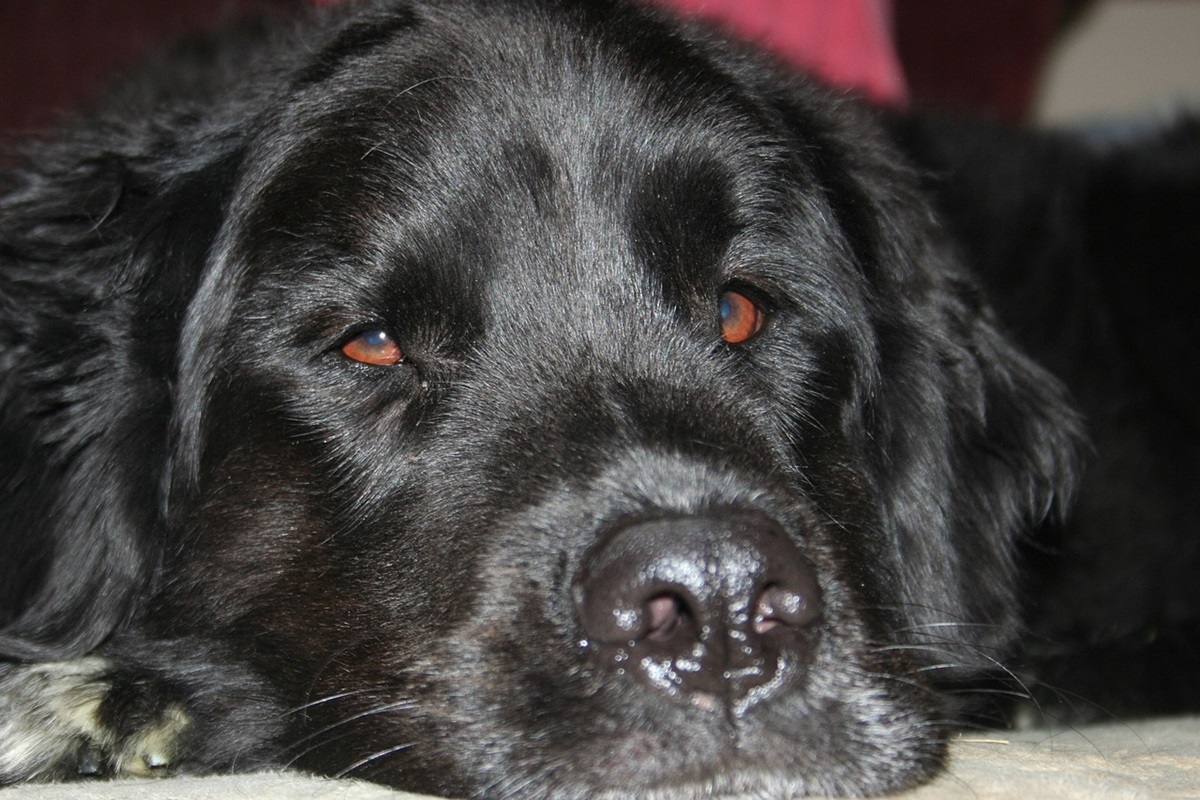
A dermatological disease that often affects our dog is called hot spots in English. Also known as pyotraumatic dermatitisin a nationally popular way is often defined by the owners as dog eczema. It tends to occur especially in summer (but not only), especially when temperatures are hot and humid. Technically it can occur in all dog breeds, obviously also in mixed breeds, but dog breeds with very thick fur, from medium-short to long, seem to be particularly at risk. In fact, it is often seen in Labrador retrievers, Golden retrievers, and Newfoundlands.
It would be best, however, not to define it as eczema, an entity that both human and veterinary dermatologists find quite generic as a definition. Say “eczema” to a dermatologist, in fact, is like telling an electrician that there is a “contact problem”. Of course, all electrical problems are based on issues involving electrical contacts.
Hot spots in dogs or eczema?
Hot spots or pyotraumatic dermatitis or acute moist dermatitis are quite recognizable lesions that appear quickly on the skin of dogs. They present themselves as red and inflamed areaswith alopecia and moist, often oozing exudate or pus. These are precisely what owners generically define as “the dog has eczema”, thus indicating a generic form of dermatitis.
They appear very quickly. Although they can appear practically anywhere on the dog’s body, their preferred locations are the head (especially the cheeks), hips and paws.
In addition to the fact that they appear very quickly, it must also be considered that they are often hidden under the furso sometimes the owner does not notice their presence until they become very large.
But what causes them? It all starts from one microtrauma that the dog causes itself. When he scratches himselfhere they are hot and humid conditions they favor rapid bacterial proliferation which literally causes the formation of the hot spot within a few hours.
These are some of the main ones causes at the base of the hot spots:
Symptoms of pyotraumatic dermatitis in dogs

These are the symptoms which should make you suspect the presence of a hot spots:
Hot spot therapy in dogs
There therapy for a dog hot spot It is based on several steps. There is no specific cure, but therapy must be adapted depending on the severity of the injury and the cause. For example, if the cause is suspected flea bite dermatitis, the dog’s antiparasitic protection will need to be strengthened. But if the cause is joint pain or an infection of the paranal glands or an ear infection, these will also need to be treated.
Once this is done, you will also need to simultaneously:
You might also be interested in:
