
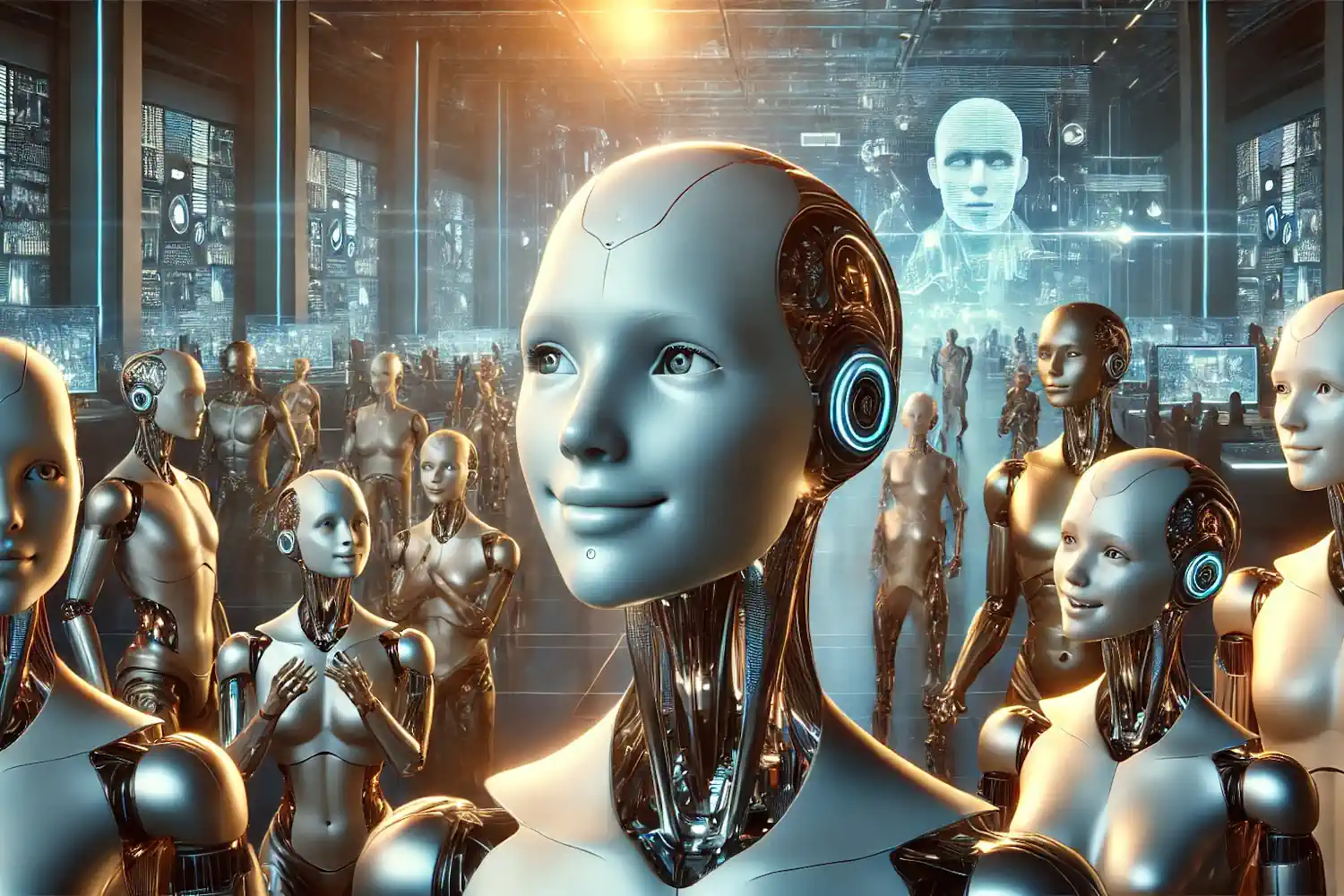
In the heart of technological innovation, theIa He is taking his first steps towards a future that seems to have come out of a science fiction film: that of machines capable of recognizing and developing human emotions. But is it really possible that an algorithm understands our moods? And above all, what are the implications of this transformation?
Empathetic ia: a subtle border between simulation and reality
The idea that a machine can recognize and respond to human emotions might seem science fiction, but today it is no longer. Thanks to advanced technologies such as the recognition of facial expressions, the analysis of the voice and even physiological signals, artificial intelligence is learning to understand our emotions.
A concrete example? The algorithms already used in the customer service sector. These systems manage to identify frustration or dissatisfaction in real time, adapting the responses to calm the situation. But what appears as a more “human” interaction really such?
Here opens the great debate: Can machines only simulate emotions or can they develop a real empathy? The skeptics say that without conscience, any attempt at empathy by the AI remains an illusion. Yet imagining a future in which these technologies can be used to improve people’s lives is too fascinating a chance to be ignored.
Health and education: how the IA could change everything
Among the sectors that could benefit from the empathic, there is the Healthcare. Machines capable of interpreting the emotional state of a patient and adapting accordingly could change the face of health care.
Imagine an application of psychological support which, based on user emotions, provides immediate support against stress or depression. These tools could become one precious resource For those who live in areas without access to adequate care or for those who need immediate help. Of course, they would never replace a human therapist, but could represent complementary help.
A revolution in schools
Education could also be transformed by empathic IAs. In the classroom, a software capable of detecting the level of attention or the emotional state of students could help teachers to customize the educational path, making learning more engaging and effective. However, this raises important doubts: do we really want our moods to be continually monitored by an I?
A hidden cost: the environmental impact
Behind the dreams of an empathic I hide a less visible but equally important reality: the energy consumption. The technologies necessary to train and make these systems work huge quantities of energyaggravating the problem of CO₂ emissions.
The data centers, real artificial intelligence engines, are among the major responsible for this environmental impact. But the future is not without solutions: innovation could lead to the development of more efficient algorithms from an energy point of view and sustainable hardware. In other words, the IA could become “green”, but as long as sustainability becomes a priority.
Ethics and artificial empathy: the risks of a technology that wants to understand everything
When it comes to empathic ia, we cannot ignore ethical issues. Can we really trust machines that analyze our emotional states? The collection of data related to emotions could open the doors to new forms of surveillance, in which our feelings are monitored and used for commercial purposes or, worse, manipulators.
In addition, there is the risk of one trivialization of empathy. If an algorithm can replicate what we call “empathy”, it could change the way we perceive human relationships. Will we accept that a “FINA” machine to understand each other, or will this idea always remain unacceptable?
Less authentic human or human machines?
Empathetic ia opens a door to a future full of promises and uncertainties. If we be able to balance technological innovation, privacy protection and sustainability, this technology could improve profoundly our quality of life.
However, they remain fundamental questions: are we ready to live with machines that could know our emotions better than ourselves? And how will we guarantee that this knowledge is used for the common good, and not for private or commercial interests?
After all, perhaps the real challenge is not so much to understand to what extent the machines can imitate human emotions, but how we are willing to give control of our emotions to technology.
