
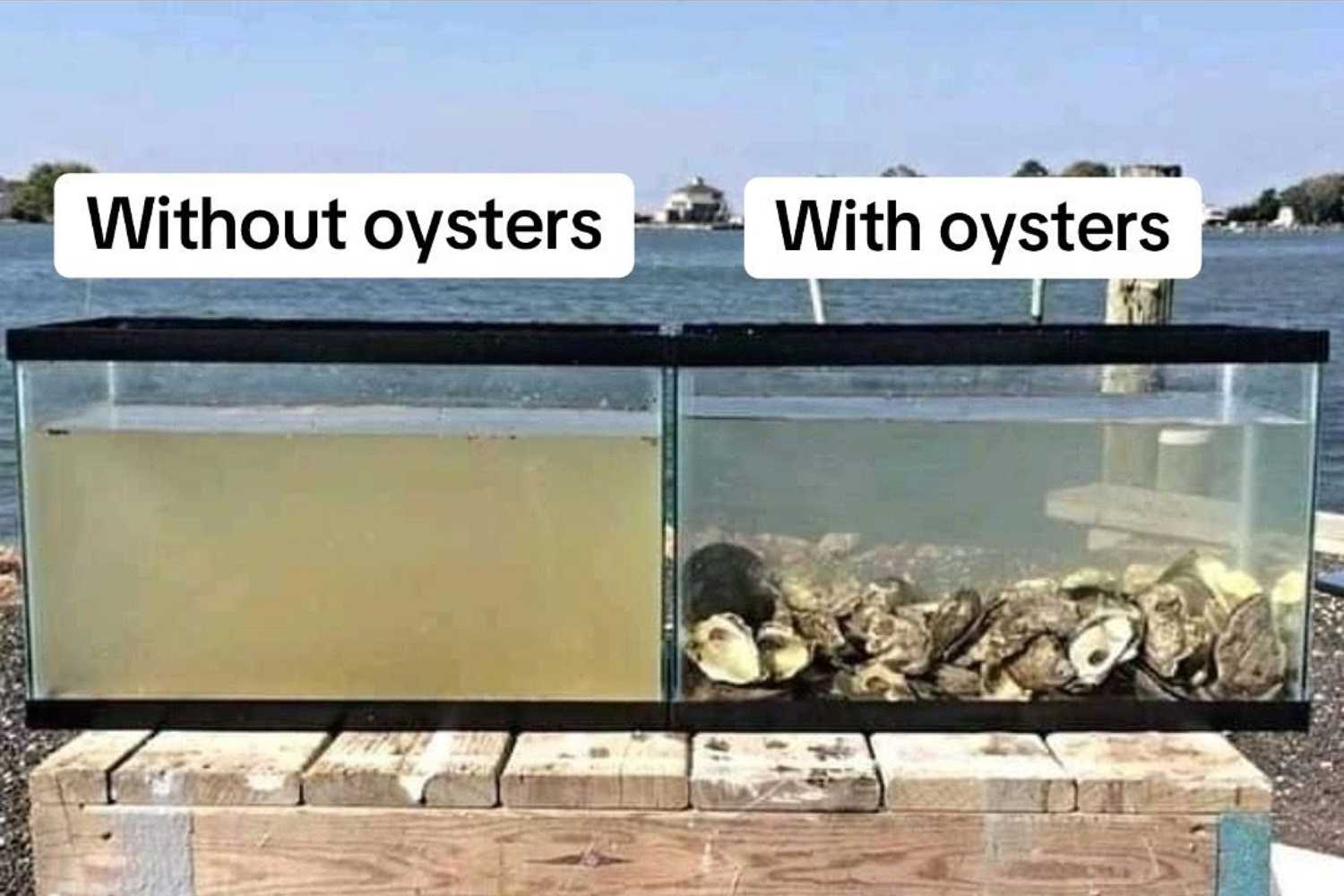
The oysters they are among the most effective Natural water filtration systems. A single oyster can filter up to 150 liters of water per dayimproving the quality of the seas through the elimination of algae, sediments and excess nutrients. This process is crucial, especially in marine areas subject to pollution from fertilizers and other waste.
When nutrients like nitrogen accumulate, in fact, they stimulate the uncontrolled growth of algae, which can Reduce oxygen levels and threaten the marine ecosystem. The oysters, on the other hand, incorporate these nutrients into their shells and fabrics or transform them into harmless sediments on the seabed.
In addition to filtering the water, the oysters form coral reefs with their shellscreating habitats for many marine species, including octopus, crabs and fish. In the past, oysters were a fundamental resource for coastal communities, both as food and as a source of economic sustenance.
Many, too many coral reefs of destroyed oysters
However, excessive fishing, pollution and climate change have led to Destruction of about 85% of the oyster coral reefs globally. For example, in the Chesapeake bay, the oysters once were able to filter the entire bay in a week; Today, the process would take over a year.
Despite the drastic decline, there are signs of hope thanks to Restoration efforts. In many areas, such as Harris Creek in Maryland, the restoration of oyster coral reefs has shown that he has a positive impact. Here, reconstituted barriers can filter the entire volume of the stream in less than ten days during the summer months, removing large quantities of nitrogen, an ecological service estimated at millions of dollars a year.
The success of these projects depends on an integrated approach that considers environmental variables such as temperature, salinity and turbidity of the water. Oysters are sensitive to extreme changes and, in unfavorable conditions, reduce their filtration activity. Despite the drastic decline, there are signs of hope thanks to Restoration efforts. Among these is the Billion Oyster Projecta non-profit initiative based in New York City founded in 2014 which aims to restore a billion oysters in the port of New York by 2035.
The project actively involves the local community, including students, teachers and citizens, in STEM educational programs (science, technology, engineering and mathematics) based on marine restoration. A key component of the initiative is the shell recycling programwho collaborates with over 60 New York restaurants to collect the shells of discarded oysters. These shells are then used as a substrate for the growth of new oysters, contributing to the reconstruction of coral reefs.
Despite these challenges, their role of “ecosystem engineers” is fundamental: the barriers they build offer refuge to many marine species and can significantly transform the quality of water and biodiversity. Investing in the restoration of oysters is not only an ecological benefit, but it also represents a sustainable and convenient alternative compared to traditional solutions for the treatment of waste water.
