
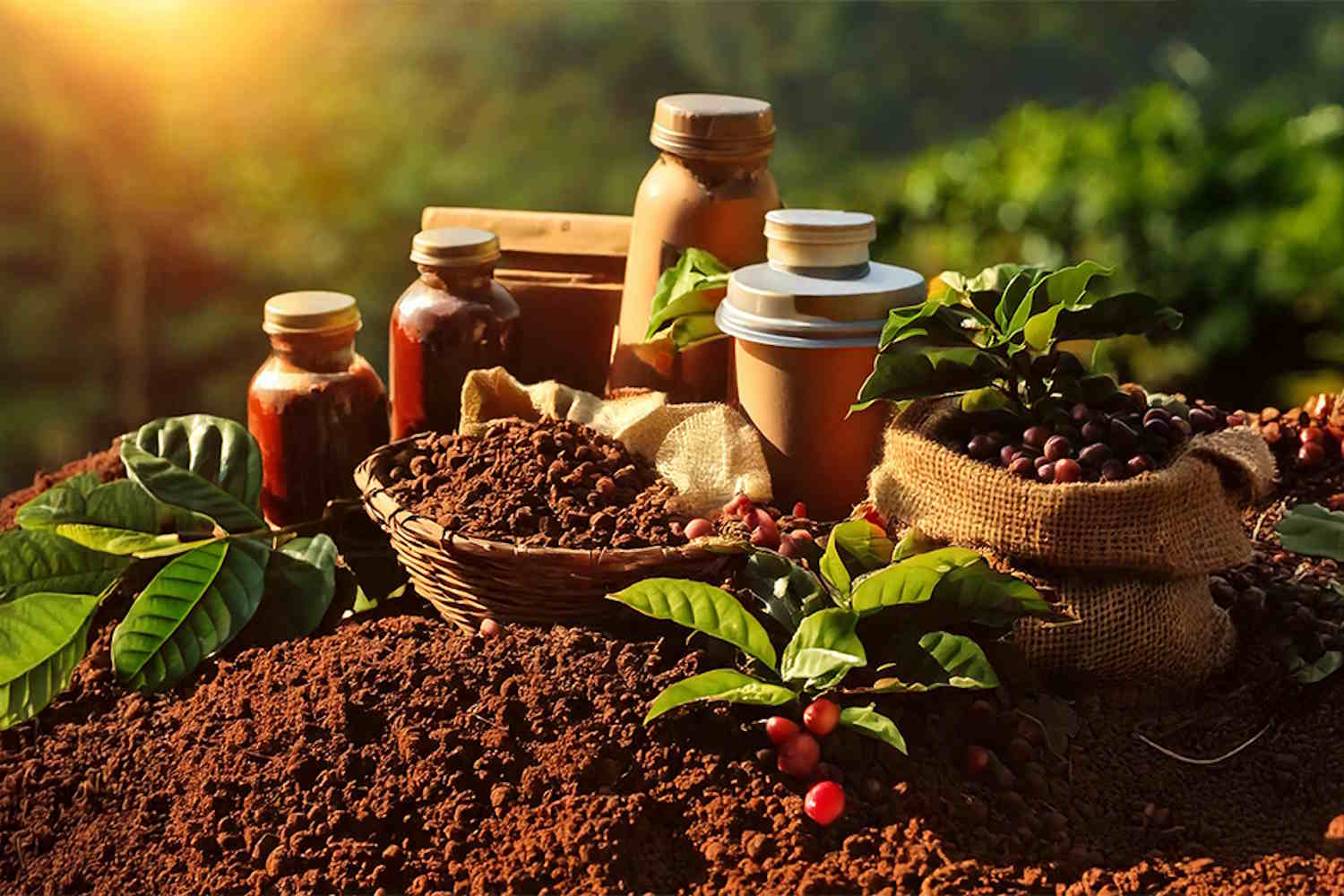
The coffee It is one of the most loved drinks in the world, but its production generates a huge amount of waste that often end up in the landfill. AND If these waste, instead of being a problem, become a resource?
Coffee is the second most exchanged product in the world, exceeded only by oil. World production for 2023-2024 is estimated at around 180 million bags of 60 kg (57% Arabic quality and 43% robust), but what you perhaps don’t know is that coffee processing generates a huge amount of by-products , calculated in the two -year period in about 840 million bags. This is what Enea discovered, the National Agency for new technologies, energy and sustainable economic development, which has identified in coffee waste, such as the Cascara (dried peel), the parchment and the Silverskina series of beneficial molecules with application potential in different sectors.
Cascara: a mine of beneficial molecules
Among the cafes of the coffee, Cascaraor the dried peel of the cherry cherry, It is the one that showed the greatest potential. “The scraps of the coffee bean are often considered a problem but, thanks to scientific research, they can turn into ‘mines’ of beneficial molecules, such as antioxidants, polyphenols, carotenoids, flavonoids and minerals, to create value -added products for various sectors” , explained the researcher Enea Loretta Bacchetta, co -author of the study.
The research, published in the magazine Plants, has identified 93 non -volatile molecules in the dried cascarathe highest number ever recorded. This opens the way to its best reuse, in line with the principles of circular economy and bioeconomics, generating additional income for coffee farmers.
Not only Cascara: parchment and Silverskin also have beneficial properties
In addition to the Cascara, also other by -products of coffee processing, such as the parchment (The protective layer that envelops the coffee seeds inside the cherry) and the Silverskin (the silver cuticle, not toasted), can play an important role thanks to their polyphenolic compounds.
The parchment, for example, can be used as natural herbicide around fruit treeswhile the Silverskin It can become a food, thickening and coloring ingredientin addition to being used in infusions and to improve the physical and chemical properties of agricultural soil in the cultivation of edible mushrooms.
The production of coffee is concentrated in developing countries located between the two tropics, where it represents a considerable fee of the income deriving from exports and constitutes a key source of sustenance for over 25 million families.
“Considering the volatility of international coffee prices, environmental factors such as climate change and parasites, trade and enhancement of coffee by -products could be advantageous for manufacturing families, the global coffee industry and the environment”, has concluded wand.
You may be interested in:
