
Purnima you owe bartenders was a girl who grew up in nature, and there began to love everything around her. During childhood she was raised by her grandmother, while the parents, with her father in the army, were often traveling. The grandmother, wise and patient, knew that the best way to manage a restless girl was involving her in the natural world. It was she who taught them everything on birds, animals and plants. And it was precisely with the grandmother that Purna saw the Hargila for the first time, a meeting that filled her heart of joy and that would have marked her future destiny.
The story of Purnima you owe bartenders
Purna after studying and completing her studies in Zoology in 2007 returned to the places of her childhood for the doctorate. What he finds is bleak: the storks he had loved so much are disappearing. The local inhabitants, who saw these birds as a bad omen, were systematically destroying their habitat, breaking down the trees where they nestled and violently chasing these majestic waders birds.
The Asian Marabù, locally known as “Hargila” (literally “bone eaten”), was despised for his food habits: like the vultures, he feeds on carcasses, a feature that had made him the object of superstitions and fears. With less than 1,200 specimens registered in the world, the species was on the verge of extinction.
The turning point comes when Purnima witnesses a traumatic event: a resident breaks a tree in his courtyard, destroying a nest and killing the chicks. That image becomes the catalyst of a mission that would have changed not only the fate of birds, but also that of thousands of women.
The commitment to save the Marabù
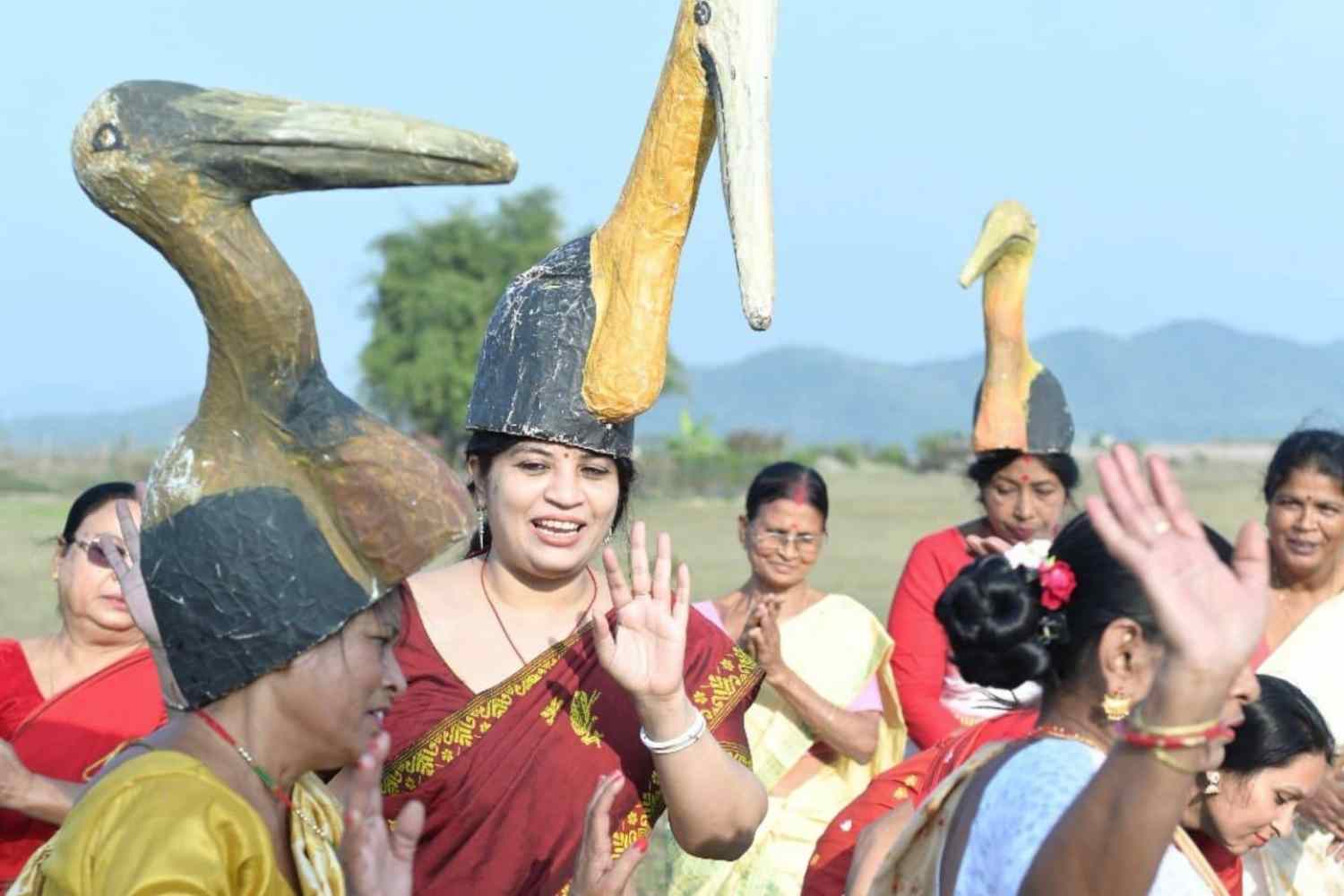
Instead of limiting yourself to academic research, Purna decides to act. His approach is revolutionary: instead of focusing only on the conservation of the species, he works to change the cultural perception of Hargila. Goes to a village in the village, talking above all with the women of the community. He transforms the image of the snake bird of misfortune to a symbol of local pride, integrating his figure into the traditional textile art of Assam.
10,000 women to save storks
Where the Community Meets Conservation, The Hargila Army Shines. #Purnimadevibarman#Hargilaarman#Hargila
Posted by the Hargila Army On Monday, Janogy 6, 2025
Thus was born the Hargila army, a force of 10,000 women who not only protects birds, but also finds its own economic independence. In 2021, with the inauguration of the Hargila Learning and Conservation Center, the project expands further. Thanks to 30 loans financed, women create artisan products with the image of the stork, transforming a symbol of misfortune into a source of income and pride.
The results are extraordinary. In the villages of Dadara, Pachariya and Singimari, the number of nests went from just 28 to more than 250, creating the largest reproductive colony of Asian Marabù in the world. The total population increased from 450 to 1,800 specimens, with the ambitious objective of reaching 5,000 by 2030.
Purnima’s commitment has not gone unnoticed. He received the prestigious Whitley Gold Award, which includes a financing of 100,000 pounds, and more recently the recognition “Champion of the Earth” of the United Nations. But his greatest success remains the cultural transformation he guided: today, when a chick is born, the community organizes a baby shower, singing songs and reciting poems in his honor.
“We’re overwhelmed with the Incredible Response to Dr. Purnima you owe Barman’s Stunning Assamese Mekhela Chador, Adorned …
Posted by the Hargila Army On Wednesday, December 11, 2024
This is not only a history of environmental conservation, but of female Empowerment and social transformation. Hargila’s army shows how environmental protection can go hand in hand with social progress, creating a better future for all species, human and non -human.
Hargila in Our Heart, Soul and Mind
Posted by the Hargila Army On Tuesday, December 20, 2022

Our Dearest Noni Baido Inspires US Every Day.
Posted by the Hargila Army On Tuesday, December 6, 2022
