
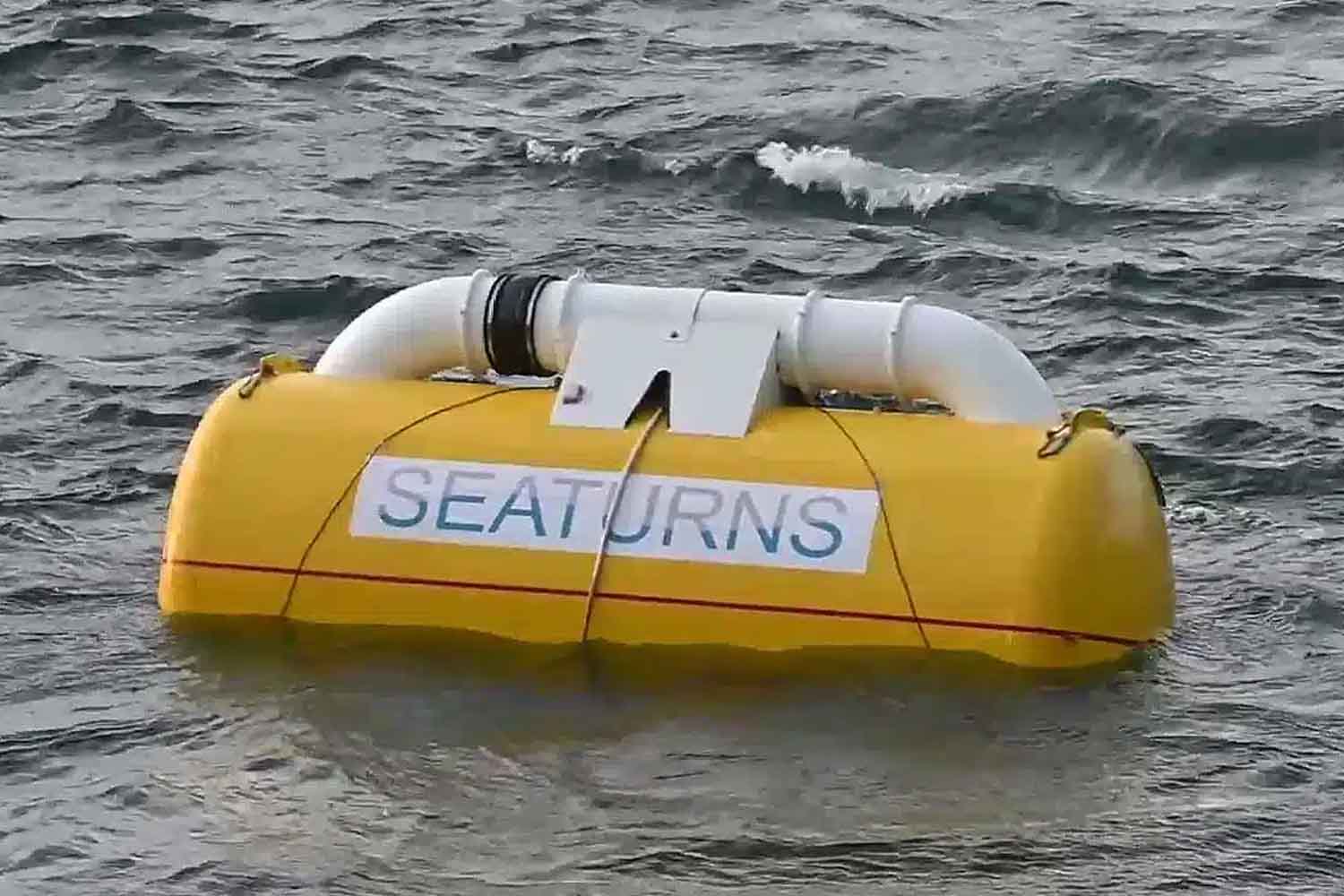
After 16 months of testing In the Brest Rada, the cylindrical fleet of Seaturns He has shown that he can produce electricity by exploiting wave motion, resisting storms and proliferations of marine organisms. A step forward for the energy of the wave motion, but the road is still long.
THE’Energy of the wave motion it is often neglected compared to the sun and the folk, but the World Energy Council (WEC) considers it a resource with a huge potential: it could satisfy until 10% of the world energy needs. Different technologies try to capture this energy, come on oscillating balls to floating chainsbut Seaturns focuses on a cylindrical fleeta sort of buoy capable of transforming the movement of the waves into electricity.
The prototype has been tested for over a year in Collaboration with Ifremerto verify stability, efficiency and resistance to extreme events. And the results? Interesting, but with some unknown ones.
A fleet that resists storms and marine organisms
During the tests, the device had to face difficult conditions, including the Storm Ciaranwhich hit the Brittany With violent winds. Second Gabriel Canteinsperspective and innovation director of Seaturns, the fleet has maintained good stability and produced more energy when the waves were high.
And as regards the proliferation of Alga and molluscs? No obvious problem, at least second Martin TräschIFREMER’s engineer: the presence of marine organisms on anchoring lines and on the immersed part He did not alter the operation of the device. Of course, these are only tests on a reduced scale prototypetherefore other tests will be needed before they can talk about a real energy revolution.
The next step? A larger prototype and more demanding tests
After these first results, Seaturns is working on a larger modellong 14.5 meterstall 7.5 meters and with a weight of 42 tons. The installation is expected to Saint-Nazaire in Julyto test technology on an industrial scale.
If everything goes as expected, the company aims to build Farm of the wave motorcycle pilot between 2026 and 2029with fleets of Ten devices each. The final goal? Make the system commercially available by 2030with applications designed for Isolated islands and industrial plantsincluding those for the green hydrogen production.
However, to carry out the project you need 2.4 million euros and collaborations with industrial partners. It will not be simple, but if the energy of the waves really wants to become a concrete solution, it’s time to accelerate.
