
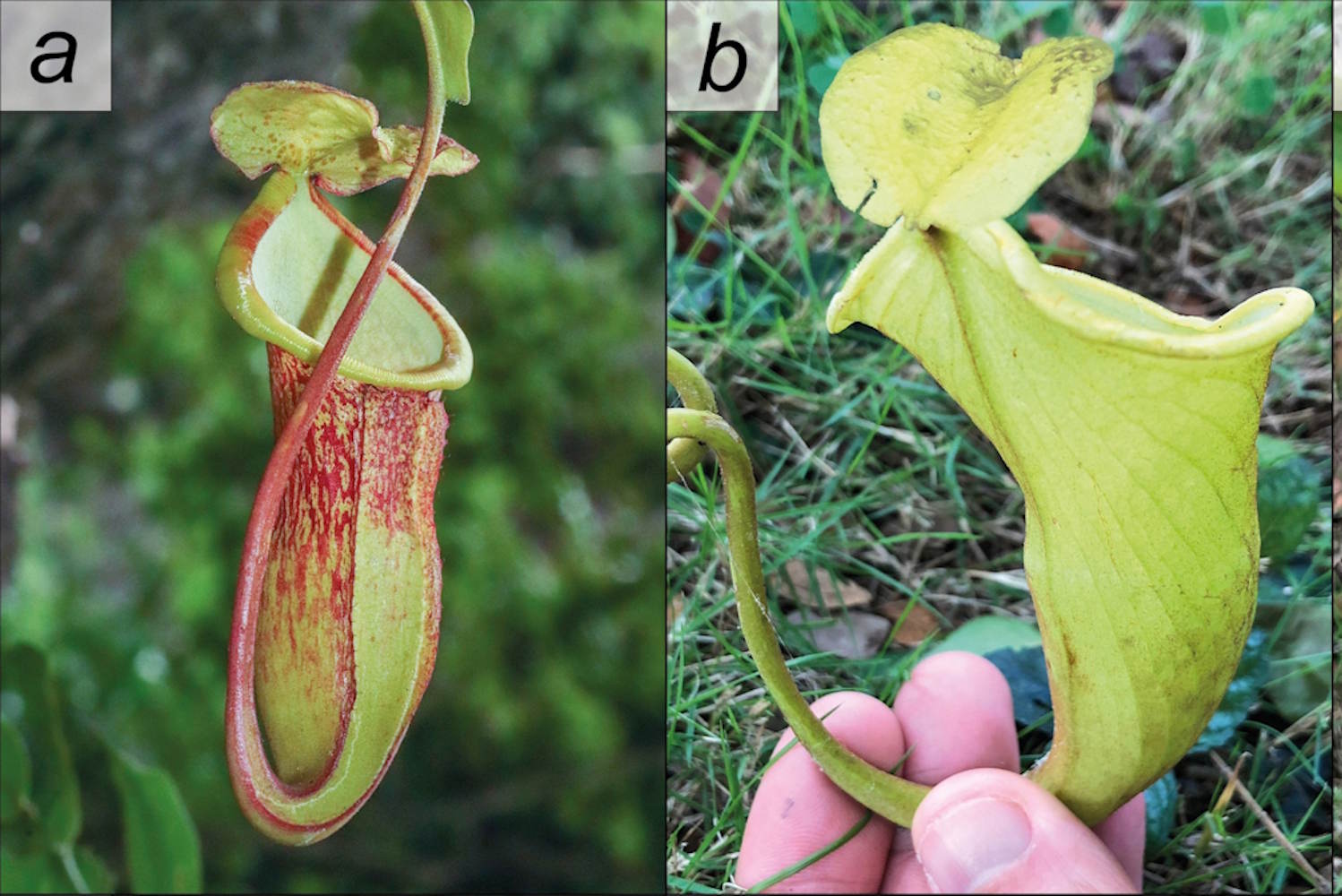
In the archipelago Palawanin Philippinesa new carnivorous plant has just been discovered, which scientists have named Nepenthes megastoma (from the Greek “wide mouth”, due to its evident characteristic). But unfortunately – incredible to say – it is already at risk of extinction, with less than 50 specimens existing in the world.
The research was led byAteneo de Manila and the results are almost paradoxical: discovering a new plant and shortly afterwards realizing that the species may no longer exist in the near future should make us think (and act). In fact, the decline is due to frequent adverse weather conditions but also to human invasion and its indirect effects, namely climate change.
The new species
The newly discovered plant is a climbing carnivorous species, which uses cup-shaped mouths to trap insects, and is present in only three locations in the steep and rocky karst terrain of the Puerto Princesa Subterranean River National Park.
“It is astonishing that these plants have evolved to survive in such difficult and inaccessible conditions – explains John Charles Altomonte, first author of the work – Yet, despite their resistance, their existence is threatened by human activity, directly through invasion and poaching, and indirectly through the effects of anthropogenic climate change”
The few areas where it grows Nepenthes megastoma they are so difficult to reach that the use of drones and long-range cameras is essential. In reality, ecologists had identified it for the first time in 2013, but they thought it was an already known species from nearby Borneothe N. campanulata.
Only after detailed field work, drone surveys and an in-depth study were the researchers able to confirm that the plant was a previously unknown Philippine species.
The species is well adapted to surviving on steep rocky slopes, with upward-facing female flowers that facilitate vertical pollination and a downy covering that helps collect rainwater. The shape of the plant’s jugs also seems to vary according to the seasons, going from a wider and more flared shape to a thinner and more elongated one.
Decline and the risk of extinction
Yet despite these remarkable adaptations, researchers estimate that there are only about 19 mature clumps with about 12 non-flowering plants, making the species’ survival highly precarious.
Experts warn that this already extremely limited population is highly vulnerable to threats such as typhoons, drought, poaching and deforestation in surrounding areas due to human activities and settlements.
With fewer than 50 mature specimens known, the plant is classified as critically endangered under US guidelines.International Union for Conservation of Nature (IUCN). And sadly, this number is likely to decline further, due to the increasing frequency and severity of extreme weather events, particularly droughts and typhoons, as well as poaching (illegally harvested specimens are already being sold in Metro Manila).
The imminent danger to the survival of N. megastomadespite its ability to adapt to a harsh reef environment, again highlights the richness and fragility of Philippine biodiversity. As well as man’s terrible ability to destroy nature.
The work was published on Phytotaxa.
Sources: Ateneo de Manila / Phytotaxa
