
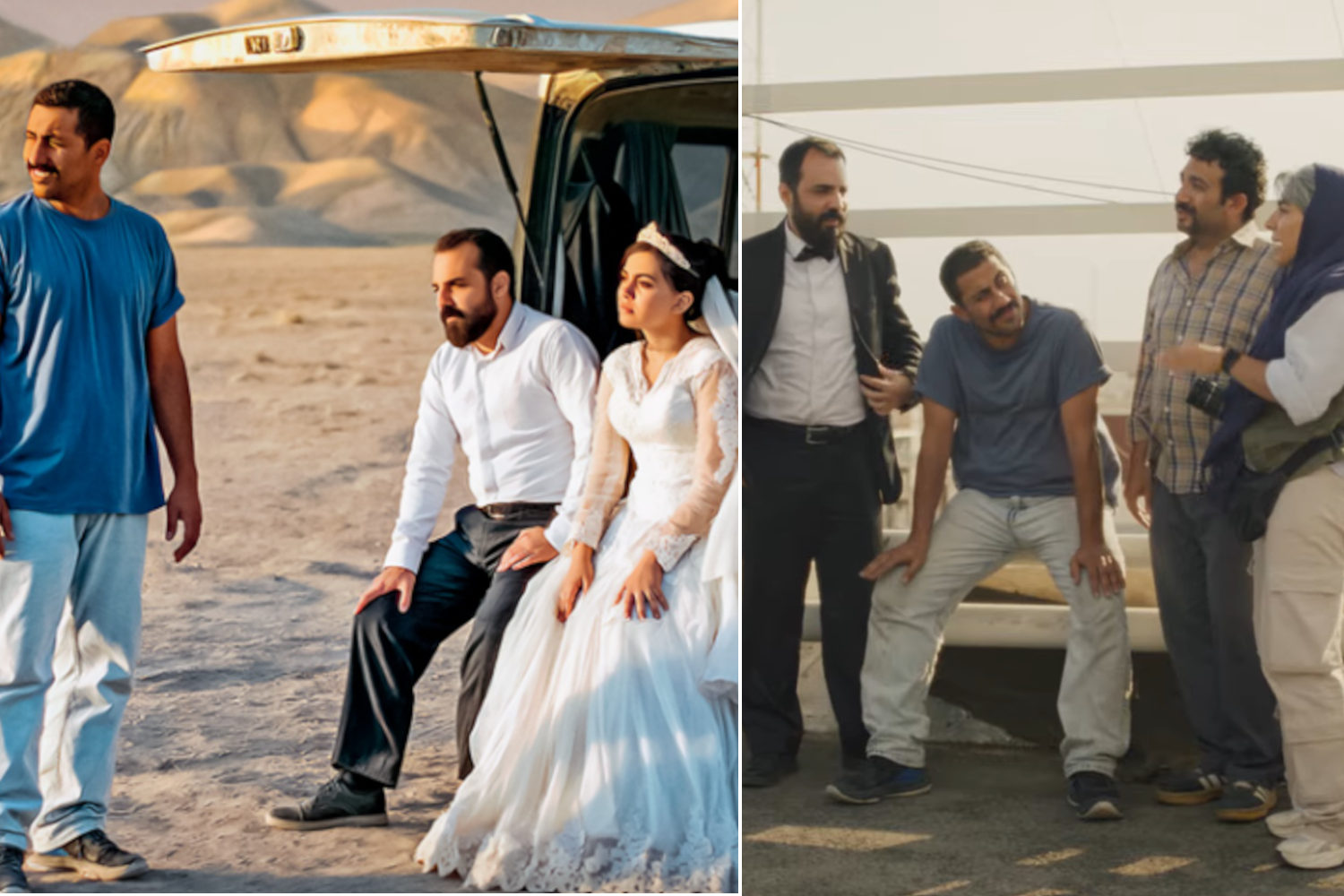
Jafar Panahi arrives in theaters with a work that is both a minimal story and a moral machine: A simple accident it starts from an everyday episode – a breakdown, the delivery of a car – and transforms it into a mirror of an entire society. At the center is Vahid, a mechanic who recognizes in a customer, from the sound of a prosthetic leg, the hypothetical torturer who had tortured him in prison. From here begins a spiral of tension, indecision and sudden comic turns that make the film unpredictable and profoundly human.
Panahi does not seek spectacularity: his strength is the precision of situations and the moral construction of doubt. The plot – which flirts with the idea of revenge but rejects easy moralism – explores the boundary between victim and executioner, showing how repression corrupts relationships and consciences without completely canceling pity. The result is a cinema that speaks lightly and strikes the heart, capable of making you laugh and immediately leaving you breathless. A bit like our Pif did with The Mafia only kills in the summeralbeit talking about very different topics.
A plot that mixes comedy and tragedy without falling into didacticism
The turning point of the film occurs when Vahid, uncertain, involves other ex-prisoners to confirm the man’s identity. These consultations, surreal and often grotesque, transform the plot into a sort of collective comedy: spouses involved, hospital visits, contradictory testimonies. Panahi uses the absurd to dismantle the violence, restoring dignity to the characters and a participatory vision of the Iranian people.
It is precisely the balance between tones – the comic that coexists with the horror – that makes the quality of the film. Panahi does not “scream” against the regime: he talks about people who resist in their fragility, and he does so with a delicacy that becomes a political act. This aesthetic and moral choice is one of the main reasons why A simple accident deserves to be seen.
The director’s figure: a “clandestine” cinema
Panahi’s artistic story adds an inevitable level of interpretation: the director wrote and directed the film without submitting the script to the State commission, often creating works in secret despite the ban on filmmaking, two arrests and a period in solitary confinement. This practice is a creative condition that gives his films a rare ethical tension and sincerity. The victory of the Palme d’Or at Cannes 2025 certifies not only the quality of the work, but also the power of a cinema that resists.
View this post on Instagram
In previous works such as Taxis Tehran And Bears don’t existPanahi had already experimented with unconventional filming strategies – microsets, hidden cameras, small crew – practical solutions to circumvent censorship. Here, the choice to shoot in isolated places and to maintain an almost artisanal approach strengthens the intimacy of the story: we see not so much the struggle against power but the way in which power marks the interiority of people.
Why watch it today: the comedy that teaches how to be human
In addition to the narrative force, A simple accident is an example of how cinema can nurture empathy: the scene in which the protagonist shows up with sweets exhibits an authentic tenderness that disarms any simplification. Panahi teaches that resentment can coexist with pity and that even the instinct for revenge can be called into question by a community that talks, laughs and compares.
Finally, seeing it means supporting a film that is both a work of art and an act of dissent. In a period in which creative freedom is under pressure, the choice to go to the cinema for this title is also a small civil gesture: not only to admire the direction or the performances, but to recognize the value of a cinema that does not bend. Don’t miss it: it’s rare that a film manages to be intelligent, moving and necessary at the same time.
You might also be interested in:
