
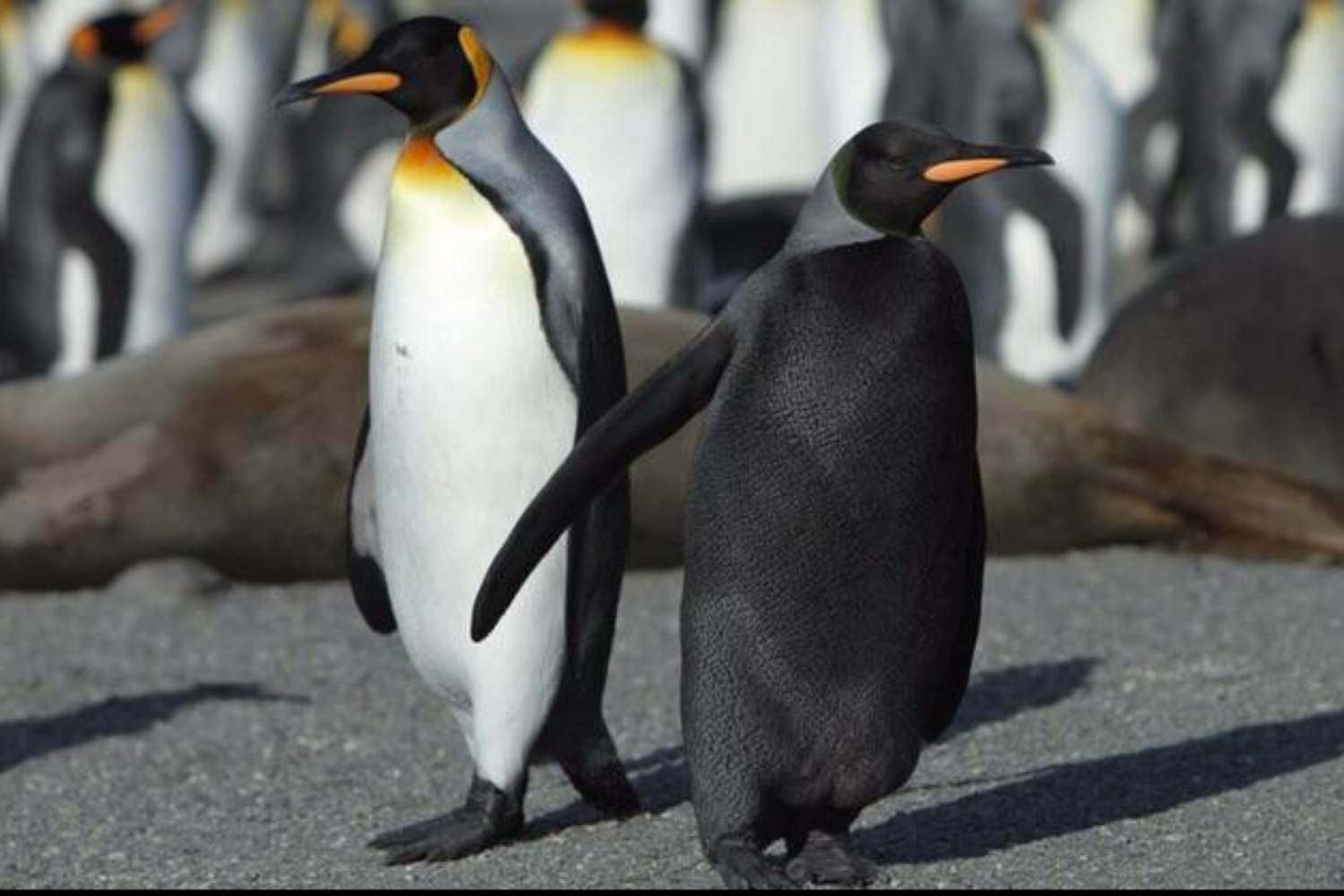
The animal world never ceases to amaze and an exceptional event has captured the attention of wildlife fans. The Belgian photographer Yves Adams he immortalized a very rare completely black royal penguin Along the coasts of the island of South Georgia, in the heart of the southern Atlantic.
To make this specimen unique is its coloring totally darka feature extremely rare among the royal penguins. Normally, these marine birds present a black back, a white belly and the unmistakable yellow spots on the head. However, the subject photographed by Adams was devoid of any distinctive sign and clearly distinguished itself in the midst of the other members of the colony.
The explanation of this particularity is found in melanisma genetic mutation that leads to an excessive production of melanin, the responsible pigment of the dark coloring of skin, feathers and fur. This phenomenon is well known in other species, such as melanic jaguars – commonly known as black panthers – but is extremely rare in penguins.
A fascinating but potentially disadvantageous aspect
The sighting took place during an excursion to St. Andrews Baya place famous for its immense colonies of real penguins. The photographer and naturalistic guide Yves Adams was conducting a group of fans when one of the participants noticed the unusual specimen. By realizing the exceptional nature of the meeting, Adams quickly acted to take photos before the penguin was confused among thousands of similar.
Although black plumage may appear fascinating and mysterious, this feature could represent one evolutionary disadvantage. In penguins the typical two -tone color has a protective function: when they swim, the white belly makes them difficult to identify by underwater predatorswhile the dark back helps them camouflage themselves with ocean depths. A completely black specimen, however, results more visible Both from above and from the bottom, increasing the risk of being identified by orche, sharks and other marine predators.
Despite the greatest risk of predation, some melanic penguins still manage to survive. According to experts, a possible explanation is that these specimens they always move in a groupreducing the chances of being targeted by predators. The protection of the pack could therefore compensate for their chromatic disadvantage, allowing them to live long enough to reach adulthood.
View this post on Instagram
