
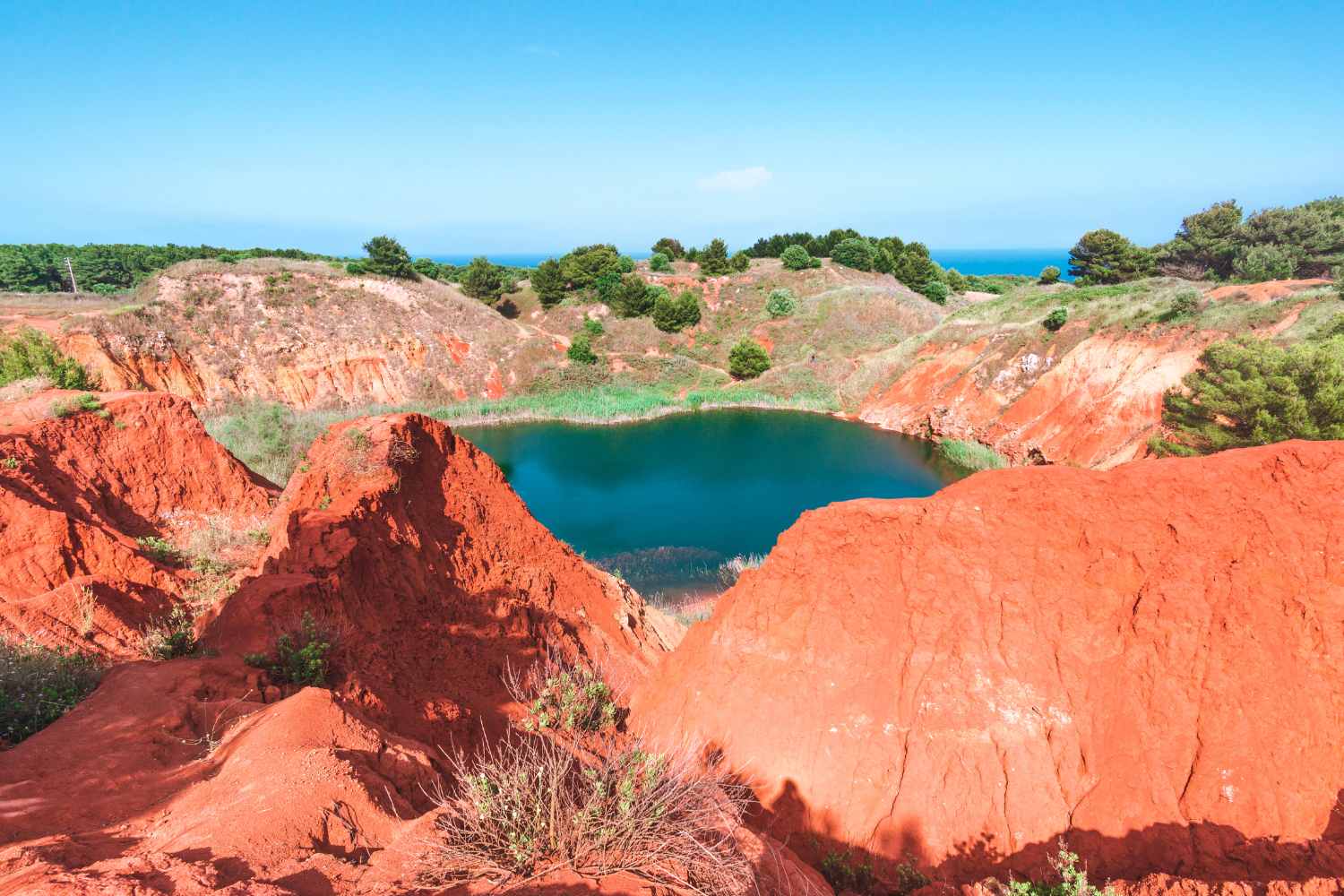
No entry signs, fences, end stops. The Otranto bauxite quarry — one of the most iconic and photographed places in Puglia, the second most visited site in the region after Castel del Monte — is off limits. The owners of the land adjacent to the emerald green lake have decided to fence off the area and post private property signs, cutting out thousands of visitors who every year walk along those reddish paths in search of an almost Martian glimpse.
The motivation is direct: safety and civil responsibility. The owners do not want to be legally responsible for any accidents in a place without protective fences, equipped paths and adequate signs. The closure occurred without a defined reopening date and, symbolically, the social profile of the site – among the most followed in the region, which over the years has become one of the most viral on Instagram – was also closed.
The situation is even more paradoxical if we consider that the site is not privately owned, the surrounding land is, and it was precisely around that land that the owners decided to intervene. Yet the quarry has been present in all official tourist publications for years: those of the Puglia Region, the Province of Lecce, the Municipality of Otranto and the Otranto-Leuca Park and Bosco delle Vallonee di Tricase. The area is crossed by routes of national importance such as the Via Francigena del Sud and the Cammino del Salento, and is a destination for cycling and trekking itineraries followed every year by hundreds of thousands of people.
A landscape born from industrial abandonment
The history of the quarry is that of a wound in the ground transformed, over time, into wonder. The extraction of bauxite – the sedimentary rock from which aluminum is obtained – was active from 1940 to 1976. At the end of the mining activity, the site was abandoned without any reclamation or redevelopment intervention. Nature did the rest: the rainwater accumulated in the basin dug by man, giving rise to the characteristic lake.
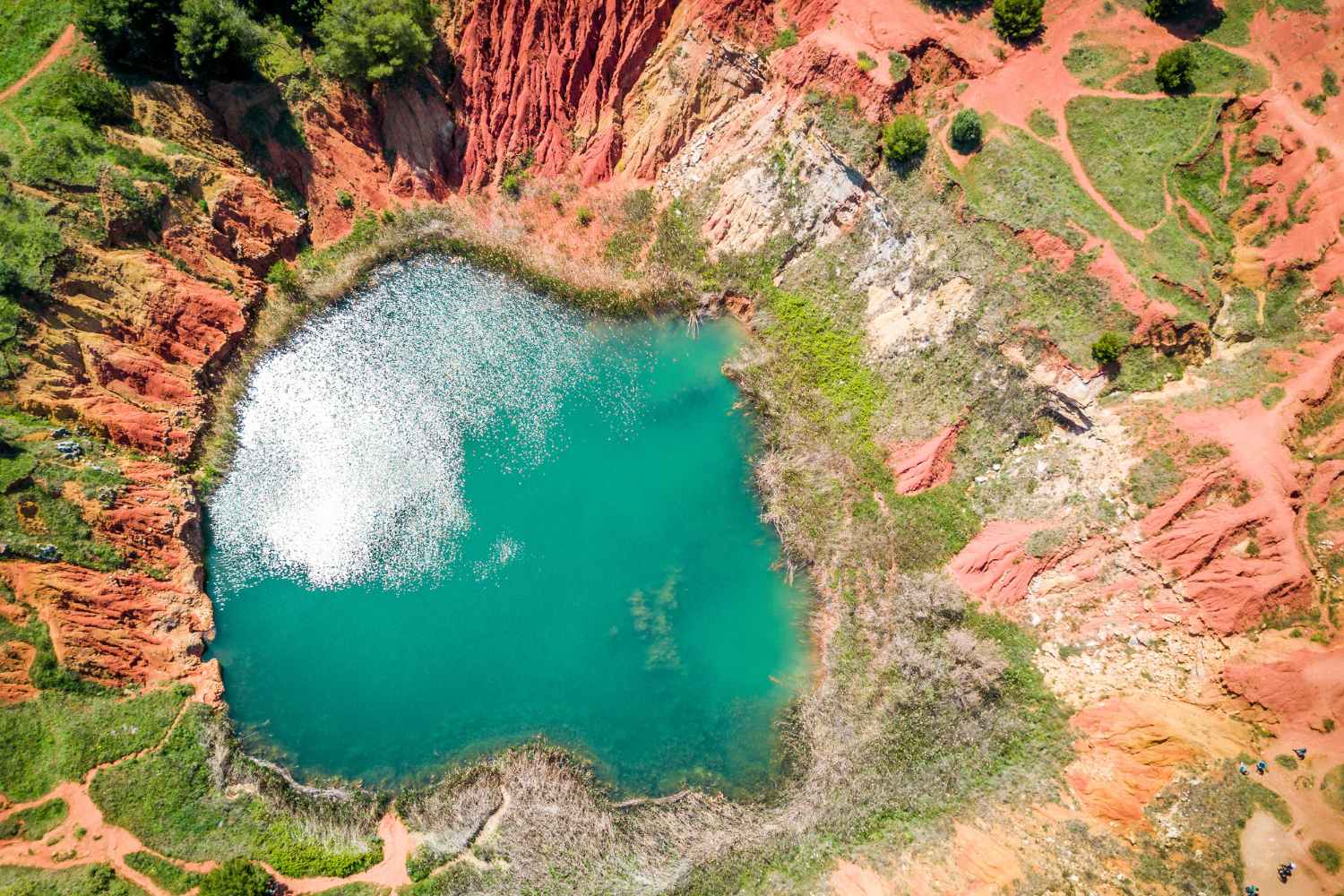
The emerald green color of the water is the result of the presence of bauxite residues and vegetation reflected on the surface, while the reddish walls owe their color to the high concentration of iron and aluminum oxides in the soil. There has never been any human intervention for redevelopment, everything you see is the exclusive result of natural processes.
The Municipality faces a choice
The ball is now in the court of the municipal administration of Otranto, which is apparently considering an emergency measure pursuant to article 700 of the Code of Civil Procedure to restore access to the site. The Municipality also announced the launch of a technical report to examine possible solutions, with the declared aim of guaranteeing public use of the area again. The hypothesis of a direct acquisition is also on the table. There is one concrete fact in favor of this road: in the area there was already a public car park created specifically to manage the growing tourist flows, an infrastructure which today remains unused.
The closure comes at a delicate moment for Salento tourism. After the collapse of the Arco degli Innamorati in the Melendugno area, another pearl of the local landscape becomes inaccessible. The story highlights a problem that, in Italy, affects many natural places of extraordinary landscape value, namely the lack of a clear management framework between private property, consolidated public use and liability in the event of accidents. Without a formal agreement between the parties – or without institutional intervention – even the most beautiful places risk ending up behind a metal fence, just on the eve of the tourist season
