
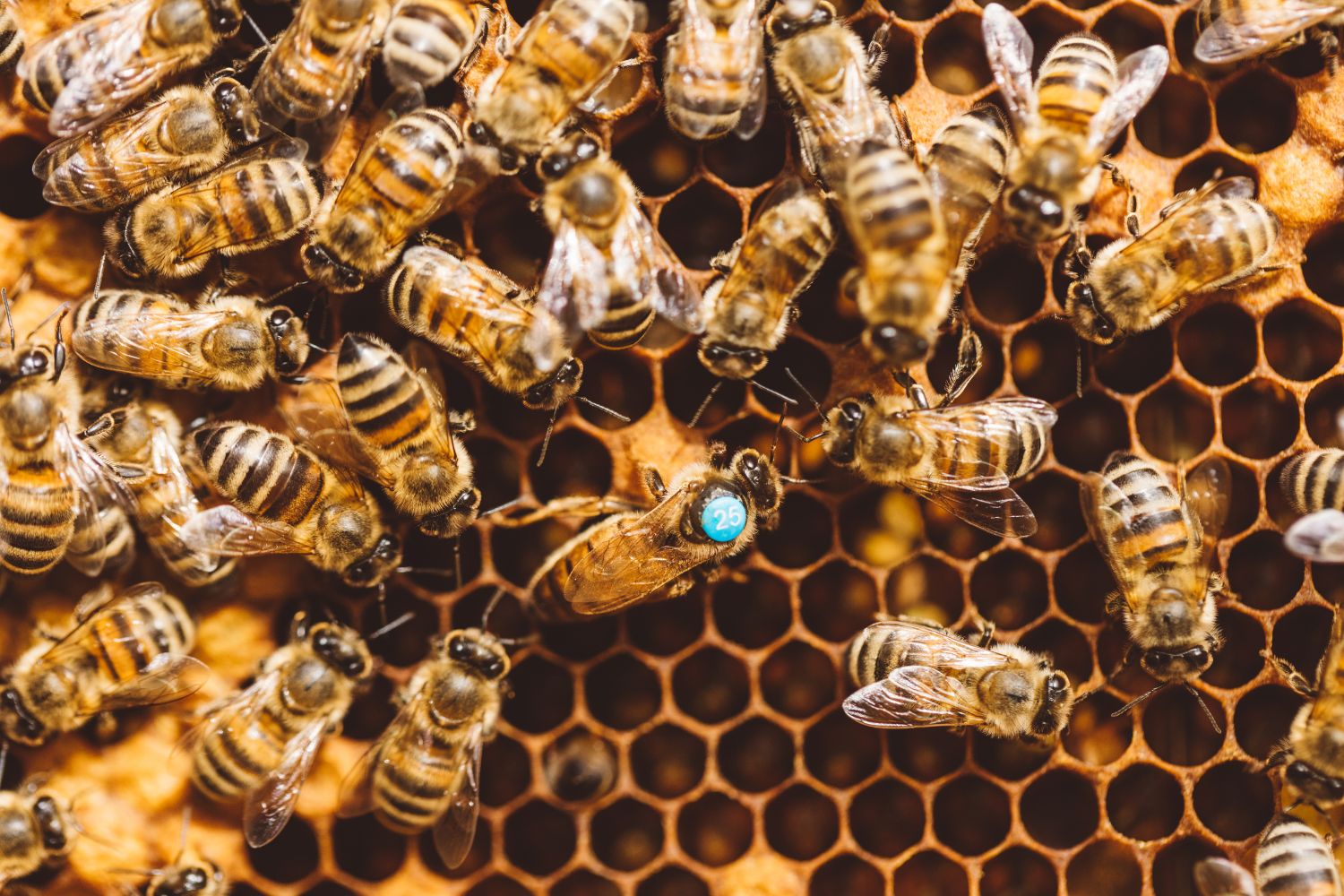
As in the case of alleged invasion of flying cockroaches in Romesome ‘no’ must be said immediately: Aethina Tumida is a parasite far from new, there is no new (or old invasion) and at the moment they are not there massacres of bees (even if his presence is a factor that adds to the many suffering that these extraordinary and indispensable insects are suffering).
But it is true that the parasite, of African origin, feeds on honey and proliferation in fruit, and it is true that his presence has been repeatedly reported in Noonlately also in Campania.
Who is Aethina Tumida
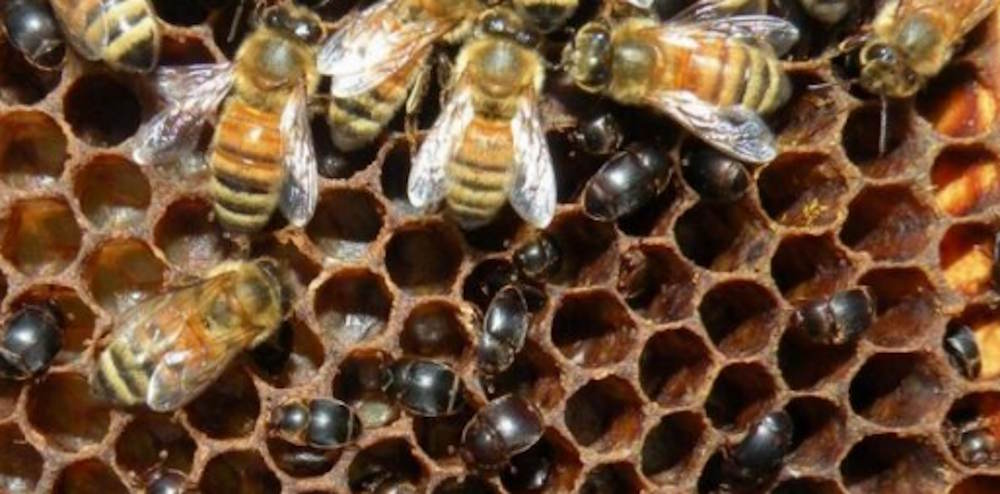
As the year already explained theExperimental Zooprophylactic Institute of the Venezie (Izsve), Aethina Tumida It is a small beetle of the riverbed, a parasite that infests the hives in the European Union, capable of determining considerable damagefrom the destruction of the favi to collapse of the colony.
Indeed It feeds on brood, honey and pollen And the larvae, in particular, dig galleries in the honeycombs and cause the fermentation of honey. A serious infestation can lead to destruction of the colony or to its abandonment. The early detection, among other things, is quite difficult, but regular monitoring is essential for control.
The parasite is technically invasive, as originally from sub -Sasaharan Africa. But, unfortunately, already since 1996 it was widespread in all habitable continentscausing serious damage to beekeeping as the larvae of this beetle develop inside the hives, destroying favi, feeding on honey and pollen, causing the fermentation of honey and the loss of the colonies.
The presence in Italy
No, even in our country his presence was discovered only today, in 2025.
In Italy it was detected for the first time in Calabria in September 2014 where, to date, it is now considered endemic In the provinces of Reggio Calabria and Vibo Valentia – wrote the experts of IZSVE always at the beginning of the year – in Sicily, although in the past two outbreaks have been promptly identified and eliminated (in 2014 and 2019), the epidemiological situation changed in October 2024 with the registration of several outbreaks in the province of Messina. To date, its presence remains limited to an area of Calabria and in north-eastern Sicily
But in fact, recently, there have also been reports in Campania, which could indicate a gradual increase, and this yes, it is worried, given the numerous risk factors for the survival of beesalready confirmed and many of which of purely human origin.
The national surveillance plan
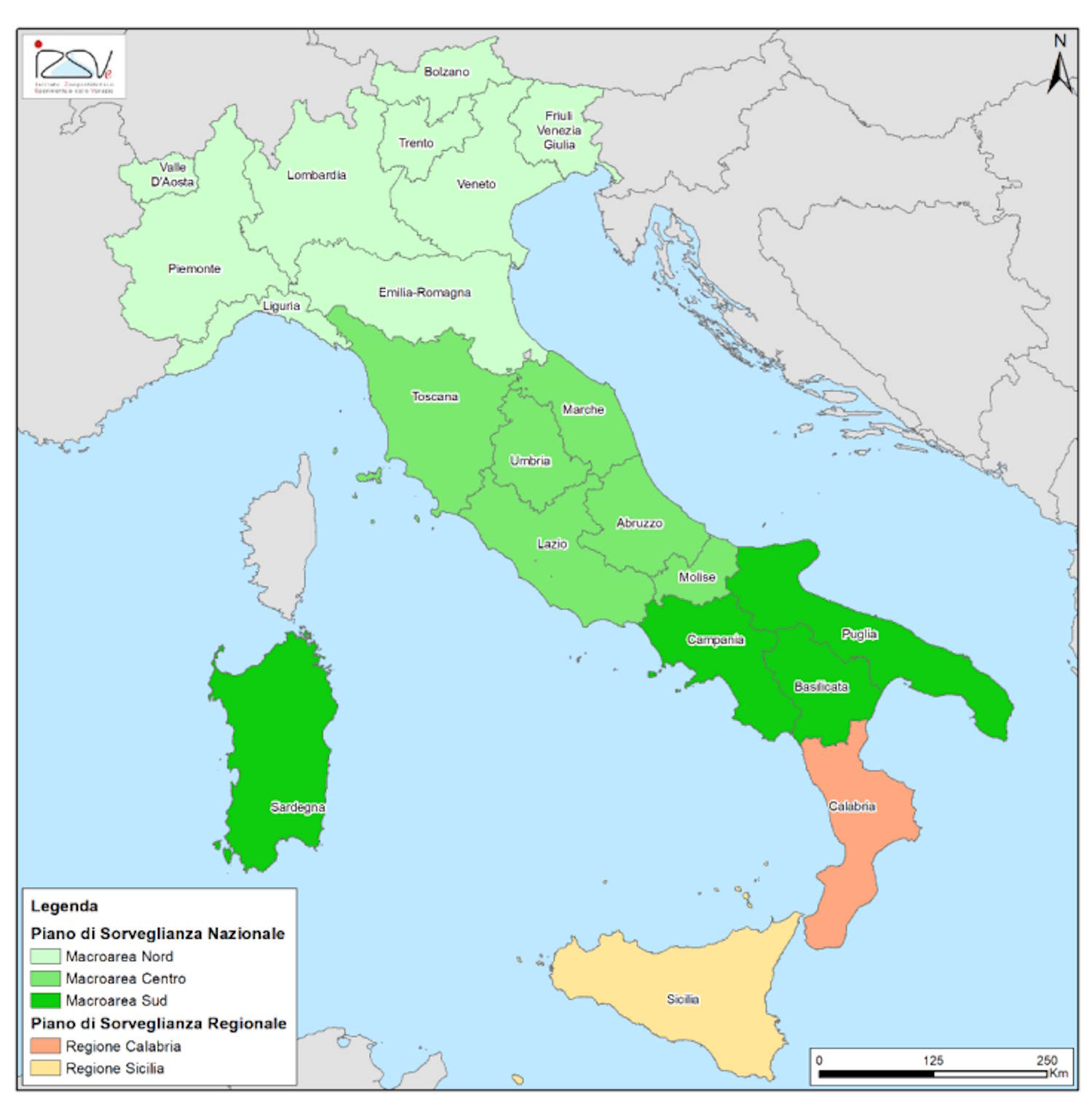
Precisely because – Alas – the parasite is already endemic of some regions of southern Italy, a long has been active National surveillance planwith particular “attention” to the regions on which the species is already present and in those at risk, which is based on structured clinical checksintegrated by specific protocols for the most sensitive areas and subject to restrictions.
In January 2025 they were 148 the hives identified for inspection control During the year, with a distribution for areas, such as:
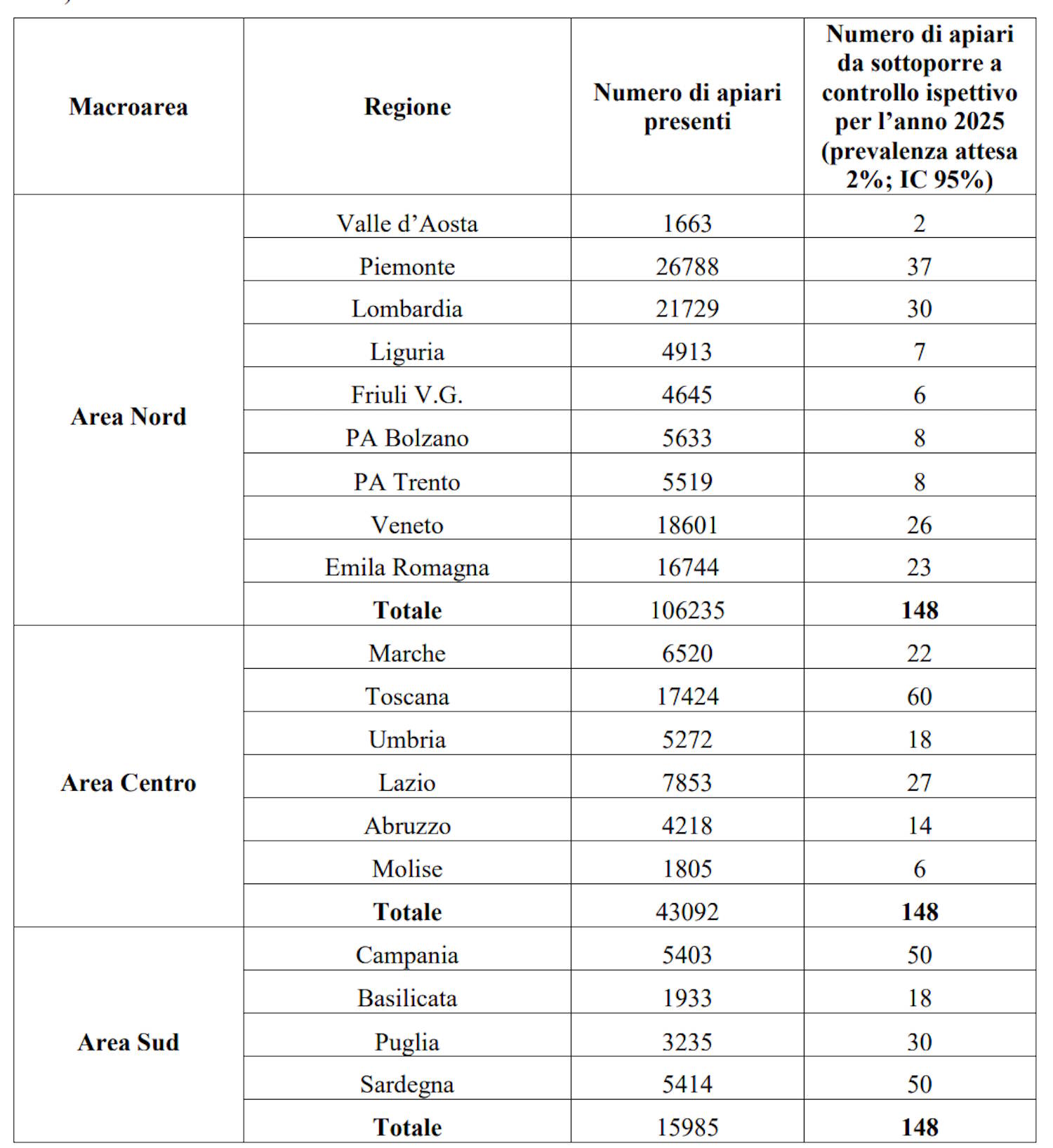
As can be seen from the table, 50 hives to be kept under control were already foreseen in Campania.
It is not excluded, however, that this plan may be Updated following reports.
What to do in case of suspected contamination
As the institute explains, in case of suspicion, it is necessary promptly warn the competent authorities: all samples of the alleged parasite (adults, larvae or eggs) must be sent to the national reference laboratory for bees diseases or the territorially competent health authority (Veterinary services of the local health company) for identification.
It is fundamental use a sealed container and suppress the samples before shippingkeeping them in the freezer or in ethyl alcohol 70%. Providing detailed information on the location of the Ausca and recent movements will help in epidemiological investigations
Source: Experimental Zooprophylactic Institute of the Venezie
