
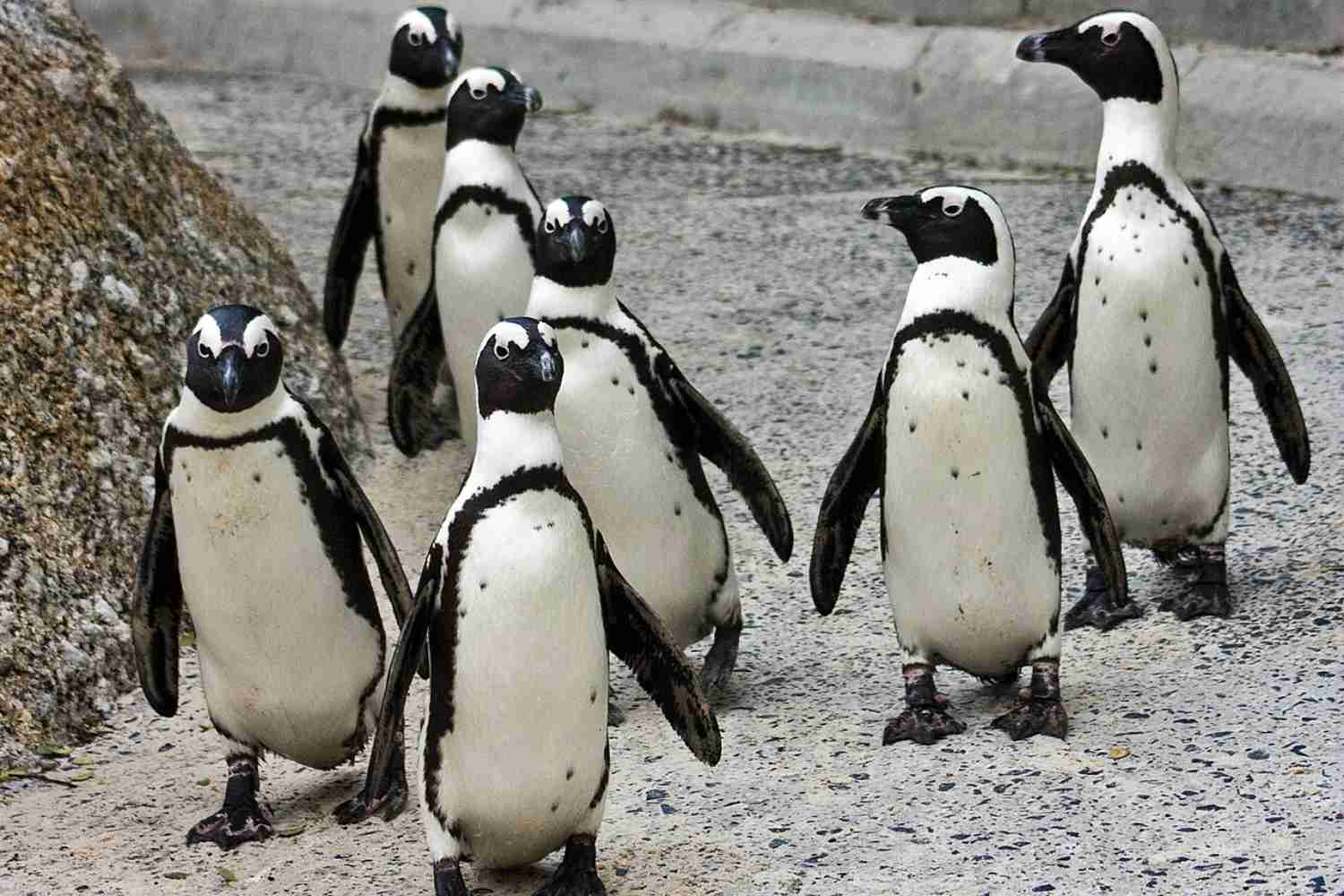
African penguins (Spheniscus demersus), once among the most widespread seabirds in South Africa and Namibia, are experiencing a dramatic decline. In recent decades their population has collapsed by 80%, bringing them into the “Critically Endangered” category of the IUCN Red List in 2024. At the heart of this collapse is a key factor: the disappearance of sardines, their main source of nutrition.
Because the sardines have disappeared
Sardine populations off the coast of South Africa have plummeted, remaining for years below 25% of historical levels. Two converging forces are causing this crisis: the effects of environmental changes, which alter fish spawning areas, and heavy overfishing which has reached unsustainable levels in some years. In certain areas exploitation has reached 80%, taking away space for recovery from a species already under stress.
The wetsuit: the riskiest moment
The most critical point for penguins is moulting, an annual phase in which, by losing and renewing their plumage, they cannot enter the water. They then remain on the ground for about three weeks, experiencing a total fast and relying exclusively on the fat accumulated in the previous months. If sardines are scarce, individuals arrive debilitated at the moult or are unable to regain weight afterwards. This condition has caused thousands of deaths in recent years.
The data that tells the story of the collapse
A study conducted on two historic colonies, Dassen Island and Robben Island, revealed shocking mortality: 95% of the penguins that had bred in 2004 died within eight years. Between 2004 and 2011, an estimated 62,000 adults disappeared, a number that illustrates the absolute dependence of the species on sardines. Parallel analyses, based on the “prey abundance index”, confirm the direct correlation between fish availability and survival.
Protection measures and residual hopes
In recent years, artificial nests, protection rules in fishing areas and chick rehabilitation programs have been introduced. However, according to researchers, the real issue remains the recovery of sardine stocks. Reducing fishing when biomass drops too low and protecting young fish could slow the decline. Without an effective strategy to restore prey, African penguins will have no future.
You might also be interested in:
