
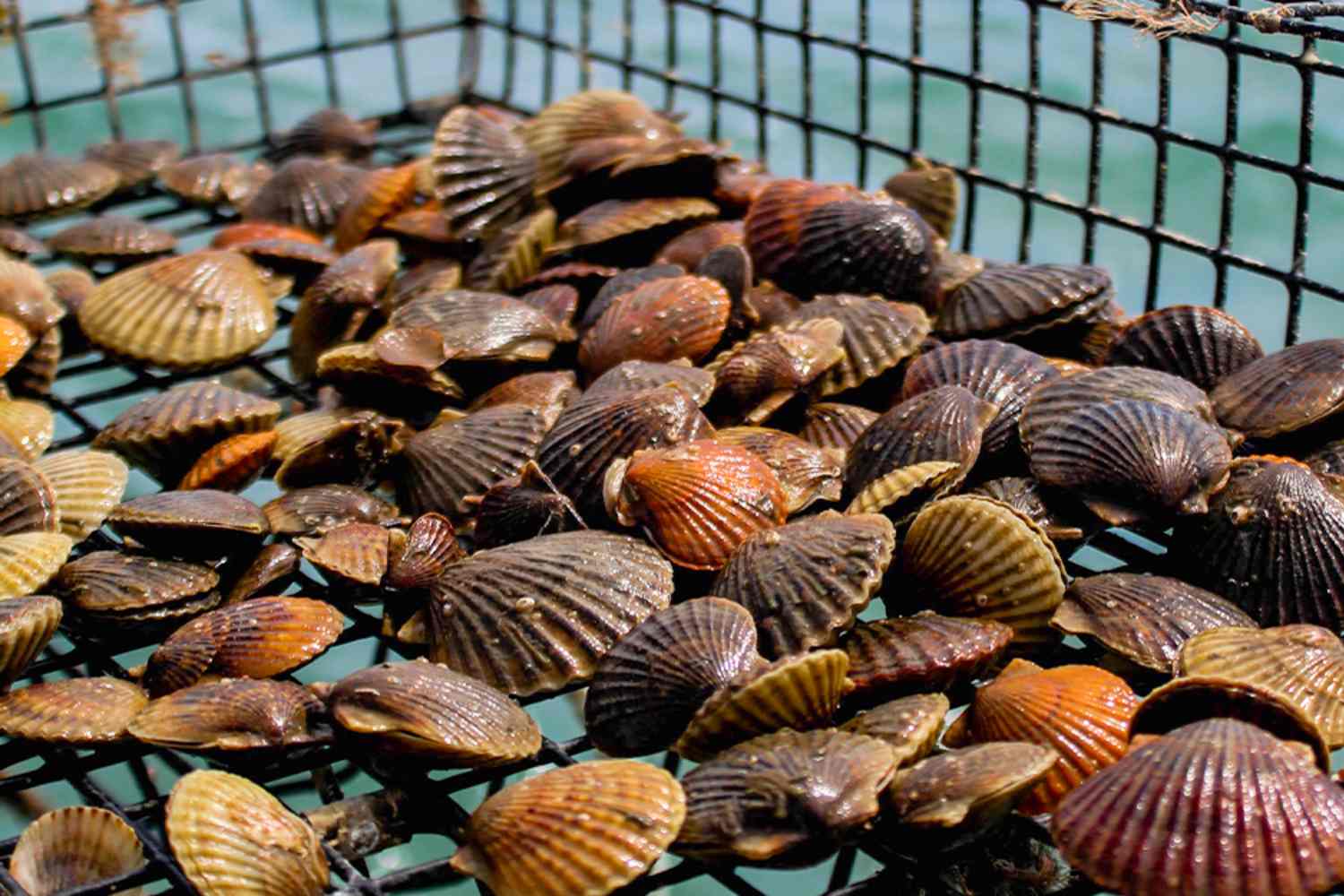
After nearly a hundred years of absence, bay scallops are finally returning to populate the waters along Virginia’s eastern coast. Locally extinct since the 1930s due to the loss of their natural habitat, these molluscs are experiencing an extraordinary resurgence thanks to decades of scientific and environmental efforts.
Credit goes to experts at the College of William & Mary and the Virginia Institute of Marine Science (VIMS), who have worked tirelessly to restore the seagrass meadows that are critical to the survival of this species.
An unprecedented ecological success
According to the latest data from the 2025 Bay Scallop Survey, the scallop population is growing at an impressive rate. Researchers have detected the presence of multiple specimens within a single square meter of seabed, a result that was unthinkable just a few years ago.
Studies indicate that the population could double in less than 18 months, a sign that the bay’s ecosystem is finally returning to balance. Scientists speculate that, in the future, this resurgence could even pave the way for the reopening of recreational fishing, which is still prohibited along Virginia’s coasts.
The decisive role of seagrass meadows
The key to this success lies in the restoration of the eelgrass prairies, which began in 1997 as an experimental project. What started out as a small test is now considered the largest and most successful seagrass restoration project in the world, with thousands of hectares of regenerated vegetation.
This habitat provides shelter and food not only for scallops, but also for numerous other marine species, improving biodiversity and coastal resilience. As Richard Snyder, director of the VIMS Eastern Shore Laboratory, explained, the return of bay scallops represents “a social and ecological goal of enormous value”.
A sustainable future for Virginia Bay
For shellfish researchers and farmers, like Darian Kelley of VIMS, this resurgence is a source of pride. In addition to restoring a lost ecological balance, the project could also bring new economic benefits, with the introduction of a high-quality local product into the sustainable aquaculture supply chain. The message is clear: when science, nature and perseverance work together, even a disappeared species can return to tell its story in the waters from which it was erased.
You might also be interested in:
