
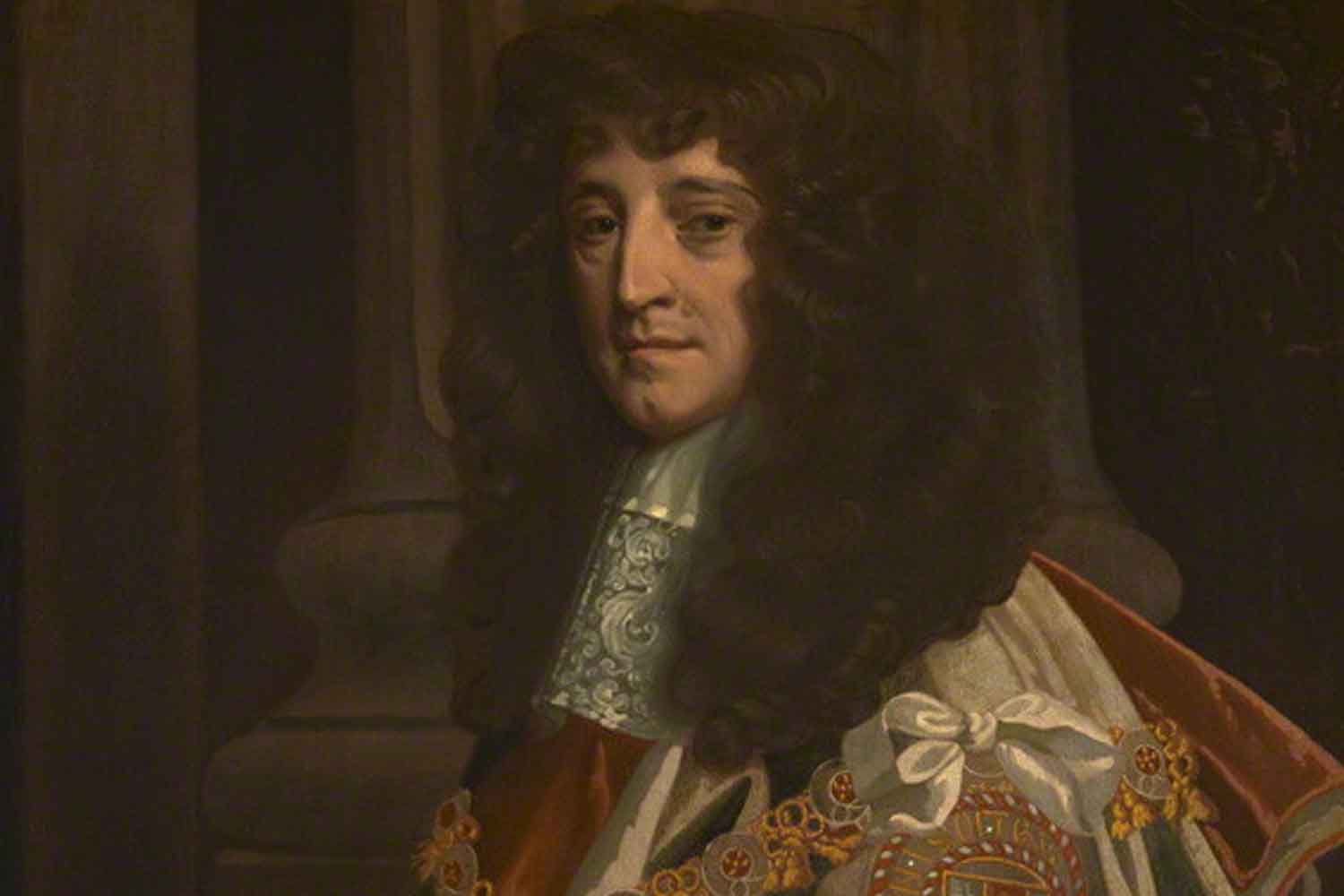
There are those who place bets on a football match and those who, in the seventeenth century, placed them on… cubes. It all started with Prince Rupert of the Rhinegrandson of Charles I of England, e John Wallisone of the best-known mathematicians of the time. The challenge was this: Can a cube pass through another cube of the same size without touching its sides?
Anyone would say “of course not”. And instead the prince won the bet. Thanks to his knowledge of glass and metallurgy, Rupert demonstrated that drilling the cube diagonally and tilting it in the right waya second identical cube could pass through it. That brilliant idea turned into a theorem: Rupert’s propertythat is, the ability of some solids to let an identical copy of themselves pass through.
From there, mathematicians never stopped. From the octagon to the tetrahedron, up to the most complex polyhedra (yes, even those of the dice Dungeons & Dragons), every shape tested seemed to confirm the rule: with the right inclination, passage was always possible.
The “Noperthedron”: the form that breaks 300 years of certainties
Then, suddenly, mathematics said “no”. Two Austrian researchers, Jacob Steininger And Sergey Yurkevichthey discovered a form that does not respect Rupert’s property. They baptized her “Noperthedron”a play on words between “Rupert” and “Nope”.
This solid a 180 faces it is the first in the world which cannot pass through its duplicateregardless of the angle or direction of the hole. A result that also pricked up the ears of Tom MurphyGoogle engineer and enthusiast of the topic, who defined the discovery as “an absolute rarity in the sea of possible forms”.
The two scholars conducted millions of computer simulations, analyzing every inclination, every perspective, every possible step. After 18 million attemptsthe answer came: impossible. The Noperthedron does not pass through itself. Point.
Two friends, an algorithm and a centuries-long challenge
Steininger and Yurkevich are not two academics closed in the laboratory, but two friends who grew up togetherboth in love with mathematics and “impossible” challenges. It all started in 2021, when they saw a video of a cube passing through another cube. From there, the question:
Can we find a form that doesn’t?
Their idea is as simple as it is brilliant: study the shadows. If you project one figure into the light and the shadow of the other never manages to completely overlap, it means that no inclination will allow passage. From that principle they developed two theorems, one “global” and one “local”, to analyze every point of the solid and its projections.
The result is an object that looks like a geometric vase, made of 150 triangles and two 15-sided polygonswhich denies any possibility of passage. A small masterpiece of logic and patience, born almost as a joke, and which has become a historic discovery.
After centuries of theorems and simulations, mathematics continues to remind us that . The Noperthedron is proof that even in the 21st century there is still room for intuition, for error, for doubt. And it is right there, between a formula and a light angled in the right way, that science becomes human again.
As one of the two researchers said:
We’re just two mathematicians who love solving difficult problems. And we will continue to do so, because we cannot do without it.
