
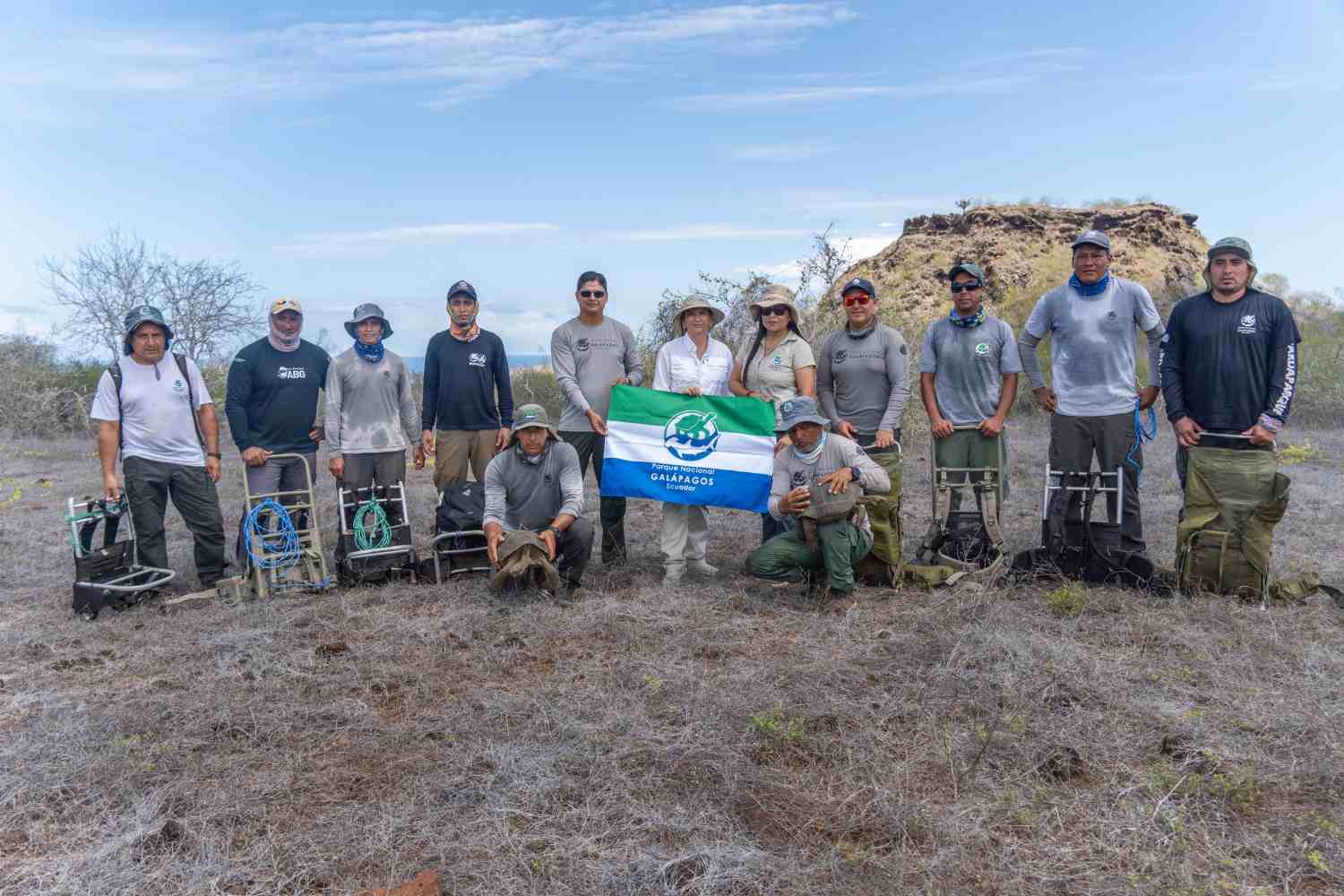
After more than 150 years of absence, the giant tortoises have returned to walk on the island of Floreana, in the Galápagos archipelago. On February 20, 2026, the Ministry of the Environment of Ecuador announced the release of 158 specimens, marking a historic stage for global conservation.
This is not just a symbolic release, but the result of more than a decade of scientific work and environmental management. Turtles had disappeared from the island since the 19th century. Today, thanks to a complex ecological restoration project, Floreana can welcome back a key species for its natural balance.
How the project was structured
The released specimens come from the “Fausto Llerena” breeding center, where a specific program was started starting from individuals with high genetic compatibility of the original lineage, rediscovered on the Wolf volcano, on the island of Isabela. A scientific result that has made it possible to recover a lineage considered locally extinct.
View this post on Instagram
Before reintroduction, each turtle followed strict protocols: prolonged quarantine, pesticide treatments, morphometric assessments and microchip implantation for long-term monitoring. Park rangers transported the animals approximately seven kilometers across volcanic terrain to selected areas to ensure the best possible adaptation.
The importance of giant tortoises
Giant tortoises of the Chelonoidis genus are defined as “ecosystem engineers”. The reason is simple but powerful: they physically change the environment in which they live. Through feeding, trampling and dispersal of seeds, they help shape the landscape.
Studies conducted on other Galápagos islands have shown that each accumulation of feces can contain on average hundreds of seeds belonging to dozens of plant species. A significant portion is transported over 500 meters away, and a smaller portion exceeds 3 kilometers. In an archipelago fragmented by volcanoes and escarpments, this capacity fosters ecological connectivity.
A delicate balance
Reintroduction is not without complexity. Turtles can also disperse seeds of introduced plants, creating new management challenges. However, their presence is essential to counteract phenomena such as the excessive growth of shrubs and to promote natural regeneration.
In Floreana, the turtles’ return follows the removal of invasive species such as rodents and feral cats and the activation of environmental monitoring systems. The goal is ambitious: to restore lost ecological processes and pave the way for the future reintroduction of other endemic species that have disappeared locally.
The journey will be long. Transforming the landscape will take years, perhaps generations. But the step taken now is already a powerful signal: when science, planning and international cooperation meet, even an island can rewrite its own natural history.
You might also be interested in:
