
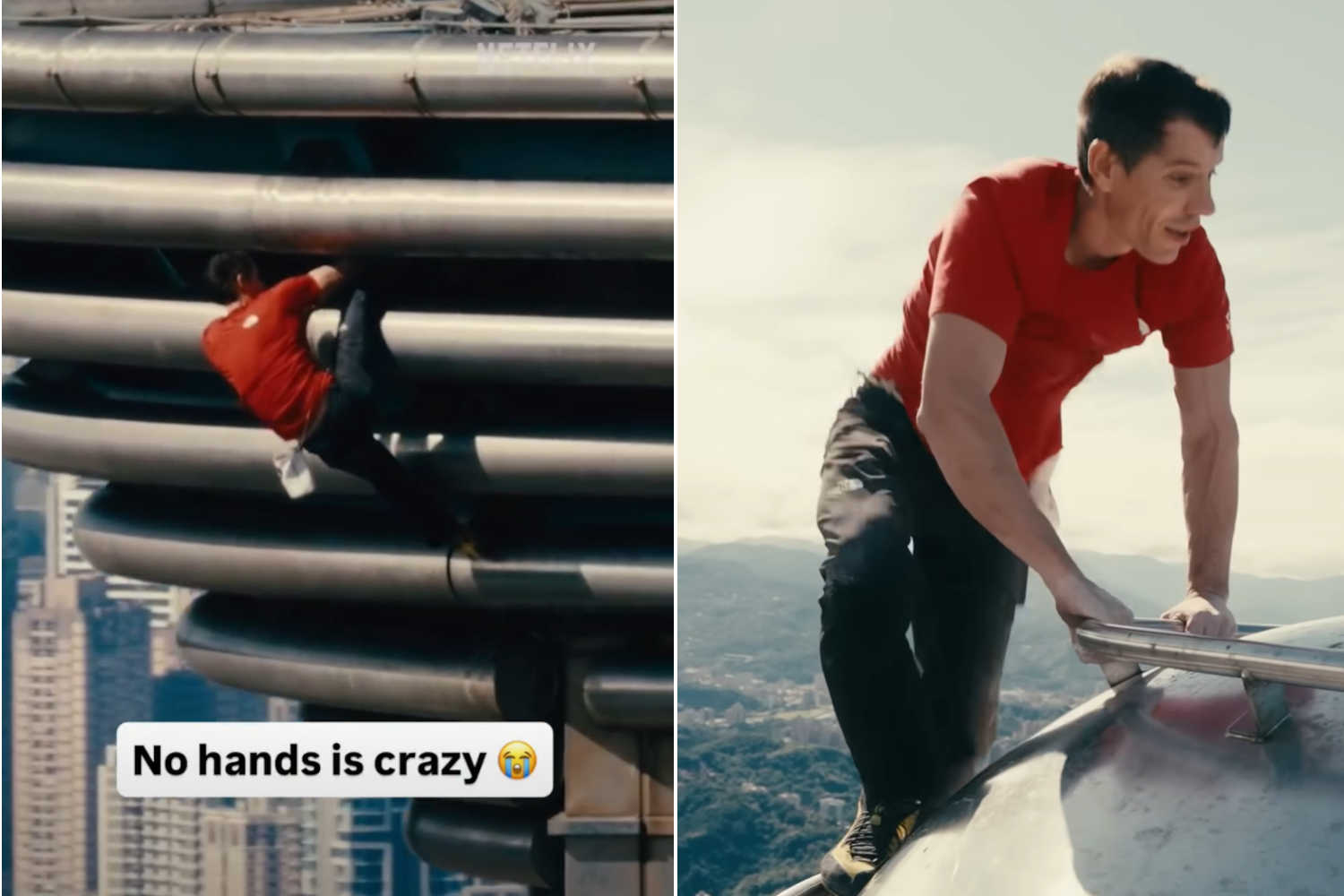
Alex Honnold did it. The American climber completed the free solo climb of Taipei 101, the 508 meter high symbolic skyscraper of Taiwan, without ropes, harnesses or protection. An undertaking that lasted about an hour and a half, followed live by hundreds of people at the foot of the building and broadcast live on Netflix, with a technical delay designed to intervene in the event of an accident. A detail that, alone, reflects the measure of risk.
The climb was initially scheduled for the previous day, but was postponed due to bad weather. Even on Sunday morning the wind didn’t make things easier. Honnold moved along the southeast wall of the skyscraper, facing a complex structure, made of glass, steel and irregular surfaces, very different from the natural walls he is used to. Once at the top, he described the experience as “a wonderful way to see Taipei”, simple words for a gesture that is anything but ordinary.
Taipei 101 takes its name from its 101 floors and features a central section made up of eight stacked modules, known as “bamboo boxes”. Precisely these segments, with overhanging floors and intermediate balconies, represented the most challenging part of the climb. Honnold used some balconies as pause points, breaking a progression that required absolute precision and continuous concentration.
View this post on Instagram
There is no shortage of controversy regarding the discipline of free soloing
At 40, Honnold is considered the world reference for free soloing, an extreme discipline that renounces any safety system. Precisely for this reason he is often the subject of criticism within the mountaineering community, which sees in these undertakings the risk of transforming climbing into a spectacle, attenuating the perception of real danger. Netflix’s involvement has also fueled the debate on the spectacularisation of risk.
Honnold became a global figure after the documentary Free Solodedicated to his unprotected ascent of El Capitan in Yosemite, which won an Oscar in 2019. Before Taipei 101 he had never completed the full climb of a skyscraper, even though he had already tackled some of the most difficult routes in the world in a natural environment.
He himself admitted that the urban context, with the public below and the media attention, was one of the most destabilizing aspects. However, Honnold explained that he wanted to use the visibility of the event to promote his charitable foundation, which is involved in installing solar panels in disadvantaged communities.
View this post on Instagram
You might also be interested in:
