
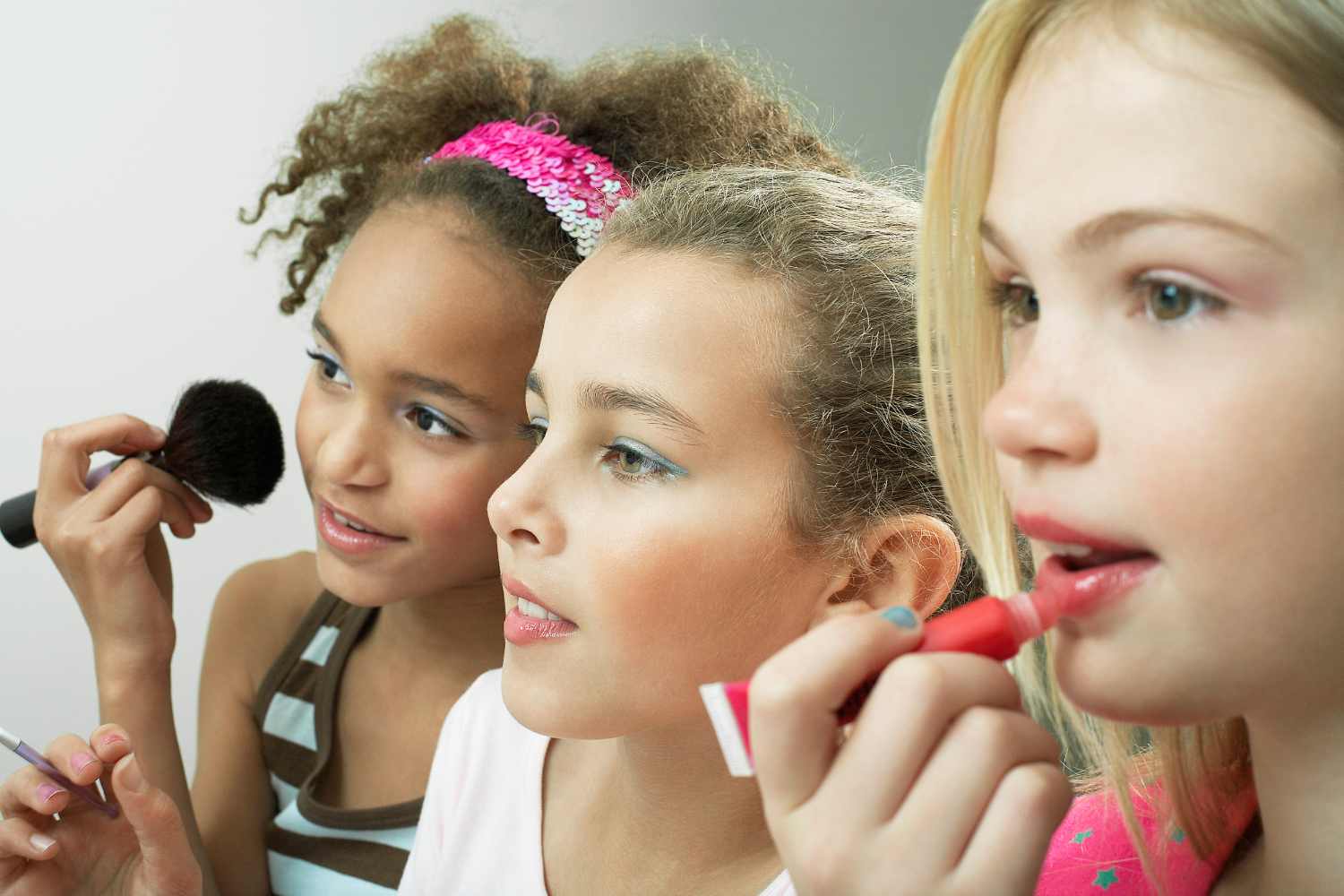
In recent years, the offer of cosmetics dedicated to children has multiplied: moisturizing creams, face masks, lip glosses, nail polishes and eye shadows are now also intended for children as young as 3 years old.
In France, brands and retailers are riding the so-called “Sephora Kids” trend, driven by social media, where hundreds of videos show little girls imitating adults’ beauty routines. Some beauty salons have even opened their doors dedicating themselves exclusively to the skin care of the little ones.
But what risks are there?
The concern of dermatologists
Faced with this trend, French dermatologists are sounding a clear alarm: cosmetic products for children, especially if not strictly necessary, can expose the little ones to potentially harmful substances.
Dermatologist Pierre Vabres, speaking at the Paris Dermatological Days 2025, declared that “Aesthetic beauty treatments for children with healthy skin are completely useless”, and added that the main treatment consists in washing the skin with neutral pH products.
Among other things, in addition to the physical risks, there is also a psychological risk: getting children used to following a beauty routine can give them a distorted image of themselves, “almost eroticized, corresponding to that of a miniature adult”.
The test on 18 children’s cosmetics
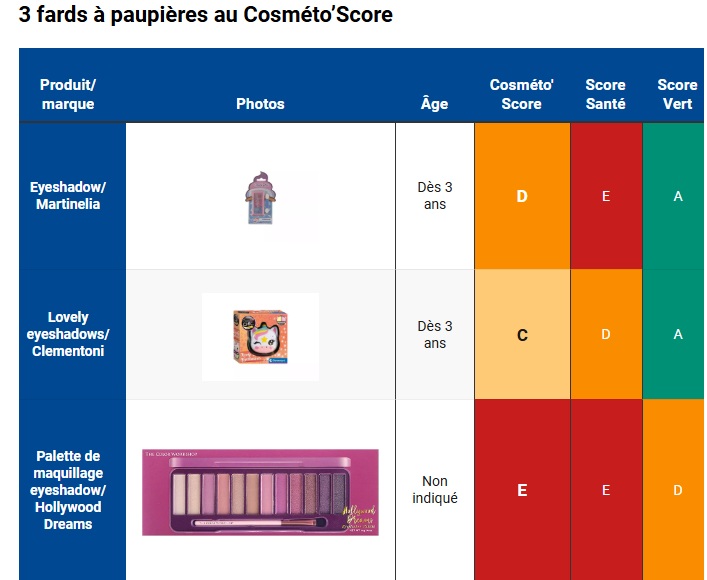
The French magazine 60 Millions de Consumers examined 18 products sold online or in toy stores, including cleansers, moisturizers, masks, lip glosses, nail polishes and eye shadows. The analysis used the Cosméto’Score, a tool from the French National Institute of Consumers (INC) which evaluates health risks (70% of the score) and environmental risks (30%), based on the list of ingredients of the various products.
The results are more than worrying: all products contain irritants or allergens, even those rated “A” in the Cosméto’Score. For example, cleansers and creams from brands such as Ouate and Lav Kids are relatively suitable for children, but contain several common allergens, irritating surfactants and ethoxylated compounds. Worse still, two products from Australian brand Oh Flossy that were found to contain a suspected endocrine disruptor, benzyl salicylate, along with other substances of concern, making them unsuitable for children.
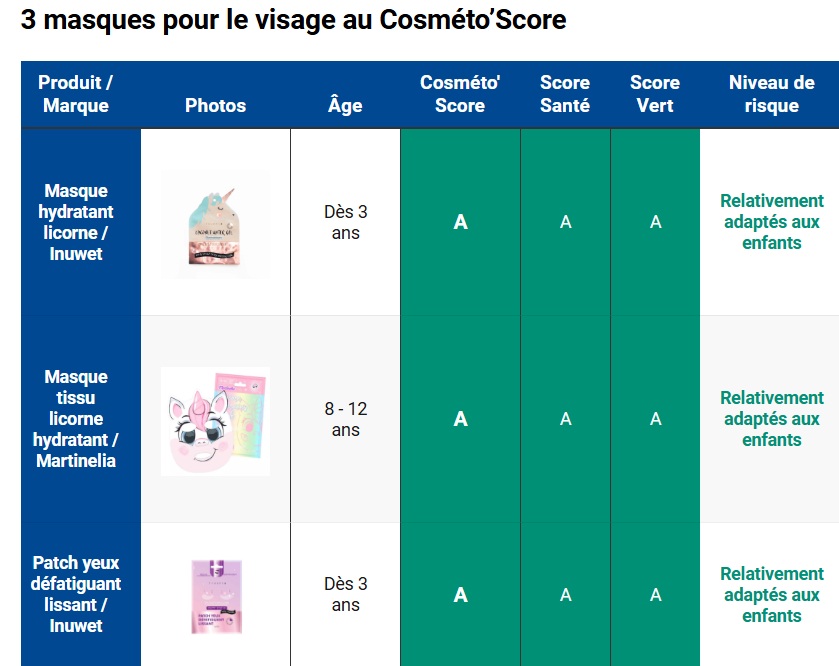
Masks and glosses also have critical issues. Products such as Martinelia’s Unicorn hydrating mask or Inuwet eye patches contain ethoxylates and phenoxyethanol, irritating and potentially toxic substances.
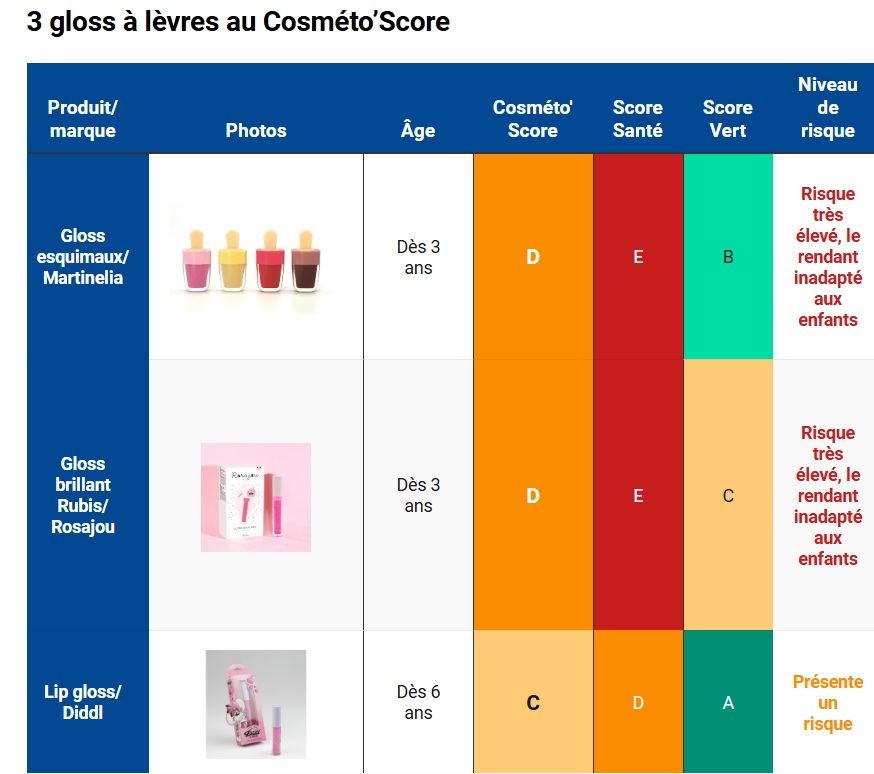
As for the lip glosses, two of the three tested (Martinelia and Rosajou) contain suspected endocrine disruptors, allergens and controversial dyes, such as titanium dioxide, which according to some studies may be present in the form of unsafe nanoparticles.
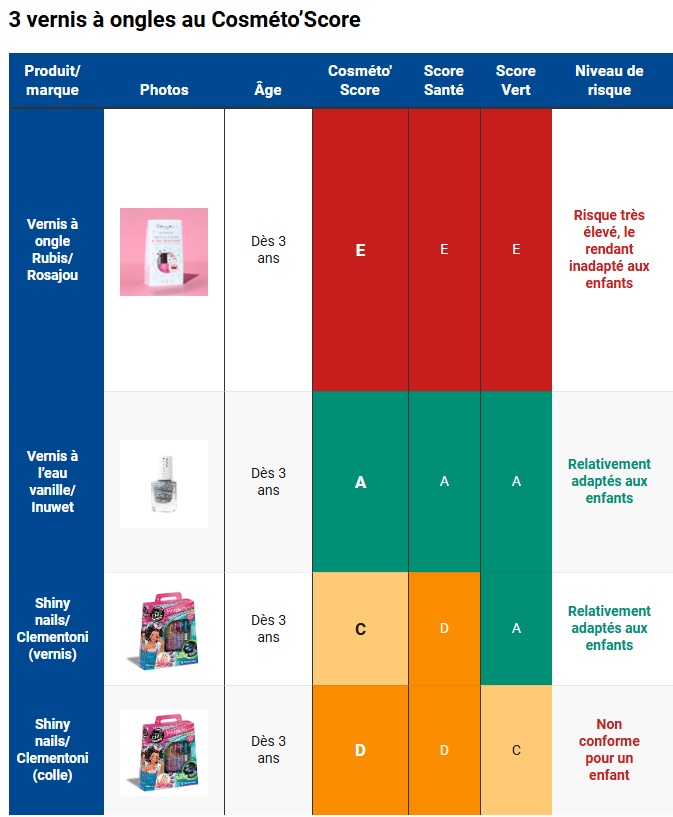
Nail polishes are not without risks either. For example, Rosajou nail polish contains sodium lauryl sulfate, a highly irritant, and BHT, a suspected endocrine disruptor.
Finally, eyeshadows highlight the presence of parabens (methylparaben and propylparaben), phenoxyethanol and synthetic dyes, substances that should be avoided by children and, according to many experts, also by adults.
And in Italy?
In Italy the phenomenon is not yet as widespread as in France, where there are real beauty salons for children and very aggressive marketing campaigns, but it still causes concern. A healthy baby’s skin doesn’t need creams, serums or colored masks, if anything it needs gentle cleansing, simple hydration (when necessary) and protection from the sun.
It is important not to get caught up in marketing (or current fashions) and maintain a prudent approach: many products imported or sold online promise safety for children, but in reality contain potentially harmful substances.
Advice and precautions
To reduce the risks, dermatologists recommend purchasing, when really necessary, children’s cosmetics only in pharmacies or parapharmacies, where the range is often more controlled. However, even in these contexts, some masks and products similar to those sold online may contain irritating or allergenic substances.
For dermatologists, the principle is simple: in children with healthy skin, a beauty routine is unnecessary. All it takes is gentle washing with neutral products and teaching them to take care of their skin naturally, avoiding exposing them to potential chemical risks.
