
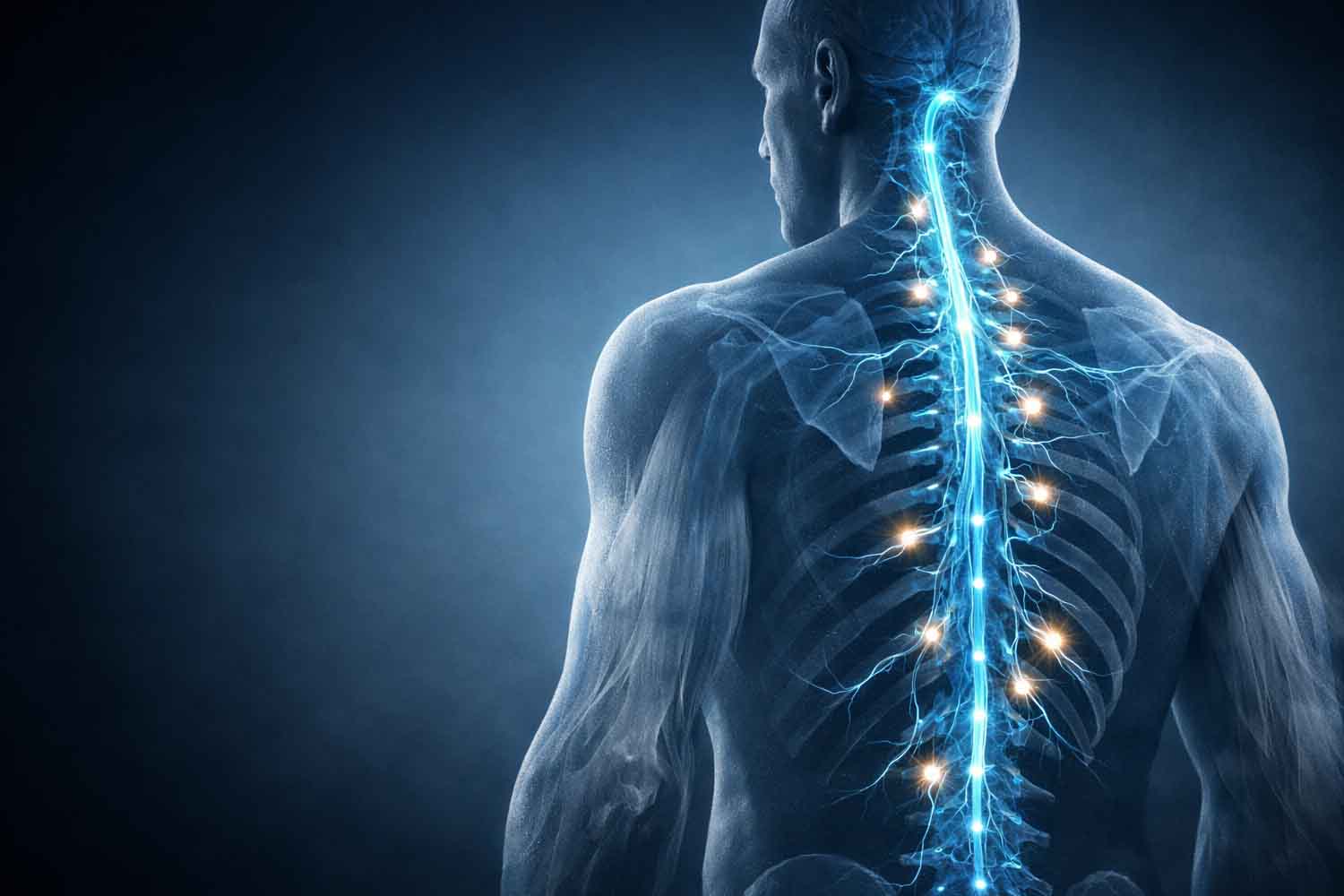
When we talk about ALS we often end up in a sea of half-truths: those who confuse it with “generic paralysis”, those who reduce it to a headline acronym, those who search online for a detail that explains everything in one line. The reality is more complex and, above all, more concrete: amyotrophic lateral sclerosis is a disease that affects motor neurons, i.e. the nerve cells that control voluntary movements. When these neurons degenerate, the muscle “runs out of guidance,” loses strength, becomes thinner, and becomes increasingly difficult to use as before.
In Italy, ALS is rare, but it is not “exceptional”: a document from the Istituto Superiore di Sanità reports that the national literature estimated incidence at around 2.90 per 100,000 inhabitants and prevalence at around 7.89 per 100,000 (values which may vary based on the sources and methods of detection). In more recent studies based on health databases, the standardized prevalence in some Italian areas is around 10–12 per 100,000.
The first symptoms of ALS
The onset of ALS is often subtle, and for this reason it can be mistaken for stress, posture, “a jumping nerve” or simple tiredness. The early signs, however, have a logic: the disease affects the circuits that move the muscles, so the symptoms often begin with localized weakness. It could be a hand that loses precision, a foot that stumbles more than usual, a leg that “doesn’t hold up” as before. In parallel, cramps, stiffness (spasticity) and the famous fasciculations, i.e. involuntary and repeated contractions visible under the skin, may appear.
In a portion of people the onset is not in the limbs, but is bulbar: here the muscles needed for speaking and swallowing come into play, and the alarm bells become a more slurred voice (dysarthria) or difficulty swallowing (dysphagia), even with foods and liquids that previously did not create problems. ALS rarely presents immediately with respiratory disorders, but when the disease progresses breathing can become a central point in the clinical path.
A point that deserves clarity, because everything goes online: in ALS, in general, sensitivity (touch, pain, temperature) is not the first target, and often remains relatively preserved, even if sensory disorders may emerge in a minority. What changes is the strength and control of movement. Having said this, there are forms and situations in which cognitive or behavioral problems can also emerge, especially in the link between ALS and the spectrum of frontotemporal dementia, but it is not correct to describe the disease as “just muscles” or “just mind”: ALS is more nuanced than that and must be considered on a case-by-case basis.
Causes of ALS and risk factors
When talking about the causes of ALS, it is essential to distinguish between the sporadic form and the familial form. About 90% of cases are sporadic, that is, without a clear family history. The remaining 5-10% are linked to genetic mutations, such as those involving the SOD1 or C9orf72 gene.
The precise causes are not yet fully clarified. Scientific research investigates mechanisms such as oxidative stress, accumulation of abnormal proteins, inflammation and alterations in cellular transport processes. There is, at present, no single universally recognized trigger factor.
It is not correct to associate ALS with a specific lifestyle or specific behavior. The evidence on environmental factors is still being studied and does not allow definitive conclusions.
ALS diagnosis
Getting to the diagnosis of ALS does not mean “just taking a test”. In many clinical pathways we proceed by exclusion and progressive confirmation: neurological examination, evaluation of signs of involvement of the first and second motor neurons, electrophysiological tests such as electromyography, and in-depth studies to exclude conditions that can imitate ALS.
It’s one of the reasons why, when symptoms are still mild or intermittent, it can take a while to give a definitive name to what’s happening.
ALS therapies and life expectancy
On the treatment front we must be clear: there is no definitive cure for ALS today. However, there are therapies that can modify the history of the disease in some patients and, above all, there is management that can radically change the quality and length of life.
The most solid pillar, over the years, has become the multidisciplinary model: neurology, pulmonology, nutrition, physiotherapy, speech therapy, psychology, home care. It is not an elegant word: it is the difference between “suffering the disease” and “governing it”, as far as possible.
When swallowing worsens and weight drops, enteral nutrition comes into the picture, often via PEG (percutaneous endoscopic gastrostomy). There is no “perfect moment” that is the same for everyone, but clinical documents and the experiences of the centers highlight that PEG and early management of dysphagia can change the approach to one of the most serious problems of ALS.
Then there is the part that scares the most, because it is automatically associated with the “worst”: breathing. When the disease involves the respiratory muscles, non-invasive ventilation (NIV) can improve the symptoms of respiratory failure, quality of life and even survival, but requires information, training and a truly involved caregiver, because management is concrete and daily.
Drugs used to treat the symptoms of ALS
As for drugs, we need to distinguish between what is “standard” and what is “targeted”.
Edaravone is authorized in some countries (e.g. Japan/USA), but is not authorized for marketing in the European Union; in Italy access has been the subject of special paths and AIFA provisions over time. But the truly new point, in recent times, is that ALS is no longer seen as a single block: genetically determined forms exist and, for a small but very important part of patients, specific treatments are available.
This is where tofersen (Qalsody) comes in, a therapy aimed at people with ALS linked to the SOD1 mutation, i.e. a rare share of the total, authorized in the European Union in 2024. Of course, it is not “the cure for ALS” for everyone, but it is a strong signal of how research is moving the bar towards personalized therapies, where genes, biomarkers, patient selection and timing count.
Can you live with ALS?
Talking about ALS inevitably means dealing with a question that always comes up, sooner or later: can we live with amyotrophic lateral sclerosis? The answer is not simple, but it is real. Yes, you can live with ALS, even if you cannot cure it.
Living with it does not mean denying the progression of the disease. It means learning to manage it step by step, adapting daily life to new needs. Today, compared to the past, the quality of life can be significantly improved thanks to a structured multidisciplinary approach. Early management by specialized centers allows timely intervention on nutrition, breathing, mobility and communication.
Many people with ALS continue to work for a period, cultivate relationships, travel, and participate in family life. As the symptoms progress, technological aids come into play that allow you to maintain autonomy for as long as possible: advanced electronic wheelchairs, ocular communicators, home ventilation devices. Technology, in this area, has radically changed perspectives.
A decisive element is psychological support. ALS not only affects the muscles, but the emotional balance of the person and the family. Accepting help, building a solid network, sharing fears and decisions becomes an integral part of living with the disease.
There are also clinical forms with slower progression, in which survival can greatly exceed statistical averages. Every story is different. Life expectancies are numbers, but the quality of time remains a personal journey.
Living with ALS means redefining priorities, finding new balances, transforming fragility into organization and awareness. It is not a choice, but it can become a path managed with dignity, adequate tools and correct information.
You might also be interested in:
