
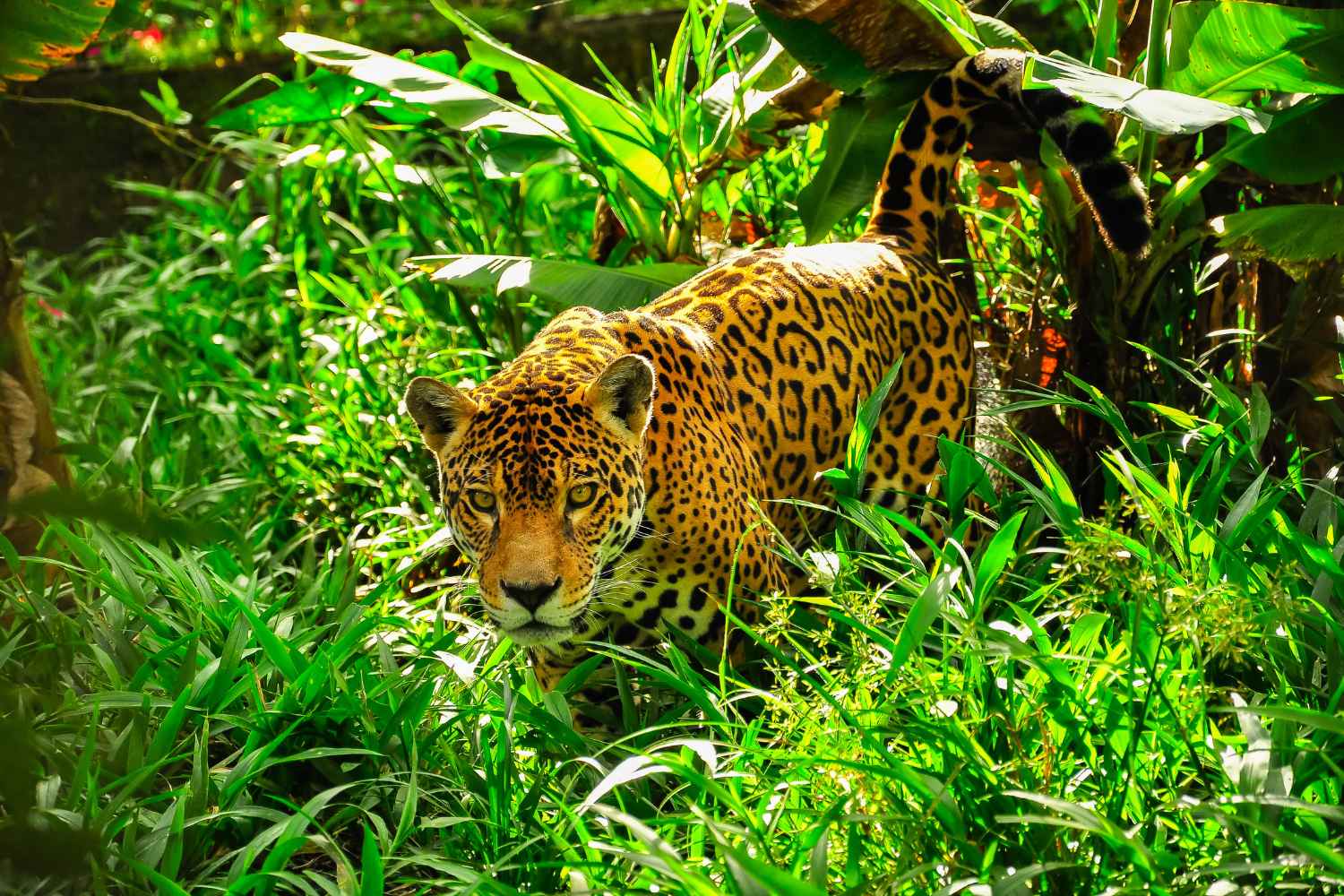
International Jaguar Day: why it is relevant today
International Jaguar Day is celebrated on November 29, with the aim of drawing attention to the growing threats that this iconic predator of the Amazon faces every day. The jaguar (Panthera onca) is the largest feline on the American continent: it can reach two and a half meters in length and weigh more than 120 kilograms. It is a versatile carnivore, capable of hunting very different animals, from turtles to iguanas, and travels considerable distances to locate prey. Unlike many other felines, he does not avoid water: he is a skilled swimmer.
A rapidly declining habitat
It is currently present in 18 countries between Central and South America, where it survives in wooded areas, tropical humid forests, mangroves and pre-mountain areas. These environments are progressively destroyed due to the expansion of intensive livestock farming and soybean crops. Deforestation is advancing at an impressive rate, with ecosystems such as the Amazon, Cerrado, Pantanal and Gran Chaco being replaced by agricultural and livestock activities. The historical range of the species has increased from 15 million to 7 million square kilometers.
From the icon of the forest to the symbol of the collapse of biodiversity
The jaguar’s decline reflects the impact of the global food system on ecosystems. On average, 61 kilograms of soy are consumed per year, but almost all of it is used to produce feed for animal breeding. The conversion of forests to agricultural land to support this system contributes significantly to biodiversity loss. The IUCN Red List today classifies the species as “Near Threatened” and studies show a decline in population density in the most compromised areas.
Direct and indirect threats
In the 1960s and 1970s the jaguar was killed for its fur, with around 18,000 specimens killed each year. The introduction of the Convention on International Trade in Endangered Species (CITES) in 1973 helped reduce the phenomenon, but poaching continues to be a problem, also fueled by the illegal market as a tiger substitute. Hunting pressure is compounded by the expansion of human activities which fragment the habitat, reduce wild prey and intensify conflicts with local communities.
Current numbers
There are currently an estimated 173,000 jaguars in the wild. The species has been eradicated from much of its historical territory and today occupies less than half of its original distribution. Long-term survival requires extensive, intact forests, which are essential for maintaining connectivity between populations and ensuring sufficient genetic variability.
The value of ecosystems and the impact on communities
According to the WWF, the ecosystem services generated by the 14 priority territories for jaguar conservation in Latin America produce an annual economic value estimated between 1.5 and 4 trillion dollars, an amount higher than the approximately 708 billion generated by human economic activities in the same areas. This data highlights how the protection of forests and the species that inhabit them also represents a concrete investment for local communities.
The WWF initiative and future objective
WWF carries out the “Jaguar Initiative”, a joint action of international offices and various environmental partners, with the aim of reducing habitat destruction and promoting more sustainable economic models. In 2025, a new protected area was established in the Pantanal-Chaco territory, which includes indigenous communities and connects over 12 million hectares, creating the largest continuous extent of protected areas and indigenous territories in that region. The subsequent phases involve the strengthening of ecological corridors in the cross-border areas between Colombia, Ecuador and Peru, today among the wildest but also among the most vulnerable.
The celebration of International Jaguar Day is a direct reminder of collective responsibility in preserving what remains of tropical forests and in rethinking consumption patterns, particularly those linked to meat production. The protection of this predator is an integral part of the protection of biodiversity and the natural balances on which human life also depends.
